
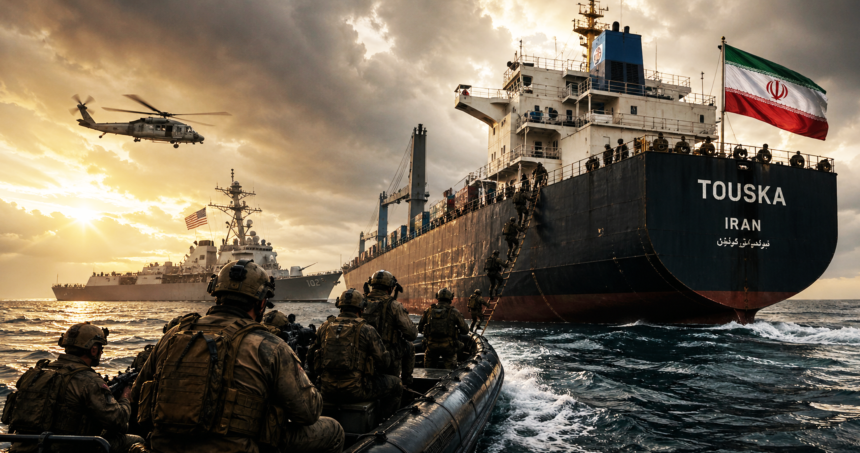
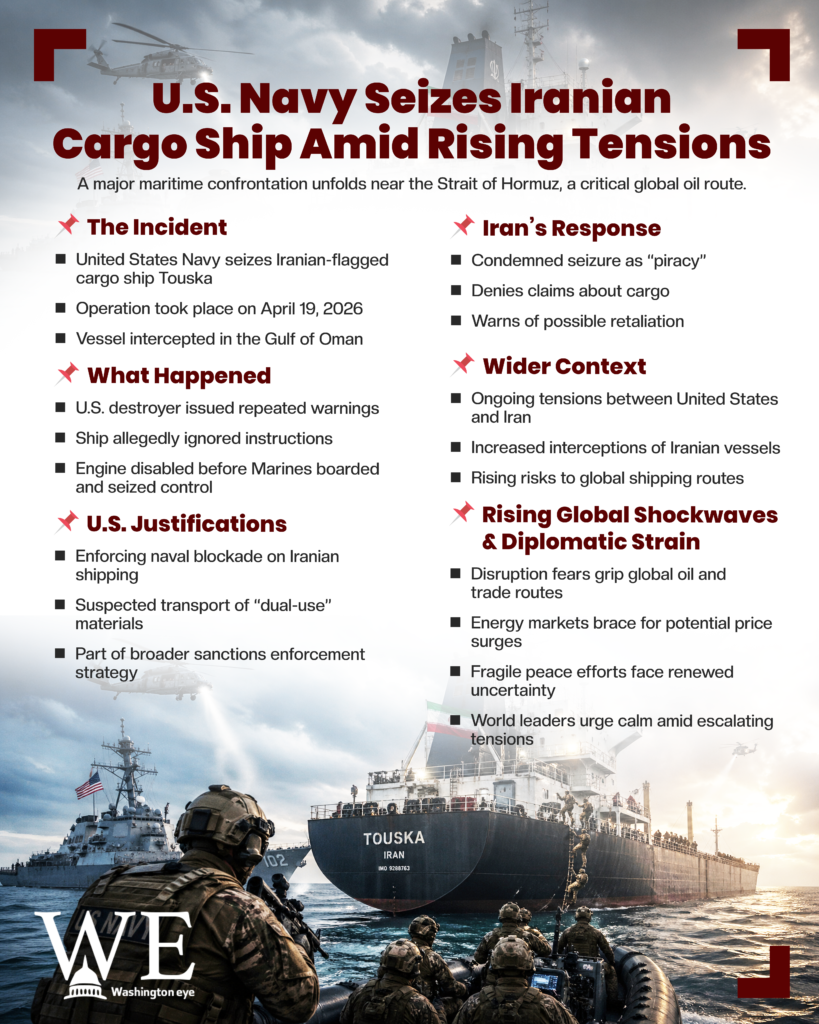
The United States Navy has seized an Iranian-flagged cargo vessel in a dramatic escalation of maritime tensions in the Middle East, intensifying an already fragile geopolitical standoff in the region. The incident occurred on April 19, 2026, near the strategically vital Strait of Hormuz, a chokepoint through which a significant portion of the world’s oil supply passes. According to U.S. officials, the vessel, identified as the cargo ship Touska, was intercepted after allegedly attempting to breach an American-imposed naval blockade on Iranian shipping routes.
The seizure was carried out by U.S. naval forces operating in the Gulf of Oman. Reports indicate that a guided-missile destroyer first issued repeated warnings to the Iranian vessel over several hours. When the ship failed to comply, U.S. forces disabled it by targeting its engine room before boarding it with Marines deployed from an amphibious assault ship. The vessel was subsequently taken under U.S. custody, marking one of the most high-profile maritime confrontations between the two nations in recent years.
Washington justified the action as part of its broader enforcement of a naval blockade aimed at restricting Iranian trade and limiting the movement of materials it considers strategically sensitive. U.S. authorities suggested that the seized cargo may have included so-called “dual-use” equipment, items that could potentially serve both civilian and military purposes. This claim has not been independently verified, but it has been central to the U.S. rationale for intercepting Iranian vessels in international waters.
The incident comes amid a wider U.S. military campaign targeting Iranian shipping networks. In recent days, American forces have reportedly intercepted multiple Iranian oil tankers across Asian waters, part of a sustained effort to enforce sanctions and disrupt Iran’s energy exports. The ongoing blockade has already redirected dozens of vessels and heightened concerns over global oil supply disruptions, particularly as tensions continue to affect shipping routes in and around the Strait of Hormuz.

Iran has strongly condemned the seizure, calling it an act of “piracy” and a violation of international law as well as a recently negotiated ceasefire framework. Tehran warned of a “swift response,” signaling the possibility of retaliatory measures that could further destabilize the region. Iranian officials have also disputed U.S. claims about the cargo, with some reports suggesting the ship may have been carrying civilian or humanitarian goods, though these assertions remain contested.
The political fallout has been immediate. The seizure has cast doubt on ongoing diplomatic efforts, including planned peace talks that were expected to involve regional mediators such as Pakistan. Analysts say the timing of the incident could derail fragile negotiations and deepen mistrust between the two sides. The already volatile situation, marked by military exchanges, economic sanctions, and competing strategic interests, now faces an increased risk of escalation.
Beyond the diplomatic sphere, the seizure has raised alarm in global markets. The Strait of Hormuz remains one of the most critical maritime corridors for energy transport, and any disruption there has immediate implications for oil prices and global supply chains. Energy analysts warn that continued confrontations at sea could trigger a broader crisis, affecting not only regional stability but also international economic conditions.
Security experts note that maritime confrontations between the U.S. and Iran are not unprecedented, but the scale and intensity of current operations mark a significant escalation. The use of force to disable and board a cargo vessel underscores the high-stakes nature of the conflict and highlights the strategic importance of controlling sea lanes in the Gulf region. With both sides adopting increasingly assertive postures, the risk of miscalculation remains high.
As the situation unfolds, the international community is closely monitoring developments, urging restraint and a return to diplomatic engagement. However, with military operations ongoing and rhetoric intensifying on both sides, the seizure of the Iranian-flagged cargo ship may prove to be a pivotal moment in an already volatile confrontation.