Indonesian authorities have deployed specially equipped oxygen buses to help residents struggling to breathe as severe forest fires continue to blanket parts of the country in thick, hazardous smoke, triggering a growing public health emergency and affecting neighbouring Southeast Asian nations. The mobile medical service has been introduced in Palangka Raya, the capital of Central Kalimantan province on Borneo island, where deteriorating air quality has left thousands of people experiencing respiratory problems.
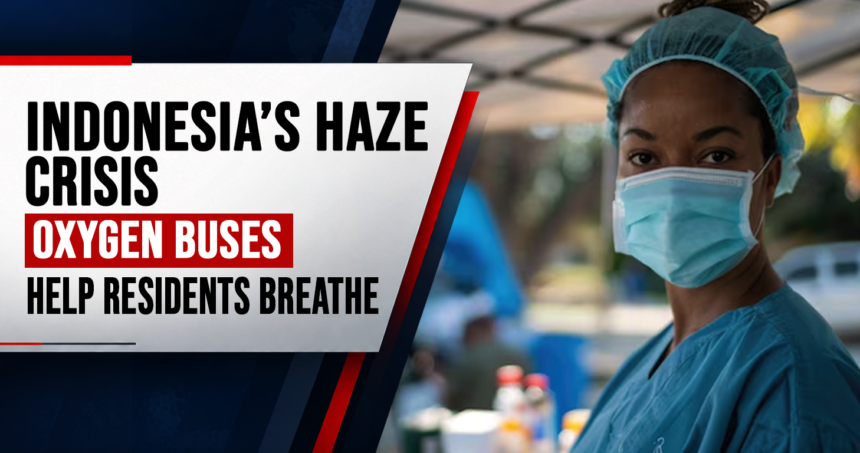
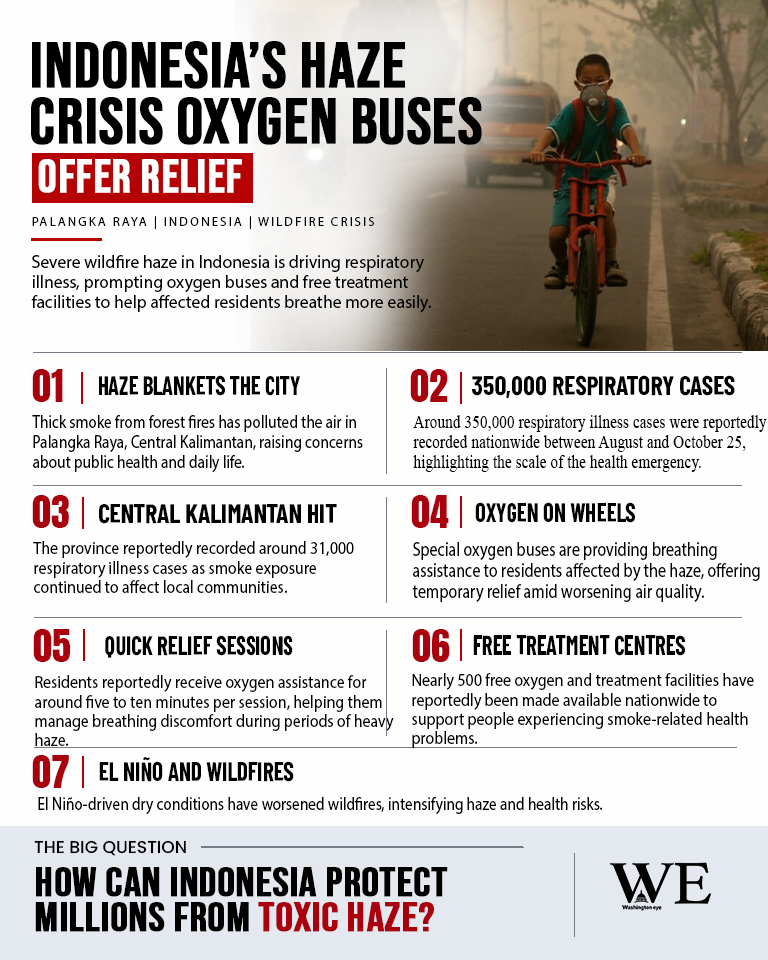
The initiative comes as Indonesia faces its most intense seasonal forest fires in more than a decade, with prolonged dry conditions and an intense El Niño weather phenomenon worsening the crisis. According to Reuters, the white-and-blue oxygen buses are equipped with oxygen cylinders and staffed by medical professionals who provide free breathing assistance to affected residents. Patients receive oxygen through small nasal tubes for approximately five to ten minutes per session, while healthcare workers record their details and assess reported breathing difficulties.
The Central Kalimantan provincial health department said the service was established to provide accessible oxygen support to people experiencing respiratory symptoms amid unhealthy air quality. The initiative has become an important source of temporary relief for residents who have been exposed to thick smoke for weeks, particularly those who must continue travelling or working outdoors despite hazardous conditions.

Indonesia’s Ministry of Health reported approximately 350,000 cases of respiratory illness linked to the fires between August and October 25, 2026. Central Kalimantan alone accounted for around 31,000 cases during the same period, highlighting the scale of the health emergency. Air pollution readings in parts of Borneo and Sumatra have exceeded 1,000 on Indonesia’s reported pollution index, far above the threshold of 300 considered hazardous.

Residents have described persistent coughing, breathing difficulties, throat irritation and chest tightness as dense yellowish smoke continues to spread across residential areas. Purnasari, a 31-year-old resident receiving assistance aboard an oxygen bus, told Reuters that spending time outdoors had become increasingly difficult because of coughing and breathing discomfort. Another resident, Oktawina, 44, expressed frustration over the continuing disaster while receiving oxygen treatment.
Medical workers operating the buses said many patients arriving for assistance were suffering from coughing or difficulty breathing, reflecting the immediate impact of prolonged smoke exposure. The wildfire crisis has been intensified by unusually hot and dry conditions associated with El Niño, which have made Indonesia’s extensive forests and peatlands particularly vulnerable to burning.
Peatland fires pose a serious challenge because they can continue smouldering beneath the ground, producing large quantities of smoke and making firefighting operations particularly difficult. Indonesia experiences seasonal forest and land fires, especially across Sumatra and Borneo, but the 2026 outbreak has been described as the country’s most severe in over ten years.

The environmental consequences have extended beyond Indonesia’s borders, with smoke spreading into Malaysia and Singapore and turning skies orange across parts of the region. According to AFP, deforestation monitoring organisation Nusantara Atlas estimated that more than 1.9 million hectares had burned across Indonesia during the first nine months of 2026. Indonesian authorities had neither confirmed nor disputed the estimate at the time of reporting.
In response to the worsening health crisis, Indonesia’s health ministry has established nearly 500 facilities nationwide offering free oxygen and treatment for haze-related illnesses, including almost 300 in Central Kalimantan. However, public frustration has continued to grow as communities demand stronger measures to contain the fires and protect residents from dangerous pollution.
Hundreds of students reportedly demonstrated outside the Central Kalimantan governor’s office, calling for more effective government action against the ongoing fires. Health experts warn that wildfire smoke contains fine particulate matter, particularly PM2.5, which can penetrate deep into the lungs and enter the bloodstream. Exposure is associated with increased risks of respiratory and cardiovascular illnesses, particularly among children, older adults and people with existing health conditions.
Although oxygen buses can provide medically supervised support to people who need supplemental oxygen, short oxygen sessions do not remove inhaled pollutants or replace comprehensive medical treatment and measures to reduce smoke exposure. The crisis has also highlighted the economic and social consequences of environmental disasters, as many residents continue working outdoors despite the risks because staying indoors is not financially possible.
With fires still burning and air quality remaining hazardous in affected regions, the oxygen buses offer immediate assistance to struggling communities. However, the continuing emergency underscores the need for effective wildfire prevention, peatland management, stronger public health protections and regional cooperation to address the recurring problem of transboundary haze in Southeast Asia.