

Global accommodation platform Airbnb has announced new rules prohibiting hosts from requiring guests to perform extensive cleaning chores before checking out, marking a significant change in its short-term rental policies. The regulations, scheduled to take effect on November 20, 2026, aim to improve transparency, simplify house rules and address growing complaints from travellers about unreasonable checkout demands.
The changes, announced on October 20, will apply to reservations booked on or after November 20, affecting Airbnb properties worldwide. Under the revised policy, hosts will no longer be permitted to require guests to complete tasks traditionally performed by professional cleaners, including washing dishes, stripping bed linen or taking out rubbish.
The decision follows longstanding criticism from travellers who have complained about being expected to undertake extensive cleaning duties despite paying additional cleaning fees. Some guests have reported receiving lengthy checkout instructions requiring them to clean kitchens, handle laundry and complete other household tasks before departure.
Airbnb acknowledged that its existing house rules could be confusing and burdensome, prompting the company to introduce clearer guidelines designed to establish reasonable expectations for both hosts and guests. Under the new policy, guests may still be asked to undertake simple tasks, such as placing used dishes in the sink, gathering used towels or separating rubbish for recycling. However, hosts cannot impose chores requiring substantial time and effort or duties normally handled by cleaning professionals.
Certain exceptions will remain applicable where specific safety or environmental circumstances justify additional requirements. For instance, properties located in areas with wildlife may ask guests to place rubbish in animal-proof containers. Despite the restrictions, Airbnb has clarified that guests will still be expected to leave accommodation in a reasonable condition. Travellers may also remain responsible for property damage or excessive cleaning costs resulting from their stay.
Importantly, the new regulations do not eliminate cleaning fees. Hosts will continue to determine their own cleaning charges, although they will have fewer options to transfer routine cleaning responsibilities to guests. Alongside the checkout changes, Airbnb is introducing a more standardised system for house rules. Hosts will be able to establish requirements across seven categories, including maximum overnight guests, quiet hours, events, pets, smoking, commercial photography and securing the property before departure.
The platform will also require hosts to disclose their house rules and checkout requests in a designated section of their listings, ensuring that travellers can review relevant conditions before confirming reservations. Hosts will no longer be permitted to introduce additional rules through private messages, signs displayed inside properties or other sections of their listings. Airbnb says this approach will help prevent unexpected demands and improve communication between hosts and guests.

The changes have nevertheless generated criticism among some property owners, who argue that restricting checkout chores could increase operational expenses and ultimately result in higher accommodation prices. According to Australia’s ABC News, several hosts expressed frustration with the policy, warning that smaller operators who manage cleaning themselves may face additional financial pressure.
Some hosts suggested that they might increase rental prices, introduce higher cleaning charges or reconsider listing their properties on the platform. Others argued that asking guests to wash dishes or dispose of rubbish was a reasonable expectation rather than an excessive demand, particularly for smaller properties operating without professional cleaning services.
However, supporters of the changes believe the revised rules will create a more consistent experience for travellers and reduce disputes over cleaning responsibilities. The policy shift comes as Airbnb continues introducing broader changes to its services. In September 2026, the company announced new artificial intelligence-powered travel planning features, expanded services and additional tools designed to help hosts manage listings and pricing.
The latest regulations reflect the company’s efforts to balance guest satisfaction with the operational concerns of property owners in an increasingly competitive global accommodation market. For travellers, the new policy could mean a simpler checkout experience, fewer unexpected responsibilities and greater clarity about what is required during their stay.
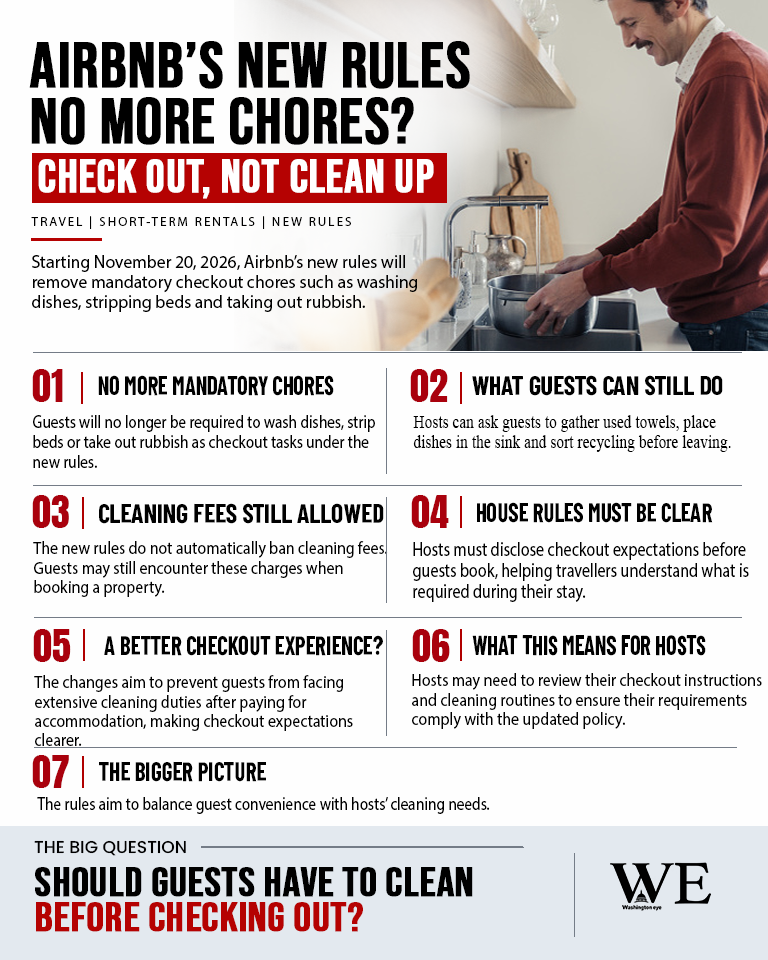
For hosts, however, the changes may require adjustments to cleaning arrangements, pricing strategies and property management practices. As the November 20 implementation date approaches, the impact of Airbnb’s revised rules on accommodation costs, host participation and guest satisfaction remains to be seen. The move nevertheless signals a shift towards clearer expectations and greater consistency across the platform’s international rental network.