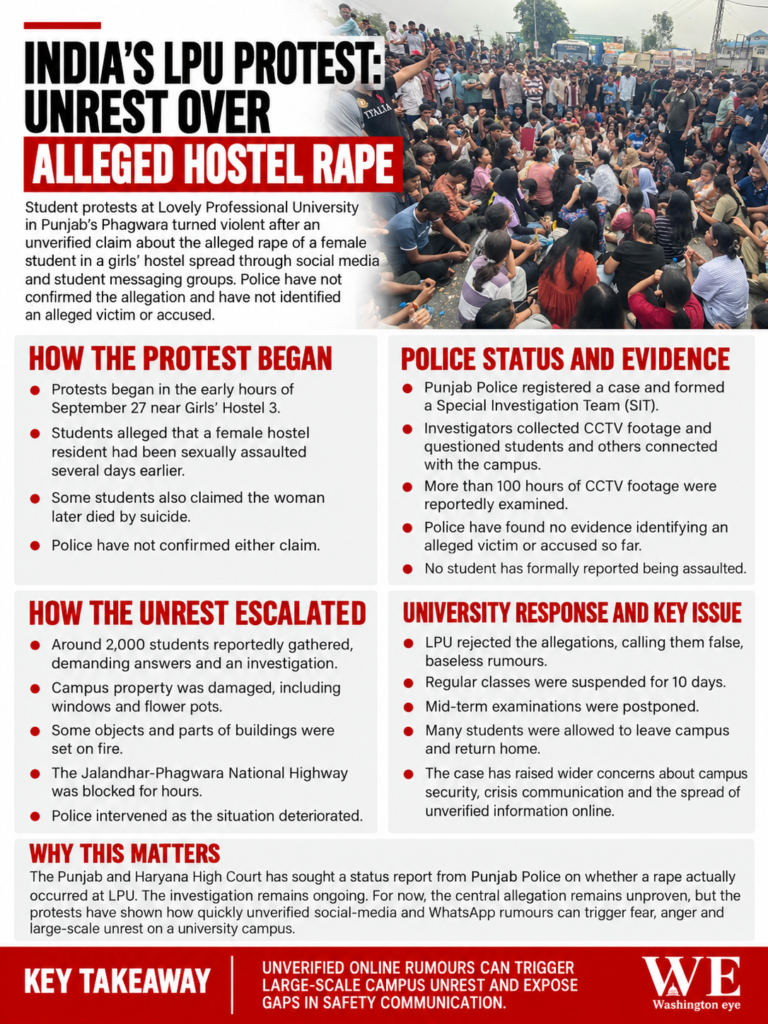
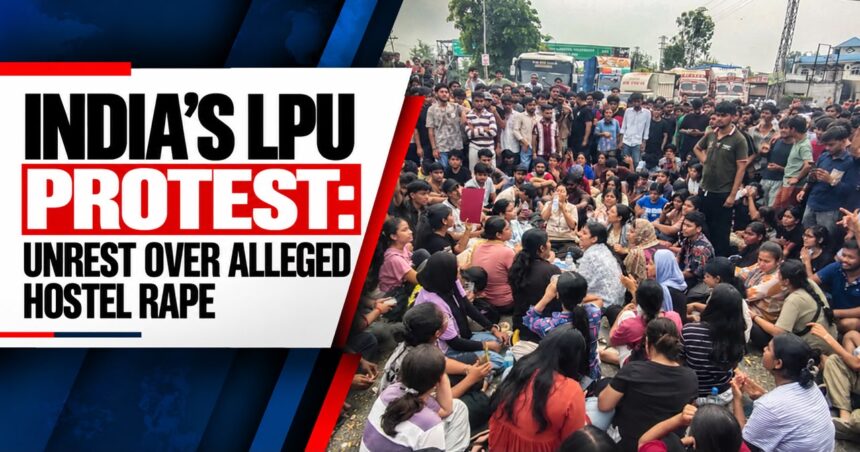
Student protests at Lovely Professional University (LPU) in Punjab’s Phagwara turned violent after an unverified claim about the alleged rape of a female student at a girls’ hostel spread rapidly through social media and student messaging groups.
The protest began in the early hours of September 27 near Girls’ Hostel 3. Students alleged that a female resident had been sexually assaulted several days earlier and that the matter had not been properly addressed. Some students also claimed the woman later died by suicide. Police have not confirmed either claim, and investigators have so far been unable to identify the alleged victim or an accused person.
The allegations quickly triggered anger across the sprawling university campus. Thousands of students gathered, demanding answers and calling for an investigation into what they believed was a serious failure of student safety.
The protest soon escalated where theyz damaged windows, flower pots and other university property, while some objects and parts of buildings were set on fire. The Jalandhar-Phagwara National Highway was also blocked, disrupting traffic for hours. Police intervened as the situation deteriorated.
Videos circulating online showed the scale of the unrest. Students were seen climbing onto military equipment and an aircraft displayed on the university campus. Other footage showed crowds surrounding campus buildings and clashes between protesters and police.

Punjab Police registered a case against an unidentified person and formed a Special Investigation Team (SIT) to examine the allegations. Investigators began collecting CCTV footage and speaking to students and other people connected with the campus. More than 100 hours of CCTV footage had reportedly been examined, but police had not found evidence identifying the alleged victim or perpetrator.
LPU has rejected the allegations, describing the claims circulating online as false, baseless and rumours. The unrest forced the university to take immediate measures. Regular classes were suspended for 10 days and mid-term examinations were postponed as authorities worked to restore order. Many students were allowed to leave the campus and return home amid concerns over their safety.
Now, this has raised wider questions about campus security, crisis communication and the dangers of unverified information spreading online. Students say their concerns about safety must be taken seriously, while police face the difficult task of separating genuine evidence from rumours.
The Punjab and Haryana High Court has since sought a status report from Punjab Police on whether a rape actually occurred at LPU. The investigation remains ongoing.
For now, the central allegation remains unproven. But the protests have already exposed how quickly an unverified claim can trigger fear, anger and large-scale unrest on a university campus.