
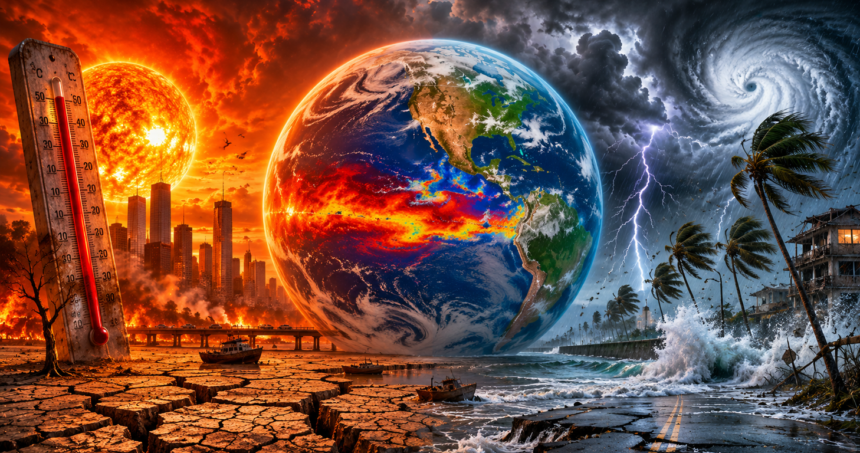
A powerful El Niño climate pattern is once again disrupting weather systems across the globe, raising concerns among scientists, governments and humanitarian agencies about a year of extreme heat, destructive floods, prolonged droughts and mounting economic losses. Meteorological agencies, including the World Meteorological Organization (WMO) and the U.S. National Oceanic and Atmospheric Administration (NOAA), have warned that the current El Niño could become one of the strongest recorded in recent decades, potentially intensifying weather extremes already amplified by climate change. Recent forecasts suggest a significant chance that the phenomenon could reach “very strong” levels later this year, bringing widespread impacts to millions of people worldwide.
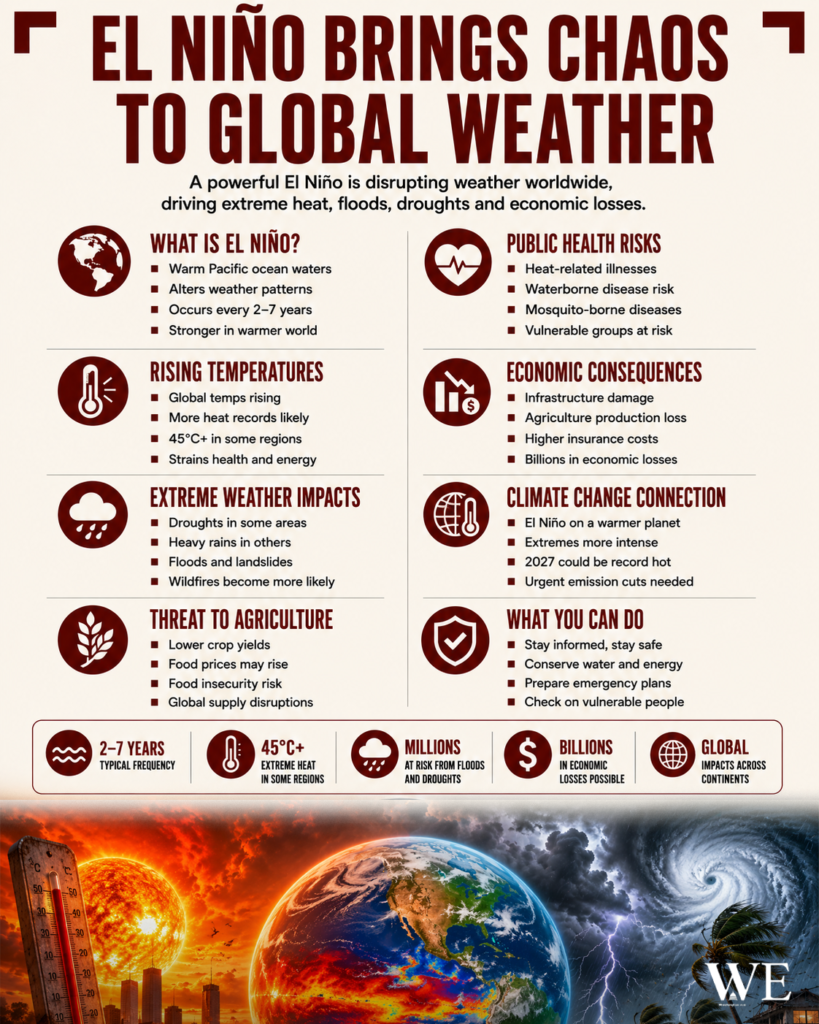
El Niño is a naturally occurring climate phenomenon characterized by unusually warm sea surface temperatures in the central and eastern Pacific Ocean. These warmer waters alter atmospheric circulation patterns, affecting rainfall, temperature and storm activity across continents. While El Niño events typically occur every two to seven years, scientists say the current event is developing in a world already experiencing record-breaking temperatures due to human-induced climate change, making its impacts potentially more severe than in the past.
One of the most immediate effects of El Niño is rising global temperatures. The WMO has warned that the event could push average global temperatures even higher during the coming months, increasing the likelihood of new heat records. Several regions, including South Asia, parts of Africa, southern Europe and North America, have already experienced unusually intense heatwaves. Temperatures exceeding 45°C have been reported in parts of Pakistan and India, while several European countries have issued heat alerts as prolonged periods of extreme heat strain health systems and energy infrastructure.
At the same time, El Niño is expected to produce sharply contrasting weather patterns around the world. Countries such as Australia, Indonesia and parts of South Asia often experience reduced rainfall and drought during strong El Niño years. Reduced precipitation can threaten agriculture, lower reservoir levels and increase wildfire risks. Meanwhile, western regions of South America, including Peru and Ecuador, frequently face heavy rains and flooding as warmer Pacific waters fuel stronger storms. Experts warn that communities in flood-prone areas should prepare for potential landslides, infrastructure damage and displacement.

The agricultural sector is among the most vulnerable. Drought conditions can reduce yields of major crops such as rice, wheat, maize and soybeans, while excessive rainfall can destroy harvests and damage transportation networks. Analysts caution that disruptions to food production could increase global food prices and worsen food insecurity in vulnerable regions. However, some experts note that global grain inventories are currently relatively strong, which may help cushion the impact of potential production losses. Governments across Asia and Latin America are already implementing contingency plans, including water conservation measures, irrigation improvements and strategic food stock management.
Beyond agriculture, El Niño can affect public health. Higher temperatures increase the risk of heat-related illnesses, dehydration and cardiovascular complications, particularly among the elderly, children and outdoor workers. Flooding can contaminate water supplies and contribute to outbreaks of waterborne diseases, while changing rainfall patterns may expand the habitats of disease-carrying mosquitoes. Humanitarian organizations are urging governments to strengthen health preparedness plans before weather conditions worsen.
Scientists emphasize that while El Niño is a natural climate cycle, its effects are increasingly interacting with long-term global warming. Rising greenhouse gas emissions have elevated baseline temperatures, meaning that El Niño now operates on top of an already warmer planet. This combination can amplify heatwaves, intensify rainfall events and increase the likelihood of weather-related disasters. Some climate experts fear that 2027 could become one of the hottest years ever recorded if the current El Niño reaches peak intensity.

Authorities around the world are urging residents to take precautions. Public health officials recommend staying hydrated, avoiding prolonged exposure to extreme heat, monitoring weather forecasts and checking on vulnerable family members during heatwaves. In flood-prone areas, emergency kits, evacuation plans and awareness of local warning systems can help reduce risks. Farmers are also being encouraged to adopt climate-resilient practices and diversify crops to withstand changing conditions.
As governments and scientists monitor developments closely, the return of El Niño serves as another reminder of the growing challenges posed by a changing climate. Whether through scorching heat, devastating floods or prolonged droughts, the phenomenon is expected to shape weather patterns across much of the world in the months ahead, testing the resilience of communities, economies and ecosystems alike.