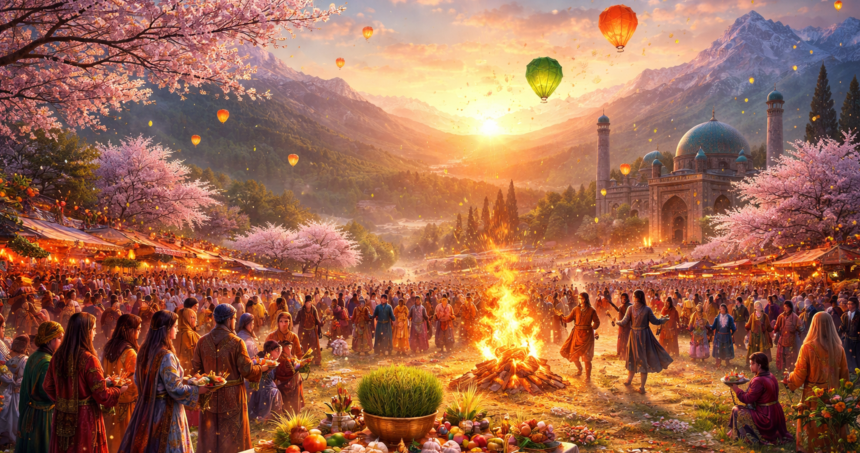
Nowruz, the ancient festival symbolizing renewal and rebirth, is being celebrated across multiple regions of the world as millions welcome the arrival of spring. Observed on or around March 20 or 21, Nowruz coincides with the vernal equinox, the precise moment when day and night are of equal length, marking the transition from winter to spring in the Northern Hemisphere. This year, celebrations began as the sun crossed the celestial equator, bringing with it a sense of hope, balance, and new beginnings.
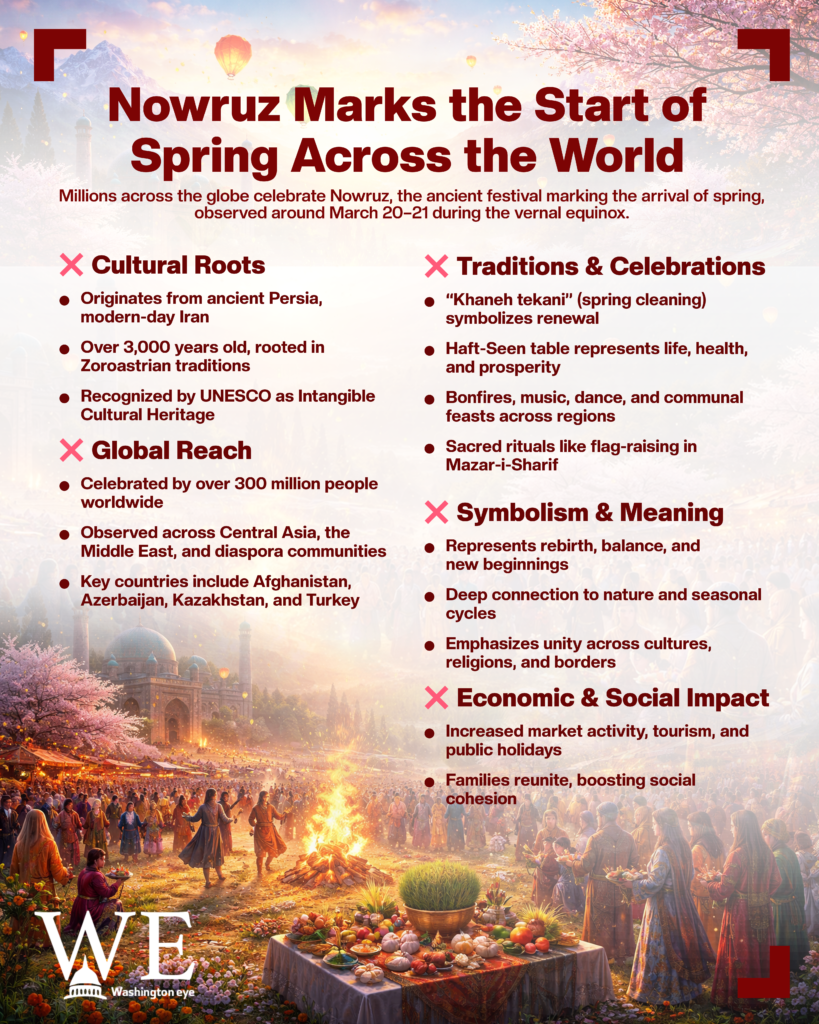
Rooted in over 3,000 years of history, Nowruz originates from ancient Persia, modern-day Iran, and is deeply tied to Zoroastrian traditions that emphasize harmony with nature and the cyclical rhythm of life. Over centuries, the festival spread across regions influenced by Persian culture, evolving into a shared cultural heritage that transcends borders, religions, and ethnicities. Today, Nowruz is recognized by UNESCO as an Intangible Cultural Heritage of Humanity and is celebrated by more than 300 million people worldwide.
The festival is observed in countries including Iran, Afghanistan, Azerbaijan, Tajikistan, Uzbekistan, Turkmenistan, Kazakhstan, and parts of Iraq, Turkey, and the Caucasus region. It is also celebrated by diaspora communities across Europe, North America, and beyond, reflecting its global cultural significance. Despite regional variations, the core themes of renewal, prosperity, and unity remain consistent.

In Iran, where Nowruz is the most significant cultural holiday, celebrations begin weeks in advance with “khaneh tekani,” or spring cleaning, symbolizing the removal of negativity and preparation for a fresh start. Families gather to set up the traditional “Haft-Seen” table, an arrangement of seven symbolic items starting with the Persian letter “S.” These include items such as sabzeh (sprouted greens for rebirth), samanu (sweet pudding for strength), and seer (garlic for health), each representing different aspects of life and renewal.

Across Central Asia, public festivities include music, dance, traditional games, and communal feasts. In Afghanistan, the festival is marked by the raising of a sacred banner in Mazar-i-Sharif, while in Azerbaijan, people light bonfires and jump over flames as a symbol of purification. Kurdish communities celebrate Nowruz as a symbol of resistance and freedom, adding a political and cultural dimension to the festival.
The economic and social impact of Nowruz is also significant. Markets see a surge in activity as people purchase new clothes, gifts, and festive foods. Tourism increases in countries known for grand celebrations, contributing to local economies. Governments often declare public holidays, allowing families to reunite and participate in cultural traditions.
In recent years, Nowruz has also gained diplomatic importance. International leaders and organizations, including the United Nations, have acknowledged the festival as a moment of cultural unity and peace. Messages highlighting diversity, coexistence, and environmental awareness are often shared during this period, reinforcing Nowruz’s relevance in a globalized world.

However, celebrations in some regions are taking place amid political tensions and economic challenges. Despite this, communities continue to uphold traditions, emphasizing resilience and continuity. In conflict-affected areas, Nowruz serves as a reminder of hope and the enduring human spirit. Environmental symbolism is central to Nowruz, with many traditions emphasizing nature, growth, and sustainability.
The planting of greenery and outdoor gatherings reflect a deep connection to the earth, aligning with contemporary discussions on climate awareness and ecological balance. As the world marks Nowruz this year, the festival stands not only as a cultural celebration but also as a universal message of renewal, peace, and shared humanity. From bustling cities to rural communities, the spirit of Nowruz continues to bridge divides, bringing people together in celebration of life’s cyclical beauty.