
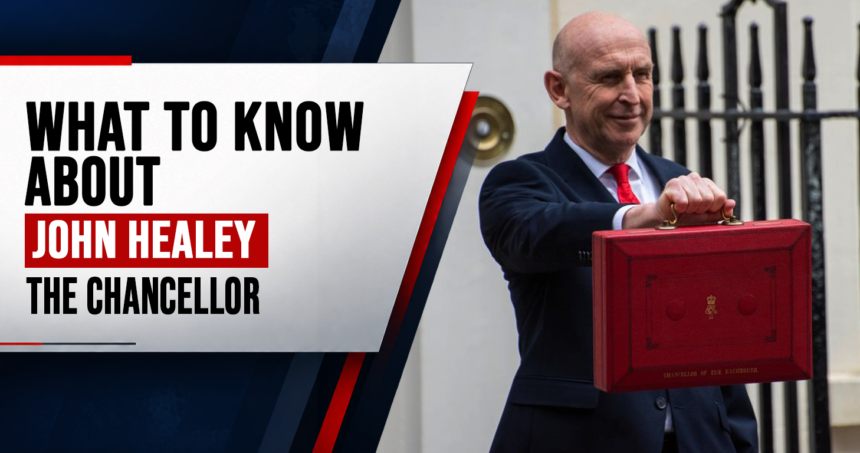
John Healey, a veteran British Labour Party politician and former defence secretary, is serving as the United Kingdom’s Chancellor of the Exchequer after being appointed in July 2026. With nearly three decades of parliamentary experience, Healey has held senior positions in defence, housing, local government and economic policy, making him a longstanding figure in British politics.
Healey was appointed chancellor on July 20, 2026, by Prime Minister Andy Burnham, following a change in Labour’s leadership. His appointment marked a significant shift in his political career, bringing him from national security and defence policy into responsibility for Britain’s public finances, taxation and government spending. He succeeded Rachel Reeves, who had held the position since Labour returned to power in July 2024.
Early Life, Education and Political Career

Born in Wakefield, West Yorkshire, Healey attended Lady Lumley’s Comprehensive School in Pickering and St Peter’s School in York before studying at Christ’s College, Cambridge. Before entering national politics, he worked with several organisations advocating for disability rights, including the Royal National Institute for the Deaf and MIND.
During the 1990s, he became involved in trade union activities and political communications, eventually serving as campaigns director at the Trades Union Congress between 1994 and 1997. His work in the labour movement helped establish his political connections before his election to Parliament.

Healey entered the House of Commons in the 1997 general election, representing Wentworth in South Yorkshire during Labour’s landslide victory under Tony Blair. He subsequently represented Wentworth and Dearne following constituency boundary changes in 2010. Since the 2024 general election, he has served as the MP for Rawmarsh and Conisbrough.
In the 2024 election, Healey secured 16,612 votes, representing approximately 49% of the total, defeating candidates from Reform UK and the Conservative Party. His parliamentary career has now extended across successive Labour and Conservative governments.
Healey held several ministerial positions during Labour’s governments between 1997 and 2010. He served as parliamentary private secretary to Chancellor Gordon Brown before taking responsibility for adult skills, Treasury affairs, local government and housing.

He became Economic Secretary to the Treasury in 2002 and Financial Secretary in 2005, giving him previous experience with Britain’s financial administration. He later served as housing minister before Labour lost power in the 2010 general election.
During Labour’s years in opposition, Healey held senior shadow cabinet responsibilities, including shadow health secretary, shadow housing secretary and shadow defence secretary. He became shadow defence secretary in April 2020 under Keir Starmer and retained the defence portfolio when Labour formed a government in July 2024.
Defence Secretary, Resignation and Appointment as Chancellor
As Britain’s defence secretary from July 2024 until June 2026, Healey oversaw military policy during a period of heightened international security concerns, including Russia’s continuing war against Ukraine, tensions in the Middle East and debates surrounding NATO defence expenditure.
He supported increased military investment and repeatedly raised concerns about the readiness of Britain’s armed forces. His tenure also involved discussions about military cooperation with European allies and the United States, alongside efforts to strengthen Britain’s defence capabilities.
However, his relationship with the government deteriorated over proposed military spending commitments. On June 11, 2026, Healey resigned as defence secretary following disagreements with Prime Minister Keir Starmer’s government over the resources allocated to defence.
In his resignation letter, Healey argued that the proposed defence investment plan did not provide sufficient funding to address Britain’s growing security challenges. His departure intensified political pressure on Starmer’s leadership and raised questions about the government’s ability to meet its military commitments.
Following Labour’s leadership change, Healey returned to the Cabinet in July 2026 as Chancellor of the Exchequer under Andy Burnham. The appointment surprised some political observers because his most recent experience had been concentrated in defence rather than economic management.
As chancellor, Healey is responsible for overseeing the Treasury, preparing government budgets, managing public finances and shaping taxation and spending policy. His appointment came amid concerns over borrowing costs, economic growth, public services and the financial implications of Labour’s policy commitments.
Healey’s previous Treasury experience, including his work under Gordon Brown, provides an important connection to his new responsibilities. Nevertheless, his transition comes at a challenging time for Britain’s economy, with competing demands for public investment, defence funding and measures addressing household living costs.
Why John Healey Matters in British Politics
Healey’s political career reflects the evolution of the Labour Party across nearly three decades, from Tony Blair’s government to the administrations of Keir Starmer and Andy Burnham. His experience spans domestic social policy, public finance and national security, while his departure from the defence ministry highlighted disagreements within Labour over military expenditure.
Now serving as chancellor, Healey occupies one of the most influential positions in the British government. His decisions on taxation, borrowing, public spending and economic investment will play a central role in determining how the government balances its financial priorities with its political commitments.
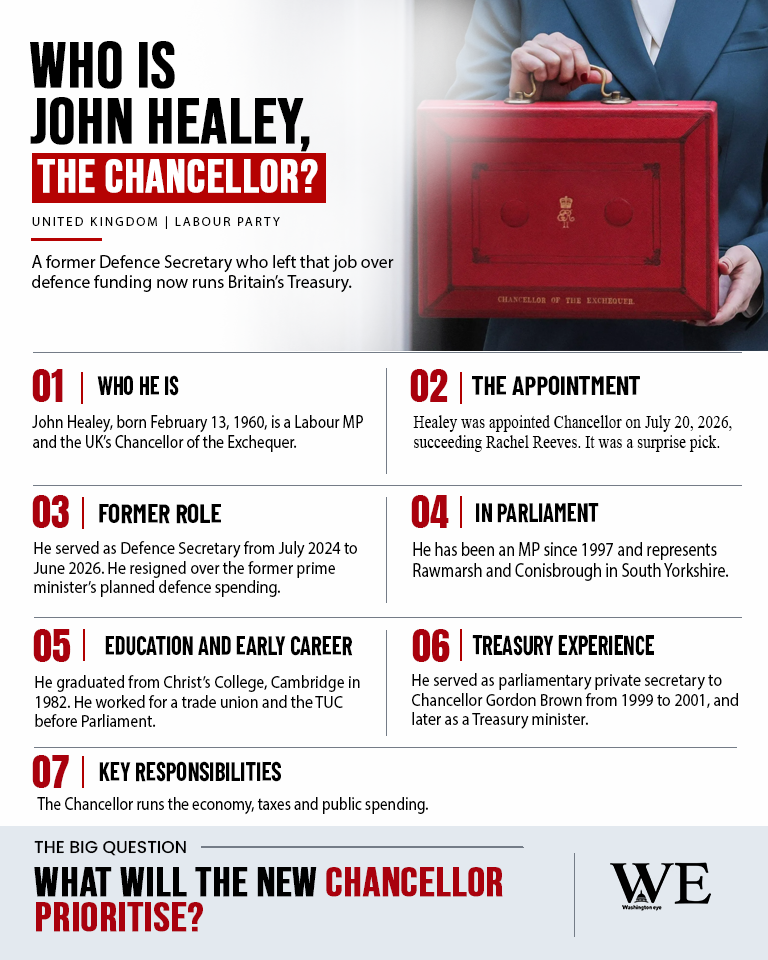
As Britain navigates economic uncertainty and international security challenges, Healey’s transition from defence secretary to Treasury chief places him at the centre of decisions affecting the country’s economic and political direction.