
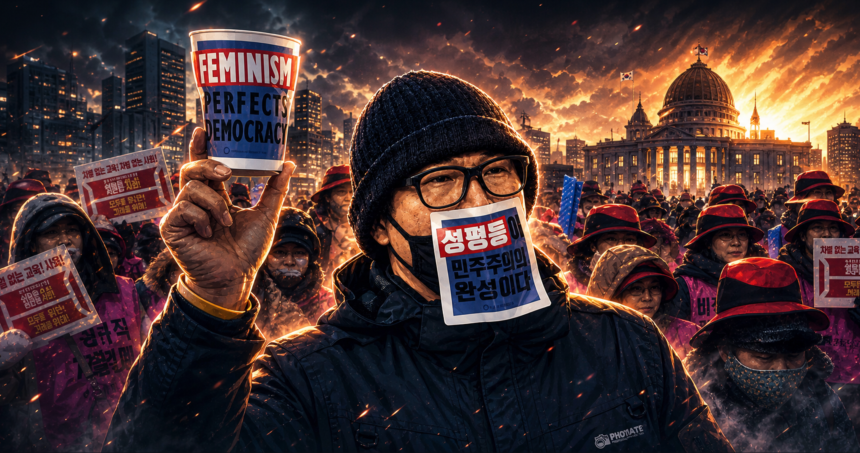
A striking literary trend is unfolding in South Korea, where female authors are dominating bestseller charts despite facing an increasingly vocal anti-feminist backlash. The phenomenon, described by observers as a “quiet revolution,” reflects a deep cultural tension between rising feminist expression and a parallel surge in online and political hostility toward gender equality.
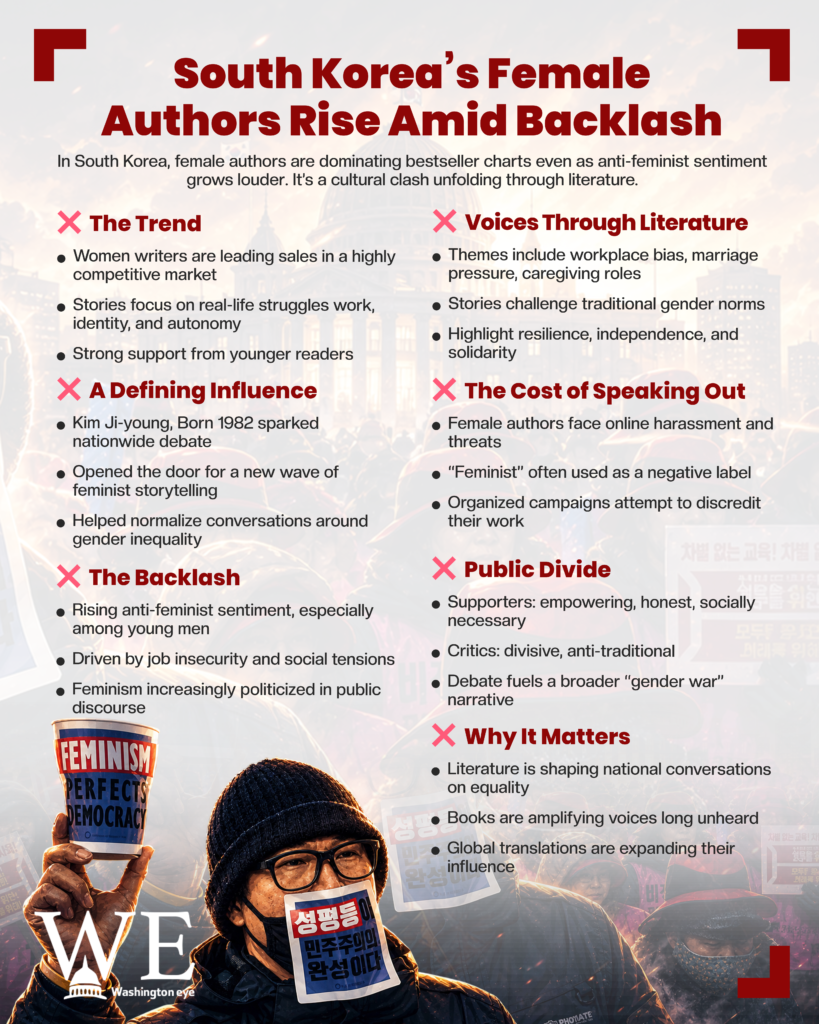
In recent months, novels and essays by women writers have surged in popularity across South Korea’s competitive publishing market. Works that center on women’s lived experiences, ranging from workplace discrimination to personal autonomy, have resonated strongly with readers, especially younger generations. The legacy of authors like Cho Nam-joo, whose groundbreaking novel Kim Ji-young, Born 1982 sold over a million copies and sparked nationwide debate on gender inequality, continues to influence a new wave of writers.
The rise of these authors comes at a time when feminism in South Korea has become deeply polarizing. Over the past decade, the country has witnessed a sharp increase in anti-feminist sentiment, particularly among young men. Analysts link this backlash to economic pressures, job insecurity, and a perception among some men that gender equality policies disadvantage them. Political discourse has also amplified these divisions, with anti-feminist rhetoric gaining traction in elections and public debates.

Despite this environment, female writers are not only publishing more frequently but also achieving commercial success. Their books frequently top bestseller lists and win major literary awards, both domestically and internationally. Contemporary works such as Honey in the Wound by Jiyoung Han highlight women’s resilience in historical and modern contexts, while other novels explore themes of identity, independence, and societal pressure.

The popularity of these books reflects a growing appetite for narratives that challenge traditional gender roles in a society long shaped by patriarchal norms. Many of these stories address issues such as workplace inequality, marriage expectations, and the burden of caregiving. Others push boundaries by portraying alternative lifestyles, including non-traditional family structures and female solidarity.
However, success has come at a cost. Female authors and their supporters frequently face online harassment, threats, and organized campaigns aimed at discrediting feminist ideas. According to recent reports, women who openly advocate for gender equality are often labeled as “selfish” or “anti-national,” and may be subjected to coordinated attacks on social media. The term “feminist” itself has become controversial, sometimes used as an insult in public discourse.
Public reactions to the rise of female authors are sharply divided. Supporters argue that these writers are giving voice to long-silenced experiences and helping to reshape cultural narratives. Many readers, particularly women, see these books as both empowering and reflective of their own lives. Literary critics have praised the works for their honesty, emotional depth, and social relevance.

Opponents, however, claim that feminist literature promotes division and undermines traditional values. Online forums and communities critical of feminism often target bestselling authors, accusing them of exaggerating gender issues or promoting anti-male sentiment. This backlash has contributed to a broader “gender war” discourse in South Korea, where debates over equality frequently spill into politics, workplaces, and everyday interactions.
Nevertheless, the continued commercial success of female authors suggests that their influence is expanding rather than diminishing. Industry data indicates that sales of Korean literature, including works by women, have grown significantly both domestically and internationally. Translations of Korean books have also increased, bringing these stories to global audiences and reinforcing their cultural impact.
Observers note that this literary movement is not merely a trend but part of a broader societal shift. As more women enter higher education and the workforce, their perspectives are increasingly shaping public discourse. Literature has become a key platform for expressing these changes, offering both critique and reflection.
In a country grappling with one of the widest gender gaps among developed nations, the success of female authors underscores the power of storytelling in challenging entrenched norms. While the backlash against feminism remains strong, the growing readership of these works indicates that conversations around gender equality are far from being silenced. Instead, they are being amplified, one bestseller at a time.