
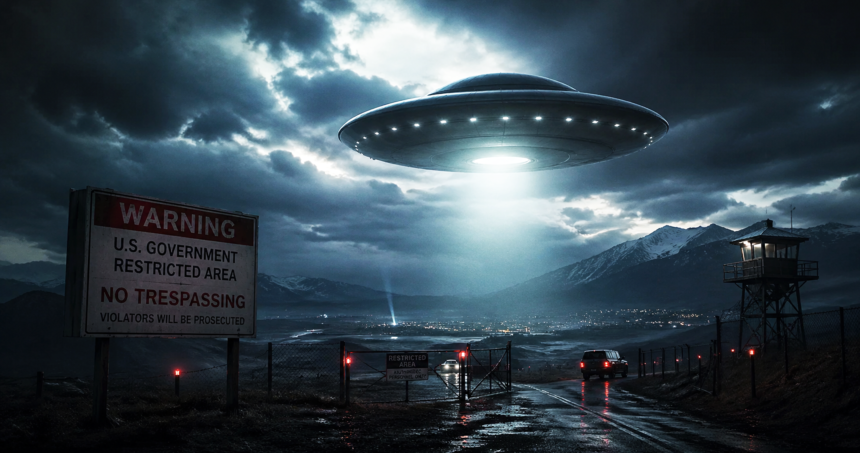
The global debate over unidentified flying objects (UFOs), now officially termed unidentified anomalous phenomena (UAP), has intensified in recent years, with governments, scientists, and the public divided over whether these mysterious sightings point to extraterrestrial life or more grounded explanations. The controversy, which dates back to the mid-20th century, has entered a new phase between 2024 and 2026 as fresh reports, whistleblower claims, and political statements fuel renewed interest in “UFO hunting” across the United States, Europe, and beyond.
The modern wave of UFO controversy can be traced to 2017, when reports revealed that the U.S. Department of Defense had secretly investigated UFO sightings. Since then, the Pentagon’s All-Domain Anomaly Resolution Office (AARO) has catalogued hundreds of sightings. Yet, despite this growing database, official findings consistently maintain that there is no verified evidence of extraterrestrial technology or alien life.
Recent news has added fresh layers to the debate. In April 2026, conspiracy theories linking UFOs to the mysterious deaths of scientists gained traction online and even reached political circles in Washington. These narratives suggest hidden government operations or alien involvement, though experts warn they reflect how unrelated events can be falsely connected in the age of social media. Meanwhile, U.S. Congressman Tim Burchett has publicly claimed to have seen images and videos of aerial objects that “defy logic,” advocating for greater transparency from authorities.

The “why” behind these controversies is complex. For believers, UFO sightings represent potential evidence of extraterrestrial visitation, advanced alien technology, or secret interstellar monitoring of Earth. Some theories even propose that aliens have already made contact but that governments are hiding the truth. On the other hand, skeptics argue that most sightings are misidentified natural or human-made objects such as drones, satellites, or weather balloons. Scientific investigations support this view, noting that sensor limitations, atmospheric conditions, and human perception often lead to misinterpretation.

A significant controversy lies in accusations of government disinformation. Reports indicate that during the Cold War, the Pentagon may have allowed UFO myths to flourish, or even planted them, to conceal classified military projects such as stealth aircraft testing. This revelation has blurred the line between genuine sightings and deliberate misinformation, making it harder for researchers and the public to distinguish fact from fiction.
Scientific studies further complicate the narrative. Historical analyses like Project Blue Book and French space agency investigations found that while a small percentage of cases remain unexplained, the majority can be attributed to identifiable causes. Modern efforts, including automated sky-monitoring systems in Germany, aim to gather better-quality data to scientifically analyze aerial anomalies. Researchers emphasize that unexplained does not mean extraterrestrial, it simply reflects insufficient evidence.
Despite the lack of proof, belief in aliens remains widespread. Public fascination is driven by popular culture, media portrayals, and the human desire to understand the unknown. Interviews with UFO enthusiasts often reveal deeply personal interpretations, ranging from alien abduction experiences to beliefs in “starseeds” or interdimensional beings. However, investigations into many viral UFO images and videos have debunked them as reflections, optical illusions, or manipulated content.

The stance of official institutions remains cautious but open. NASA and the Pentagon continue to study UAPs primarily for national security and aviation safety reasons rather than to confirm extraterrestrial life. While acknowledging that a small fraction of cases remain unexplained, authorities stress that no credible evidence currently supports alien origin.
Ultimately, the “actual truth” about UFOs lies somewhere between mystery and misconception. While the universe’s vastness makes the existence of extraterrestrial life scientifically plausible, there is no confirmed evidence that aliens have visited Earth. The ongoing controversies highlight not only gaps in scientific knowledge but also the powerful role of belief, speculation, and misinformation in shaping public discourse.
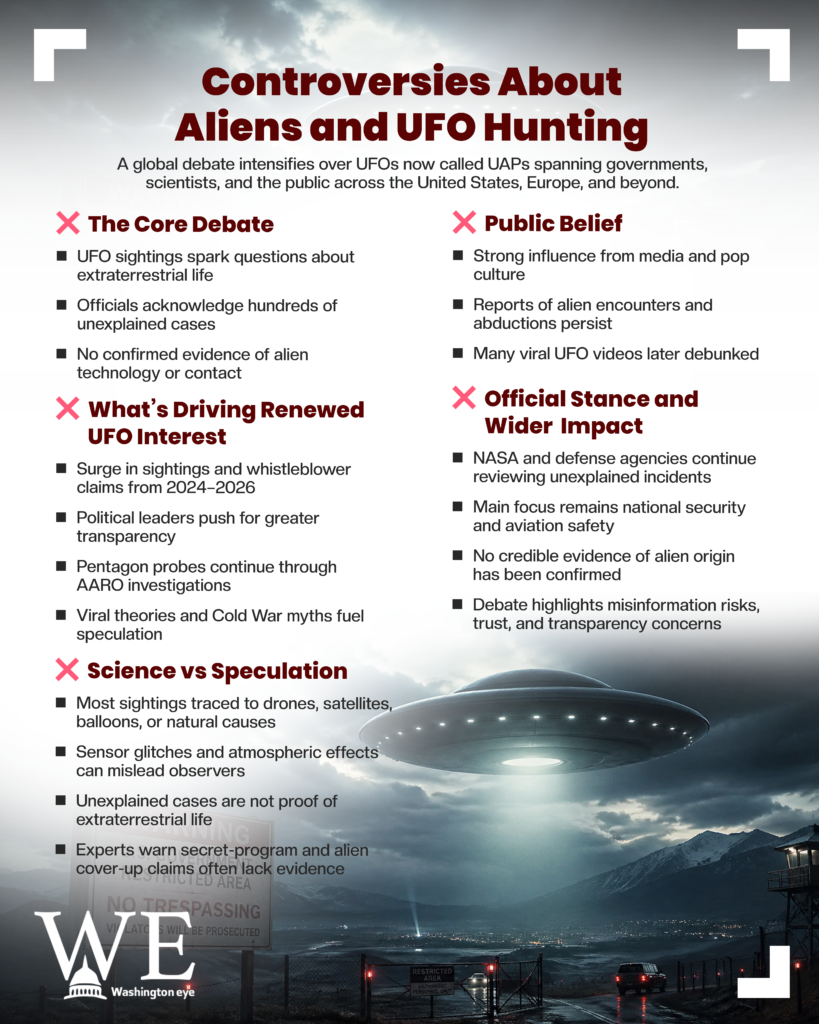
As UFO hunting continues to grow, with new technologies, global research initiatives, and political attention, the debate is unlikely to fade. Instead, it reflects a broader human quest: to understand whether we are alone in the universe, or simply misinterpreting the skies above us.