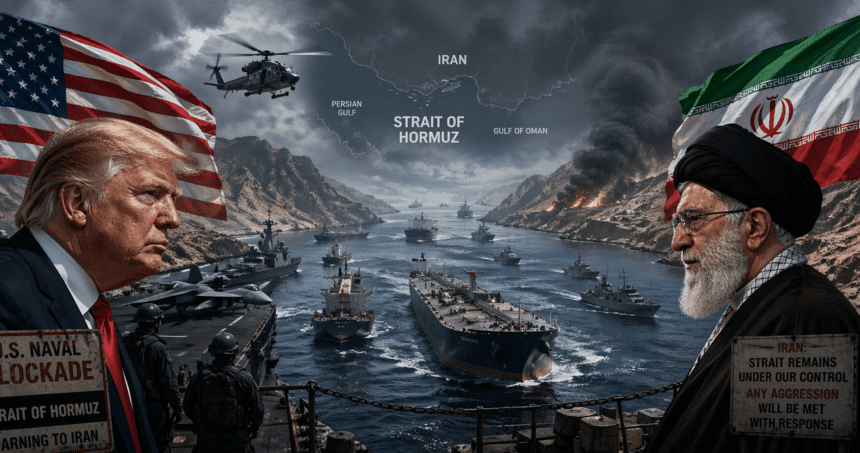
U.S. President Donald Trump has triggered global alarm after warning of a blockade around the strategically vital Strait of Hormuz, a move that could disrupt nearly one-fifth of the world’s oil supply and escalate tensions with Iran and major global powers, including China. The warning, issued in mid-April 2026 amid an ongoing U.S.-Iran conflict, marked one of the most aggressive shifts in Washington’s stance during the crisis.
The confrontation intensified after failed ceasefire negotiations in Islamabad, prompting Trump to announce a naval blockade beginning April 13 targeting ships entering or leaving Iranian ports. While early rhetoric suggested a broader attempt to control movement through the strait, U.S. military officials later clarified that the blockade would primarily focus on Iranian-linked shipping to avoid a wider maritime conflict.
Trump adopted a hardline tone in public statements and on social media, declaring that U.S. forces would intercept vessels and warning Tehran of severe consequences if it did not comply with American demands, including abandoning its nuclear program. “No more Mr. Nice Guy,” he reportedly said, signaling a shift from earlier diplomatic messaging to a more confrontational posture.
The rhetoric quickly translated into action. On April 19, U.S. naval forces intercepted and seized an Iranian-flagged cargo vessel accused of attempting to bypass the blockade. Trump said the ship was stopped after ignoring repeated warnings, with U.S. forces firing disabling shots and boarding the vessel. This marked the first direct enforcement of the blockade and raised fears of open naval confrontation.
The Strait of Hormuz, located between the Persian Gulf and the Gulf of Oman, is one of the world’s most critical energy corridors. Around 20% of global oil shipments pass through it, making any disruption immediately impactful on global markets. Following Trump’s actions, oil prices surged and financial markets showed volatility, reflecting concerns over supply shocks and prolonged instability.
Iran strongly rejected the U.S. move, calling the ship seizure “piracy” and warning of retaliation. Tehran insisted that the strait remained open under its control, even as its forces reportedly turned back or fired warning shots at vessels attempting to pass through contested waters. Iranian officials argued that any U.S. enforcement action violated ceasefire terms and escalated the conflict unnecessarily.
The crisis also drew in global powers. Trump publicly pressured China, one of the largest importers of Gulf oil, to take responsibility for securing the strait, warning that future diplomatic engagements could be affected if Beijing did not cooperate. However, China, along with Russia, resisted the U.S.-backed efforts at the United Nations, reflecting deep geopolitical divisions over the conflict.

At the same time, Trump’s messaging appeared to evolve over days. Initially suggesting a sweeping blockade of all traffic, his administration later narrowed the scope to Iranian ports, likely in response to international criticism and concerns from allies wary of being drawn into a broader war. European countries and NATO partners largely declined to participate in military operations, emphasizing the need for diplomatic resolution instead.
Adding a layer of public spectacle, the crisis spilled onto social media. Iranian officials and commentators mocked Trump’s statements online, with viral posts on platforms like Twitter (now X) joking that “this is not Facebook that you can block,” highlighting skepticism over the feasibility of controlling a global maritime route. The trolling reflected broader public sentiment in parts of the region, where Trump’s rhetoric was seen as exaggerated or unrealistic.
Meanwhile, analysts warned that even a partial blockade could have long-term consequences. Dozens of oil tankers became stranded, production slowed across Gulf states, and restoring normal shipping operations could take months or even years depending on diplomatic outcomes. As tensions remain high, planned peace talks, reportedly mediated by Pakistan, hang in the balance. Iran has signaled reluctance to participate, citing what it calls inconsistent U.S. demands and continued military pressure.
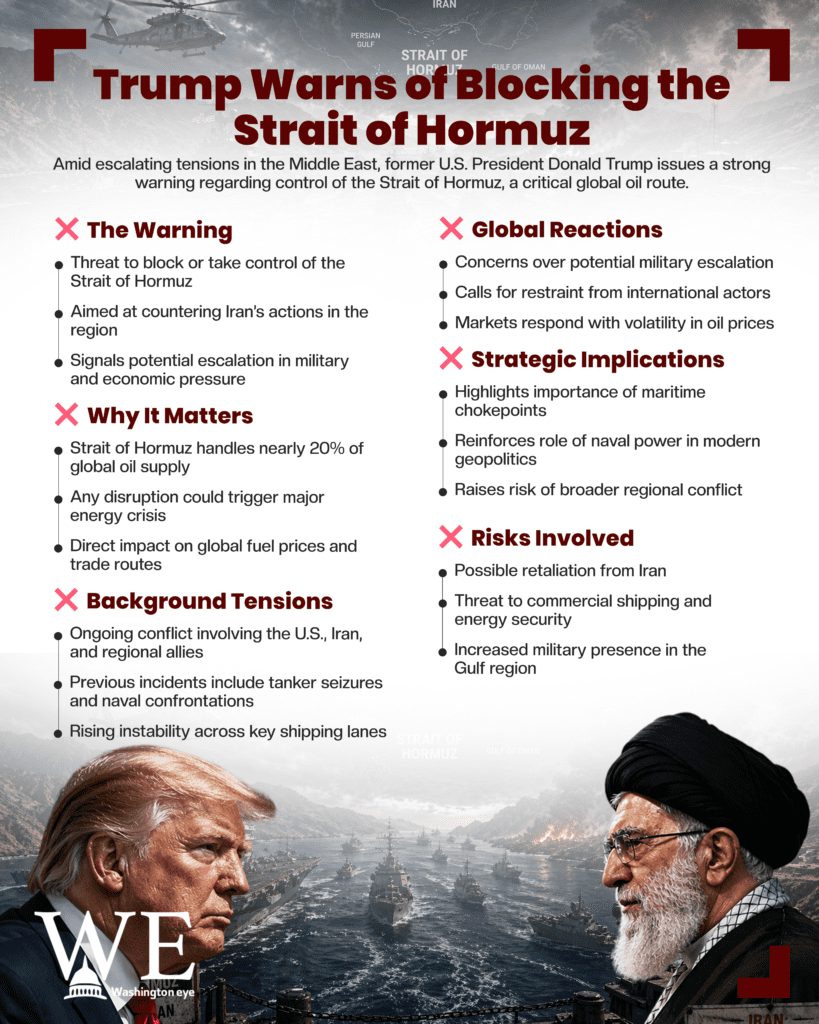
The situation in the Strait of Hormuz continues to evolve rapidly, with the risk of escalation still looming. For now, Trump’s warning to “block” the strait has moved beyond rhetoric into reality, reshaping global energy markets and intensifying one of the most volatile geopolitical flashpoints of 2026.