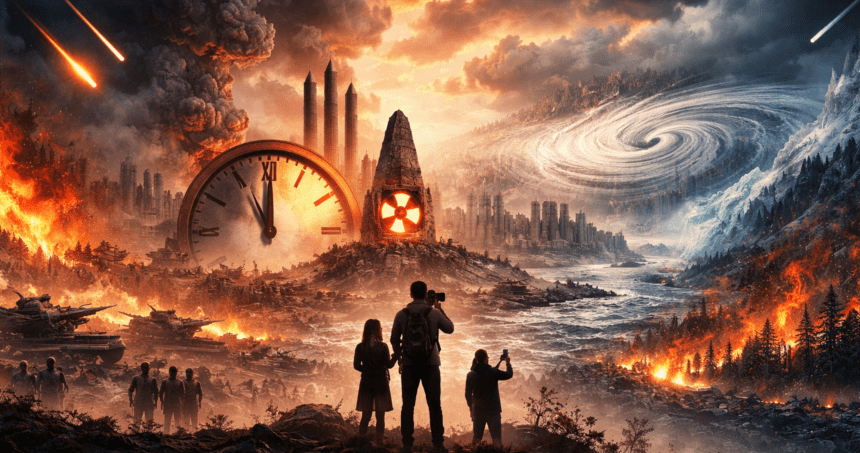
Concerns about whether the world is approaching a catastrophic turning point have resurfaced amid growing wars, climate crises, economic instability and rapid technological change. From conflicts in Eastern Europe and the Middle East to extreme weather events and nuclear tensions, analysts say the sense of global uncertainty has reached levels not seen since the Cold War. While experts emphasize that the “end of the world” is not imminent, many warn that humanity is facing a cluster of overlapping crises that could reshape the future of the planet.
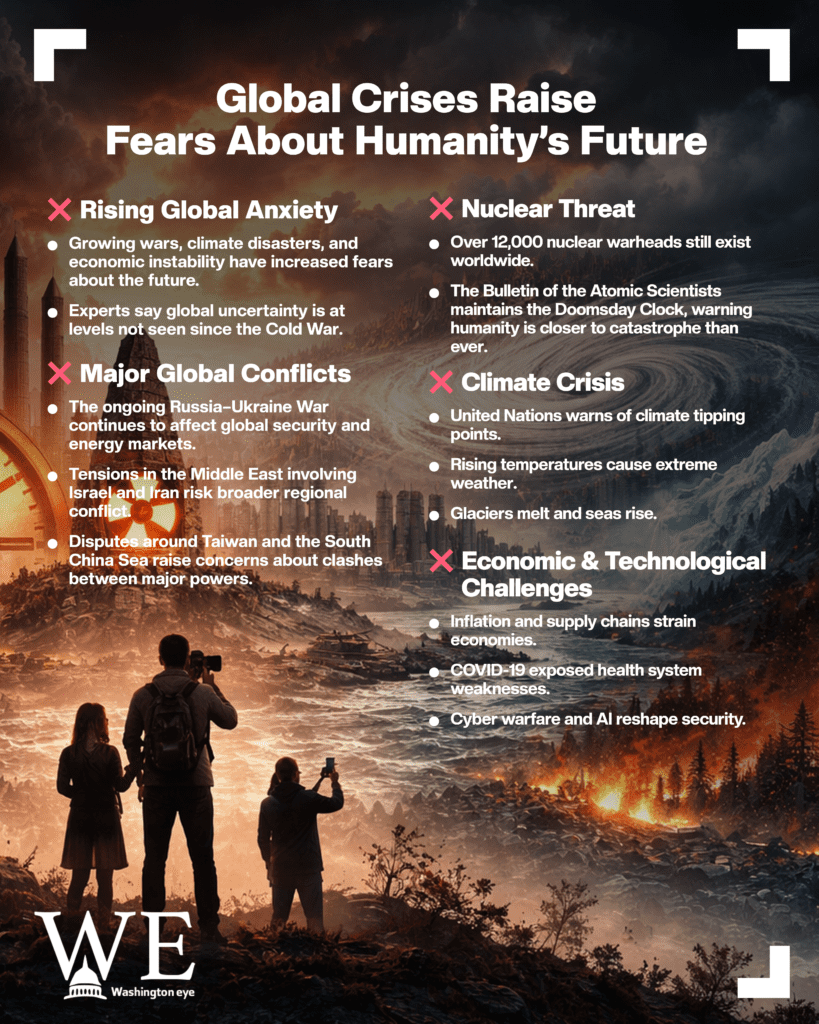
The debate has intensified in recent years as several major conflicts have erupted simultaneously across different regions. The war between Russia and Ukraine, which began in 2022, continues to strain global security and energy markets. In the Middle East, tensions involving Israel, Iran and regional militant groups have repeatedly threatened to escalate into broader confrontation. Meanwhile, disputes in Asia, particularly around Taiwan and the South China Sea, have raised fears of potential clashes between global powers such as the United States and China.
These geopolitical tensions are especially worrying because of the presence of nuclear weapons. According to international security analysts, more than 12,000 nuclear warheads still exist worldwide. Experts warn that even a limited nuclear exchange could trigger catastrophic humanitarian and environmental consequences. The symbolic “Doomsday Clock,” maintained by the Bulletin of the Atomic Scientists, has in recent years been set closer to midnight than ever before, reflecting rising fears of nuclear war, climate collapse and disruptive technologies.

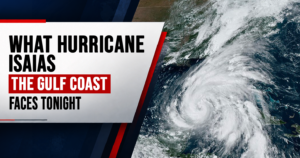
Climate change is another major factor driving concerns about the future of the planet. Scientists from the United Nations and the Intergovernmental Panel on Climate Change have warned that the Earth is approaching critical environmental tipping points. Rising global temperatures are fueling stronger hurricanes, prolonged droughts, melting glaciers and rising sea levels. In many parts of the world, extreme weather has already caused displacement, food insecurity and economic damage. Some climate researchers caution that if global warming exceeds key thresholds, ecosystems could collapse and billions of people may face severe consequences.
Beyond environmental and military risks, the world is also experiencing major economic and political shifts. Global inflation, supply chain disruptions and energy crises have placed pressure on governments and populations alike. The COVID-19 pandemic exposed vulnerabilities in health systems and international cooperation, while new threats such as cyber warfare and artificial intelligence raise additional questions about the future of global stability.
Another factor contributing to the perception that the world is nearing collapse is the rapid spread of information through social media. Dramatic headlines, viral videos and apocalyptic narratives often amplify public anxiety. Psychologists say humans are naturally drawn to worst-case scenarios, especially during periods of uncertainty. However, many historians argue that humanity has repeatedly survived major crises throughout history, including world wars, pandemics and economic depressions.
Some scholars emphasize that today’s global challenges are serious but not necessarily signs of the end of civilization. Instead, they argue that the current period may represent a transformation rather than a collapse. Advances in technology, international cooperation and scientific innovation have also brought solutions to many global problems. Renewable energy, medical breakthroughs and diplomatic initiatives continue to shape efforts to manage risks and prevent large-scale disasters.

At the same time, experts stress that ignoring current threats could have severe consequences. Climate scientists warn that decisive action is needed to limit global warming. Security analysts urge renewed diplomatic engagement to prevent military escalation. Economists highlight the importance of cooperation in stabilizing global markets and addressing inequality.
Public discourse about the “end of the world” is therefore less about a literal apocalypse and more about growing anxiety over the direction of humanity. In many ways, the current moment reflects a crossroads. The choices made by governments, institutions and societies in the coming decades will determine whether global challenges lead to conflict and instability or to new systems of cooperation and resilience.
While the world faces undeniable risks, history suggests that humanity has repeatedly adapted to crises through innovation, diplomacy and collective action. Whether the future becomes catastrophic or transformative may depend less on fate and more on how effectively global leaders and societies respond to the complex challenges of the modern era.