Yemen’s renewed strategic importance lies not only in the fighting within its borders, but also in its proximity to one of the world’s most consequential maritime passages. Developments around the Bab al Mandab Strait show how a domestic conflict can become intertwined with wider regional competition and disrupt commercial routes far beyond the Middle East. The lesson is not simply that shipping is vulnerable during war. It is that unresolved local conflicts can give regional actors new forms of leverage over international trade, energy flows, and diplomacy.
Recent fighting and territorial changes along Yemen’s Red Sea coast have intensified concern over access to the Bab al Mandab Strait, the narrow waterway connecting the Red Sea with the Gulf of Aden. The passage is central to ships travelling between the Mediterranean and the Indian Ocean through the Suez Canal. As a result, Yemen’s conflict is increasingly relevant not only to Yemeni parties and neighboring states, but also to importers, exporters, insurers, shipping firms, and governments dependent on predictable maritime trade.
A Local Conflict with Regional Reach
Yemen’s conflict began as a domestic political and military struggle, but it became progressively internationalized after the Houthi movement took control of Sana’a and Saudi Arabia led a military intervention in support of the internationally recognized Yemeni government. The conflict has since involved a complex range of domestic actors, regional governments, and external powers with differing security interests.
The Houthis, who control substantial areas in northern Yemen, are widely described by governments and international observers as aligned with Iran. Saudi Arabia, meanwhile, has long regarded the group’s military capabilities and cross border attacks as a direct threat to its security. Tehran and Riyadh have also maintained a broader strategic rivalry, despite periods of diplomatic engagement and attempts to reduce tensions. Reuters notes that this rivalry has persisted even after the China facilitated restoration of Saudi Iranian relations, reflecting the depth of distrust between the two states.
However, understanding Yemen only as a contest between Saudi Arabia and Iran would be incomplete. Yemeni actors possess their own political objectives, local support networks, economic interests, and grievances. The Houthis have framed their actions in terms of resistance to foreign intervention and solidarity with Palestinians, while Saudi Arabia and the internationally recognized government have portrayed their positions in terms of territorial security, state authority, and protection from attacks. These competing narratives shape both military decisions and negotiations.
The wider implication is that regional rivalry does not simply enter fragile states from outside. It often operates through existing political divisions and institutions. External support can strengthen local actors militarily, but it can also make political settlement more difficult by raising the stakes of compromise. In Yemen, the interests of domestic parties cannot be separated neatly from the calculations of larger regional powers, yet they also cannot be reduced to them.
The Bab al Mandab as Strategic Leverage
The strategic significance of Yemen is closely tied to geography. The Bab al Mandab Strait links the Red Sea to the Gulf of Aden, making it an essential route for commercial shipping moving between Europe, Asia, and the Middle East. Control of territory near the strait does not necessarily amount to control of the waterway itself, but it can create the capacity to threaten vessels, influence routing decisions, or raise the perceived risks associated with transit.
Recent reports indicate that Houthi advances along Yemen’s western coastline and around islands near the strait have increased anxiety about maritime security. Reuters reported in September that the group’s position along the coast could strengthen its ability to pressure shipping through the Bab al Mandab and complicate Saudi Arabia’s options. The group has stated that international navigation remains safe except for vessels it identifies as linked to particular adversaries, but even selective threats can affect the wider shipping market because operators must assess risk across entire routes rather than on a vessel-by-vessel basis.
This is an important distinction. Global trade does not require a complete closure of a maritime chokepoint to suffer disruption. Uncertainty alone can produce significant consequences. Shipping companies may reroute vessels, adjust schedules, pay higher insurance premiums, or impose surcharges on cargo. Longer voyages increase fuel consumption, delay deliveries, and reduce the availability of ships for other routes. These costs can be distributed across supply chains, affecting firms and consumers geographically far removed from the conflict.
Yemen therefore illustrates how relatively limited military actions can have disproportionately broad economic effects when they occur near critical infrastructure. A missile attack, a maritime warning, or an escalation near a shipping corridor may affect commercial behaviour even if the waterway remains formally open. The economic significance of such events is shaped as much by risk perception as by physical damage.
Energy Security and Route Dependence
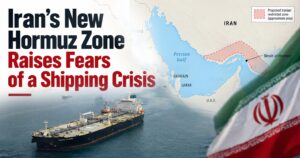
The interaction between the Bab al Mandab and the Strait of Hormuz further magnifies Yemen’s importance. Both are vital maritime passages for energy trade, especially oil and related products. When one route faces disruption, the value of alternatives rises. Yet when multiple chokepoints are threatened at the same time, the flexibility of exporters and importers declines sharply.
Reuters reported that Saudi Arabia has sought to use Red Sea export routes as part of efforts to reduce exposure to pressures around Hormuz. This makes safe passage through the Bab al Mandab particularly important for Saudi energy shipments travelling from Red Sea ports toward Asian markets. In this context, developments in Yemen can affect not only Yemen’s immediate neighbors, but also the broader resilience of global energy logistics.
The lesson for states and companies is that diversification is not merely about having multiple ports or pipelines. It also requires considering whether alternative routes depend on the same regional security environment. A route may appear to provide redundancy on a map, but it offers limited protection if it is exposed to a related conflict or influenced by the same geopolitical rivalry.
For energy importing states, this underscores the value of strategic reserves, diversified suppliers, and contingency planning. For exporters, it highlights the importance of protecting transport networks without assuming that naval capacity alone can resolve the political conditions that create insecurity. Military deterrence may reduce particular threats, but it cannot by itself settle the conflicts that make maritime pressure an attractive tool.

The Limits of Military Containment
The international response to threats in the Red Sea has often focused on maritime security, including naval patrols, defensive operations, and efforts to deter attacks on commercial vessels. Such measures can be important for protecting crews and maintaining navigation. Nevertheless, Yemen demonstrates the limits of treating maritime disruption as a purely technical or military problem.
If the underlying political conflict remains unresolved, military action may contain threats temporarily while leaving incentives for escalation intact. It can also intensify perceptions of external intervention, harden the positions of local actors, and widen the distance between conflict management and conflict resolution. The challenge is particularly acute when Yemen is connected to broader regional confrontations, because decisions made outside the country can quickly alter local military dynamics.
The United Nations has continued to call for de-escalation and a return to a Yemeni led political process. In June, UN Special Envoy Hans Grundberg stressed the need to preserve the gains of the 2022 truce, protect Yemen from wider regional escalation, and maintain space for an inclusive political settlement. This approach reflects a central policy reality: maritime security and political diplomacy must proceed together.
A durable settlement would need to address not only front lines and military deployments, but also governance, public sector salaries, humanitarian access, detainees, economic fragmentation, and the future distribution of political power. Without progress on these issues, ceasefires may remain fragile, and external developments may continue to reactivate local conflict.
What Yemen Reveals
Yemen reveals that regional rivalry can transform local instability into a source of international economic risk. It also shows that global trade depends on political stability in places that may receive limited attention until disruption occurs. Bab al Mandab is not simply a strategic point on a maritime map. It is a reminder that supply chains, energy markets, and regional security are closely connected.
The most durable response will require a balanced combination of protection for commercial navigation, diplomatic restraint among regional actors, and renewed support for an inclusive Yemeni political process. Treating Yemen only as a battlefield, or only as a shipping security problem, risks overlooking the connection between domestic peace and international economic stability.