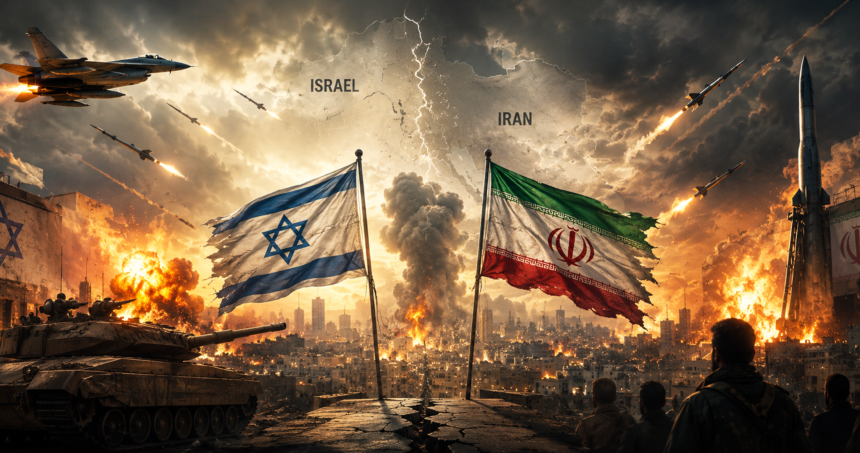
The latest exchange of attacks between Israel and Iran have raised concerns that a fragile ceasefire established earlier this year could be unraveling, threatening to reignite tensions across the Middle East.
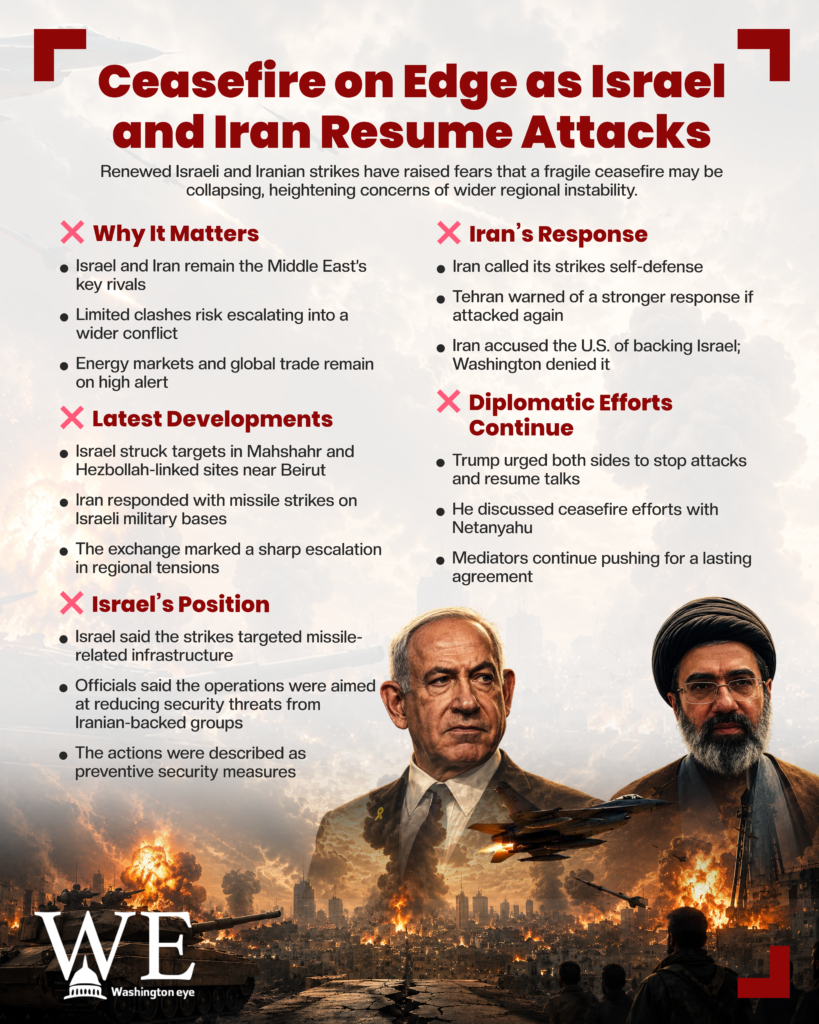
The escalation began after Israel launched strikes on facilities in Iran’s southwestern city of Mahshahr. Israeli officials said the targeted sites were involved in producing specialized materials used in the development of ballistic missiles. At the same time, Israeli forces carried out attacks against positions linked to the Iran-backed Hezbollah movement in Beirut’s southern suburbs, an area considered a stronghold of the Lebanese group.
Iran responded by launching strikes against two Israeli military bases, describing the operation as a defensive measure. Iranian officials warned that any further attacks would trigger a much stronger response, potentially extending beyond Israeli targets to include American interests across the region.
The renewed violence comes despite ongoing diplomatic efforts aimed at preventing a broader regional conflict. U.S. President Donald Trump publicly called on both sides to halt military operations and return to negotiations. Trump said he had spoken with Israeli Prime Minister Benjamin Netanyahu and expressed optimism that a more permanent ceasefire agreement could still be reached.
While neither Israel nor Iran has formally abandoned the ceasefire framework established in April, the latest attacks highlight how quickly tensions can flare despite diplomatic progress. Analysts warn that even limited exchanges risk triggering miscalculations that could draw additional regional actors into the conflict.

Iran has also accused the United States of bearing responsibility for Israel’s military actions. Iranian Foreign Ministry officials argued that Israel would not undertake major operations without coordination with Washington, a claim repeatedly rejected by U.S. officials.
The latest developments have heightened concerns across the region, particularly as conflicts in Lebanon, Gaza and the Red Sea continue to create instability. Security experts note that any prolonged confrontation between Israel and Iran could have consequences far beyond the battlefield, affecting global energy markets, shipping routes and international trade.
For now, diplomatic channels remain open, and mediators continue efforts to preserve the ceasefire. However, the exchange of strikes serves as a reminder of how fragile the current situation remains. With both sides issuing warnings and maintaining military readiness, the coming days could prove critical in determining whether the region moves toward renewed conflict or a return to negotiations.