
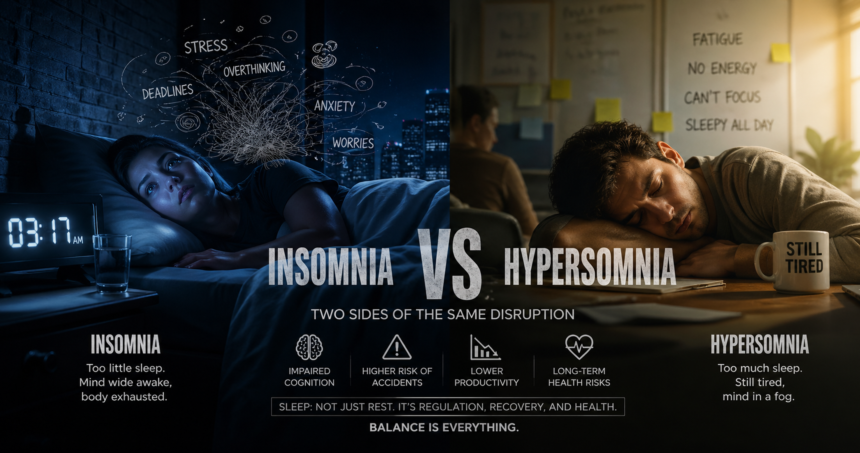
Sleep disorders are emerging as a silent global health concern, with experts increasingly warning about the contrasting yet equally disruptive conditions of insomnia and hypersomnia. While one deprives the body of rest and the other overwhelms it with excessive sleep, both disorders are now being linked to declining productivity, rising mental health challenges, and long-term medical risks across populations worldwide.
Insomnia, widely regarded as the most common sleep disorder, is defined by difficulty falling asleep or staying asleep. Hypersomnia, on the other hand, refers to excessive sleepiness, even after a full night’s rest. The distinction may appear simple, too little sleep versus too much, but medical experts say the underlying causes and impacts are far more complex.
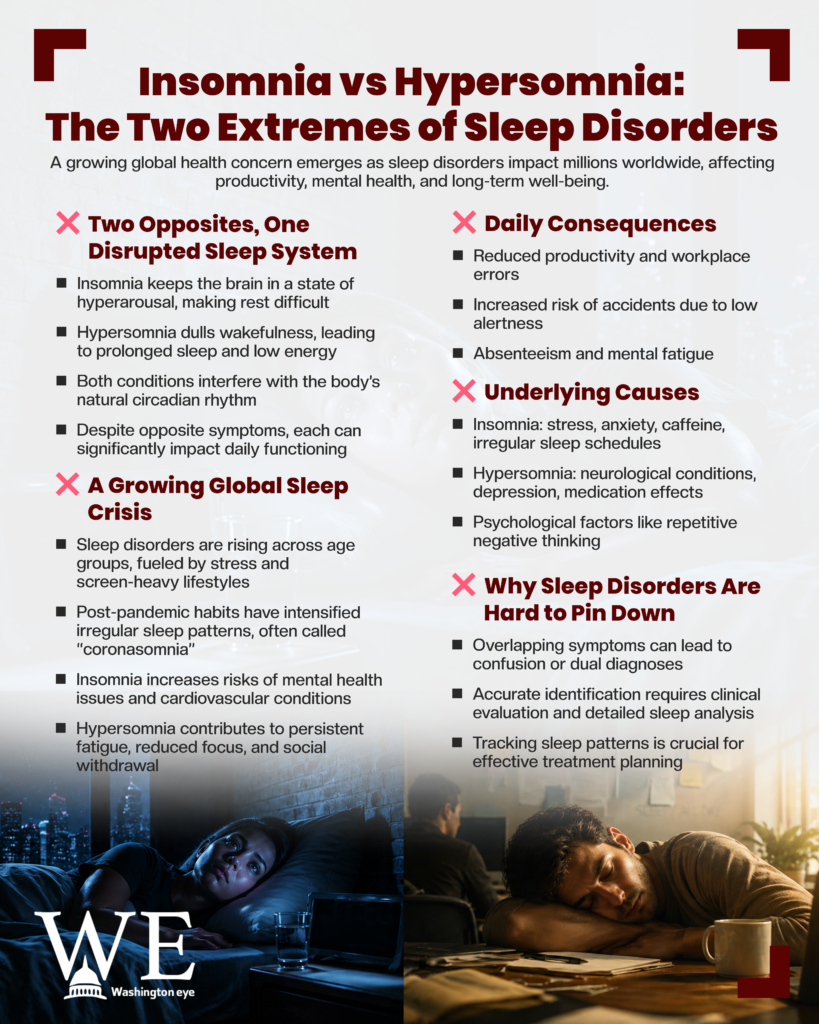
Recent clinical discussions and studies highlight that both disorders are not confined to any specific region; they affect people globally, cutting across age groups and professions. The rise in digital lifestyles, stress, and post-pandemic behavioral shifts has further intensified sleep disruptions, with new terms like “coronasomnia” reflecting this growing trend.

The key difference lies in the body’s sleep-wake regulation. Insomnia patients struggle to initiate or maintain sleep, often lying awake for hours. Hypersomnia patients, by contrast, experience uncontrollable daytime sleepiness and may sleep excessively, sometimes more than 11 hours, yet still feel fatigued. Medical researchers emphasize that hypersomnia is not simply “oversleeping,” but a neurological condition that disrupts alertness and daily functioning.

Both conditions, however, converge in their consequences. Studies show they significantly reduce quality of life, impair cognitive performance, and increase the risk of accidents, particularly due to reduced concentration and alertness. In professional environments, this translates into reduced productivity, absenteeism, and workplace errors, an issue increasingly flagged by employers and health authorities alike.
Health impacts are profound. Chronic insomnia has been linked to depression, hypertension, heart disease, and stroke, while hypersomnia is associated with headaches, dizziness, and social dysfunction. Scientists also warn that sleep deprivation, or dysregulated sleep, can trigger broader systemic issues affecting the brain, cardiovascular system, and metabolic health.
The causes behind these disorders are multifaceted. Insomnia is often driven by stress, anxiety, irregular sleep schedules, excessive caffeine intake, or underlying medical and psychiatric conditions. Hypersomnia, meanwhile, may stem from neurological disorders, depression (particularly atypical depression), medication side effects, or unknown biological mechanisms. Emerging research also links both conditions to repetitive negative thinking and mental health stressors, suggesting a deeper psychological component influencing sleep cycles.

Medical professionals stress that diagnosis is crucial, as both disorders can coexist or be misdiagnosed. Treatments vary depending on the cause. Insomnia is commonly treated with cognitive behavioral therapy for insomnia (CBT-I), sleep hygiene practices, and, in some cases, short-term medication. Hypersomnia treatment may include stimulant medications, behavioral adjustments, and addressing underlying conditions.
Public health experts now argue that sleep should be treated as a core pillar of health, alongside diet and exercise. The growing body of research indicates that both insufficient and excessive sleep are warning signs of deeper physiological or psychological imbalances. With increasing screen time, irregular work schedules, and rising stress levels, the modern lifestyle is believed to be a major driver of these disorders.
As awareness grows, healthcare systems are calling for early screening, better sleep education, and lifestyle interventions to prevent long-term complications. Experts emphasize that recognizing the difference between insomnia and hypersomnia is not just about sleep duration, it is about understanding how sleep quality, timing, and neurological regulation shape overall health.