Trump Declares ‘Victory’ Over Iran while asking Allies to Help Open Strait of Hormuz
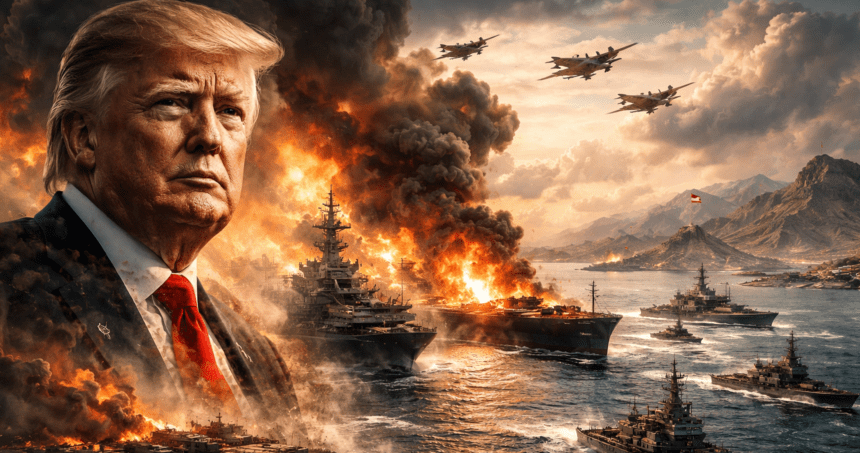
Former U.S. President Donald Trump has claimed a strategic “victory” over Iran amid escalating tensions in the Persian Gulf, even as Washington continues to call on international partners to help reopen the critical Strait of Hormuz. The statement, delivered during a campaign-style address in the United States this week, comes at a time when global shipping lanes remain under severe disruption following Iranian actions that have restricted maritime traffic through one of the world’s most vital energy corridors.
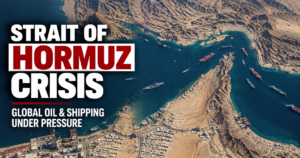
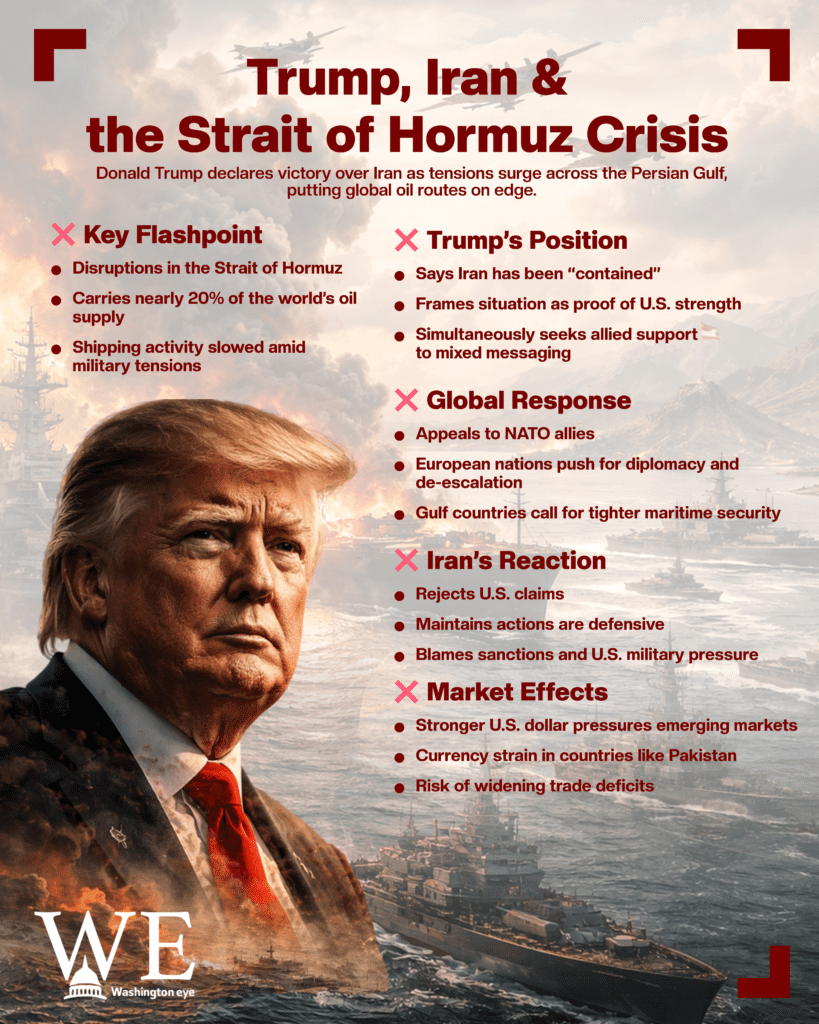
The Strait of Hormuz, located between Iran and Oman, carries nearly one-fifth of the world’s oil supply. Recent confrontations, including reported naval standoffs and suspected sabotage incidents, have effectively slowed or halted tanker movement, triggering alarm across global markets. While Trump framed the situation as a demonstration of U.S. strength and deterrence, critics argue that the crisis reflects ongoing instability and a lack of diplomatic resolution.
Speaking to supporters, Trump asserted that Iran had been “contained” and that U.S. pressure had forced Tehran into a defensive posture. However, in the same remarks, he acknowledged the need for multinational cooperation, urging NATO allies and regional powers to contribute naval resources to secure shipping routes. “We’ve done our part. Now others must step up,” he said, highlighting a contradiction between claims of victory and the continuing dependence on international assistance.
The economic implications of the standoff have been immediate and far-reaching. Oil prices surged sharply following reports of disruptions, with Brent crude crossing significant thresholds not seen in months. Countries heavily dependent on Gulf النفط, including major Asian economies such as China, India, and Japan, have expressed concern over supply stability. The spike in energy prices has also placed renewed pressure on inflation globally, affecting fuel, transportation, and food costs.
Currency markets have reacted with volatility as well. The strengthening of the U.S. dollar amid geopolitical uncertainty has placed additional strain on emerging economies, including Pakistan, where the rupee faces depreciation pressures due to higher import bills for energy. Analysts warn that prolonged instability in the Strait of Hormuz could deepen fiscal challenges for oil-importing nations, widening trade deficits and increasing reliance on external financing.
Iran, for its part, has rejected Trump’s characterization of events, stating that its actions are defensive and aimed at protecting national sovereignty. Iranian officials have repeatedly warned that any foreign military escalation in the region would be met with firm resistance. Tehran has also accused the United States of provoking tensions through sanctions and military deployments, arguing that the root cause of the crisis lies in Washington’s policies rather than Iranian aggression.
The international community remains divided on how to respond. European nations have called for de-escalation and diplomatic engagement, while Gulf states, particularly Saudi Arabia and the United Arab Emirates, have pushed for stronger security measures to ensure uninterrupted oil flows. Meanwhile, global institutions have warned that a prolonged disruption in the Strait could have cascading effects on international trade and economic recovery.
Experts note that the Strait of Hormuz is not merely a regional concern but a global economic lifeline. Any sustained closure or restriction could lead to supply shortages, price shocks, and increased geopolitical risk. The situation also raises broader questions about energy security and the vulnerability of global supply chains to regional conflicts. Public reaction to Trump’s remarks has been mixed. Supporters view his stance as a continuation of a hardline approach that prioritizes U.S. interests, while critics see it as contradictory and lacking a coherent long-term strategy.
Political analysts have pointed out that declaring victory while simultaneously seeking international assistance may undermine the credibility of U.S. leadership on the global stage. As tensions persist, diplomatic channels remain active, though progress has been limited. The coming weeks are likely to be critical in determining whether the crisis escalates further or moves toward resolution. For now, the Strait of Hormuz remains a focal point of global concern, symbolizing the fragile balance between geopolitical rivalry and economic interdependence.