
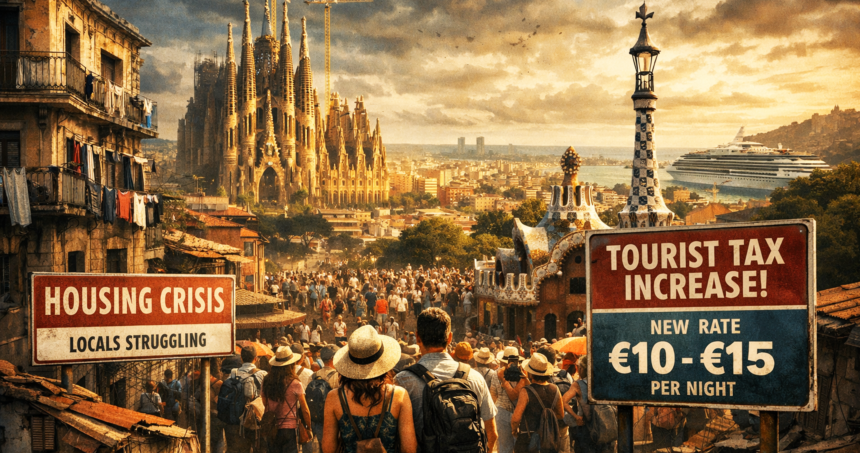
Barcelona, one of Europe’s most visited cities, has announced a major increase in its tourism tax, a move that could make visiting the Spanish destination significantly more expensive for travelers starting in April 2026. The decision, approved by lawmakers in the Catalan regional parliament in late February 2026, aims to address the growing challenges of overtourism and rising housing costs that have sparked concerns among local residents.
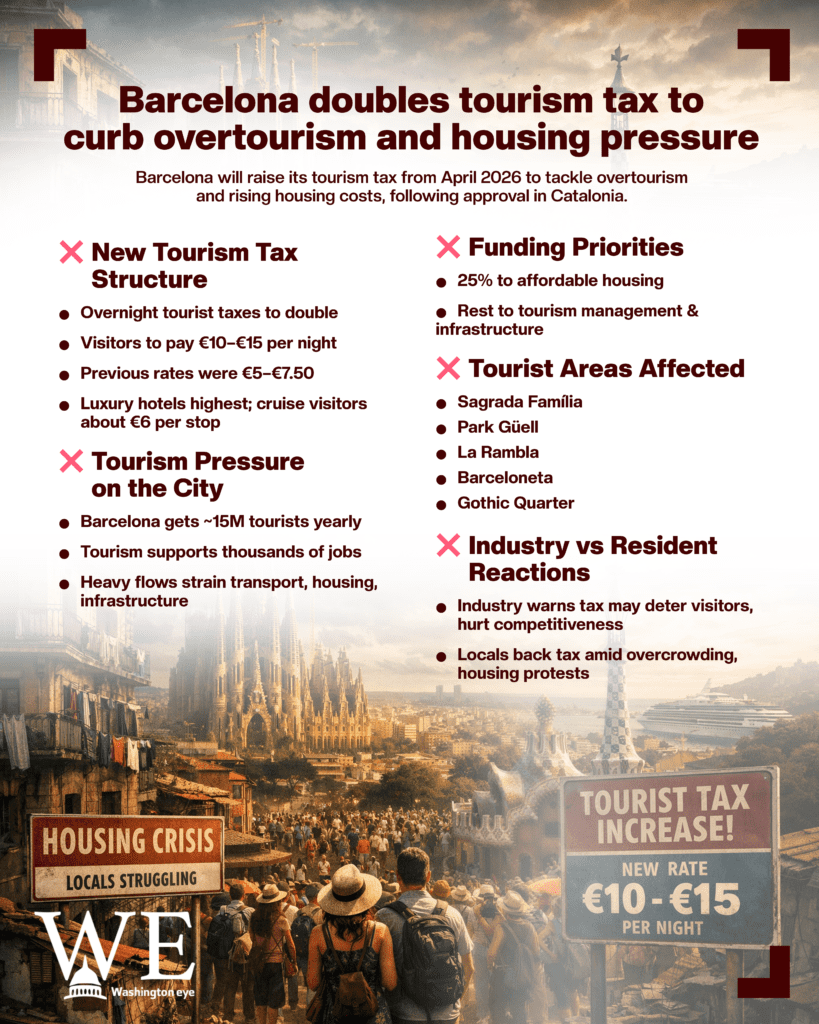
The new policy will double the existing tourist tax charged on overnight stays in hotels, holiday apartments, and other accommodation. Depending on the type and category of lodging, visitors may now pay between €10 and €15 per person per night in tourism taxes in Barcelona, among the highest visitor taxes in Europe. Previously, the maximum rate ranged roughly between €5 and €7.5 per night.
Authorities say the tax increase is part of a broader strategy to manage the impact of mass tourism in the city, which attracts millions of visitors every year. Barcelona receives around 15 million tourists annually, making tourism one of the most important sectors of its economy but also a major source of pressure on local infrastructure and housing.

Under the new system, the highest charges will apply to guests staying in luxury hotels or short-term holiday rentals. For example, tourists staying in five-star hotels may pay up to €15 per night in combined regional and municipal taxes. Guests renting vacation apartments may face a maximum tax of around €12.50 per night. Cruise passengers visiting the city will continue paying a smaller daily levy of about €6.

The Catalan government says the additional revenue will help address the growing housing crisis in Barcelona, where many residents have complained that the popularity of tourist rentals has driven up rent prices and reduced available housing. Around 25 percent of the funds raised through the increased tourism tax will be allocated to affordable housing policies, while the rest will support tourism management and infrastructure improvements.
Barcelona has been struggling with overtourism for several years. Popular neighborhoods and historic areas often experience overcrowding, especially during peak travel seasons. Iconic attractions such as the Sagrada Família basilica, Park Güell, the Gothic Quarter, La Rambla boulevard, and Barceloneta beach draw millions of visitors annually, placing heavy pressure on public transport, housing markets, and local services.
Local authorities believe the tax increase could help regulate visitor numbers while ensuring tourism contributes more directly to the city’s economy and urban development. The new policy also aligns with broader European trends, as several cities have introduced or increased tourism taxes to promote sustainable travel and manage tourist flows.

However, the decision has sparked mixed reactions. Tourism industry representatives have warned that higher taxes could discourage travelers and affect Barcelona’s competitiveness as a global travel destination. Hotel associations argue that sudden increases could hurt businesses that rely heavily on international visitors.
On the other hand, many residents support the move, saying it is necessary to reduce overcrowding and protect housing affordability. Anti-tourism protests have occasionally taken place in Barcelona in recent years, with locals demanding stronger regulations on short-term rentals and tourism development.
The tax increase comes alongside other policies aimed at managing tourism in the city. Barcelona has already limited new hotel licenses in some central districts and announced plans to ban short-term tourist apartment rentals by 2028, a measure intended to free up more housing for local residents.
Despite the concerns, tourism remains a crucial part of Barcelona’s economy, supporting thousands of jobs in hospitality, retail, and transportation. City officials say the challenge is not to reduce tourism entirely but to create a more balanced and sustainable system that benefits both visitors and residents.
As Barcelona prepares to implement the higher tourism tax in April 2026, travelers planning trips to the city may need to adjust their budgets slightly. While the added cost may seem small compared to overall travel expenses, the policy signals a significant shift in how popular tourist destinations are managing the impact of mass travel in the modern era.