
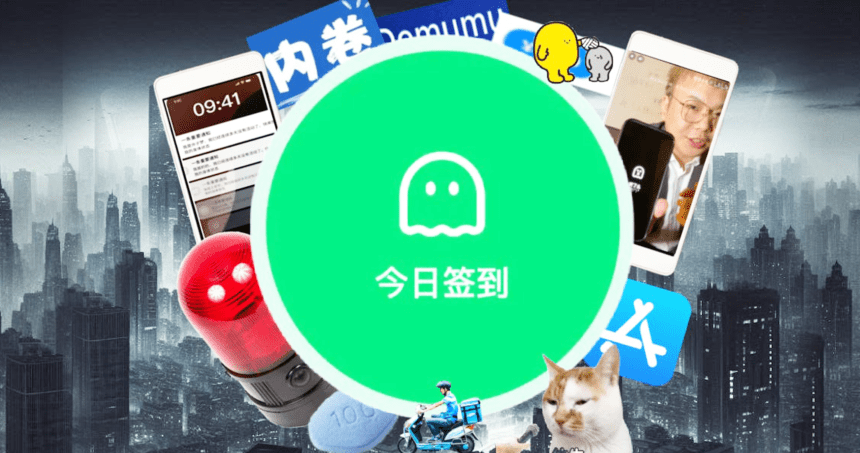
A Chinese-developed mobile application bluntly titled “Are You Dead?” has gone viral across social media platforms, sparking global debate about loneliness, digital isolation, and the changing nature of human interaction in an increasingly online world. The app, whose name alone has fueled curiosity and controversy, has climbed app-store rankings in several countries after being widely shared by young users on TikTok, X, Instagram, and Chinese platforms such as Weibo and Xiaohongshu.
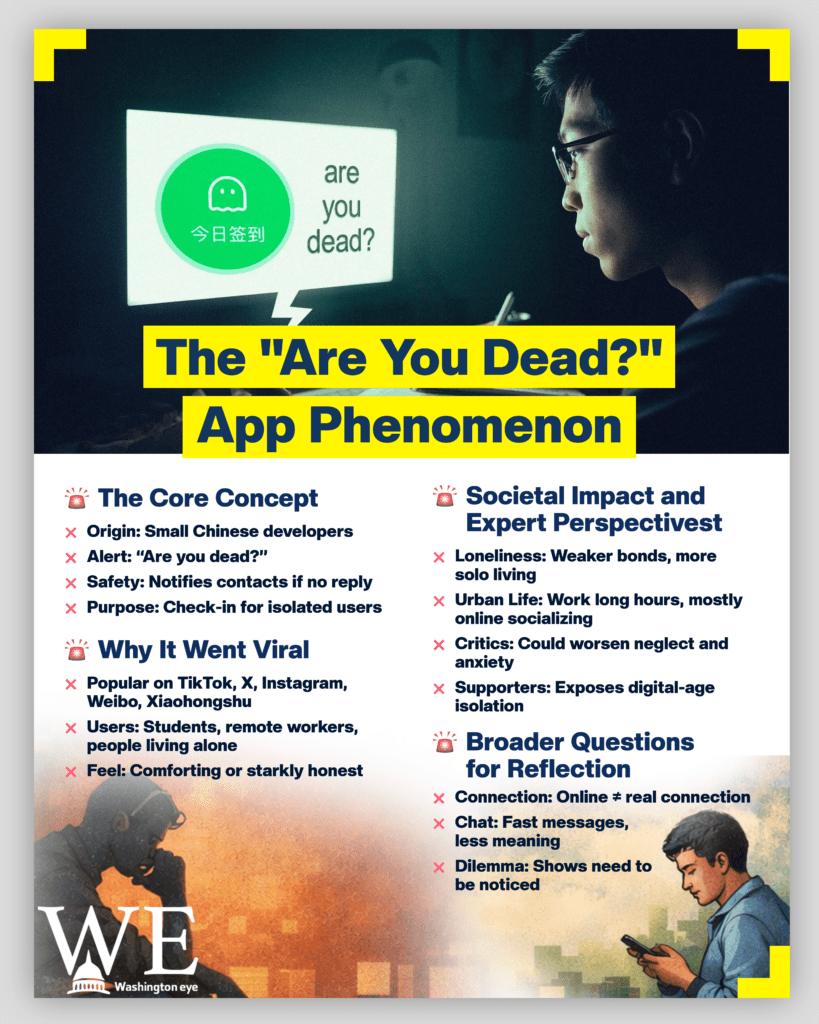
The premise of Are You Dead? is deceptively simple. Once installed, the app sends periodic notifications to users asking a stark question: “Are you dead?” If the user does not respond within a certain time frame, the app automatically alerts selected contacts, signaling prolonged inactivity. According to developers’ descriptions circulating online, the app is meant to act as a “digital check-in,” particularly for people living alone or struggling with isolation.
Reports suggest the app was created by a small Chinese tech startup or independent developers, though no major tech company has officially claimed ownership so far. This ambiguity has only added to the app’s mystique and viral appeal. While some users see it as a darkly humorous productivity and safety tool, others view it as a troubling reflection of modern loneliness.
The app’s rapid rise among young people has been especially notable. University students, freelancers, remote workers, and individuals living away from family have embraced the app as a way to feel “noticed,” even if by a machine. Many users online have described the notification as oddly comforting. “At least something checks if I exist,” one viral post read. Another user wrote, “It’s scary, but also honest. Some days, no one else asks.”

Experts say the app’s popularity highlights a deeper social dilemma. Sociologists and media scholars point to weakening family bonds, increased solo living, and reduced face-to-face interaction as key factors behind its appeal. In fast-paced urban societies, particularly in major Chinese cities but increasingly worldwide, young adults often live far from families, work long hours, and socialize primarily through screens.
Critics argue that the app normalizes emotional neglect rather than addressing it. “An app asking if you are alive should not replace human care,” said one media analyst, noting that digital tools are increasingly filling gaps left by shrinking family time and community interaction. Mental health advocates have also raised concerns that such apps may intensify anxiety or reinforce feelings of abandonment, especially for vulnerable users.
At the same time, supporters say the app reflects reality rather than creating it. They argue that Are You Dead? forces society to confront uncomfortable truths about isolation in the digital age. “The question isn’t why the app exists,” wrote one commentator, “but why so many people relate to it.”
The media world has played a major role in amplifying the trend. News outlets, influencers, and content creators have framed the app variously as a social experiment, a dark comedy, a safety innovation, or a symptom of societal failure. Short videos showing users reacting emotionally to the notification have garnered millions of views, turning a niche Chinese app into a global talking point within days.
Beyond the shock value, the app raises broader questions about life interaction in a hyper-connected yet emotionally distant era. As communication becomes faster and more digital, meaningful engagement often declines. Family gatherings shrink, neighborhood connections weaken, and conversations are replaced by notifications. In this context, an app bluntly asking if someone is alive becomes both ironic and revealing.
Whether Are You Dead? will sustain its popularity remains uncertain. Tech trends are often fleeting, but the discussion it has sparked appears more lasting. The app has become a symbol of a generation navigating fame, loneliness, and identity through screens, where being “online” does not always mean being connected.
As debates continue, one thing is clear: the viral success of Are You Dead? is less about technology and more about society’s silent struggles. In a world full of messages, likes, and alerts, the app’s unsettling question echoes a deeper concern, who is really checking on us, and why does it sometimes take an app to ask?