The royal ceremony at Windsor carries strategic significance as Britain welcomes Sultan Haitham bin Tarik while conflict threatens shipping through the Strait of Hormuz. King Charles III is scheduled to receive the Omani ruler on October 20, opening formal state engagements that place an established bilateral relationship within a regional crisis. For London and Muscat, the visit offers an opportunity to strengthen cooperation without obscuring the pressures surrounding Oman’s diplomatic position.
Beyond the Royal Welcome
The programme combines ceremonial recognition with political and commercial discussions. Following the Windsor reception, Sultan Haitham is scheduled to meet Prime Minister Andy Burnham and address business leaders in London. Oman’s Foreign Ministry describes the visit as an opportunity to expand strategic cooperation and investment, indicating that its objectives extend beyond immediate regional security concerns.
The diplomatic significance lies in bringing these agendas together. Britain is signalling support for a partner whose importance has increased during the conflict, while Oman gains a platform to explain its security concerns and economic priorities. However, ceremonial prominence should not be confused with a negotiated outcome. The practical value of the visit will depend on whether political reassurance produces sustained coordination.
Hormuz Gives Oman Strategic Weight
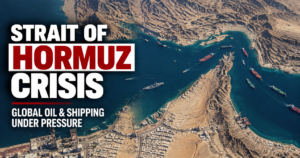
Oman’s position beside the Strait of Hormuz places it close to efforts to restore commercial shipping between the Persian Gulf and international markets. Reuters reports that Muscat has held discussions with Iran aimed at restoring maritime traffic, making its diplomatic access relevant alongside its geographical position.
For Britain, this creates an incentive to support mediation as well as maritime security. Oman can provide a channel for communication where direct engagement between adversaries remains difficult. Nevertheless, proximity and access do not amount to control. Muscat cannot independently guarantee safe passage, and any durable arrangement would require cooperation from the governments and forces affecting the waterway.
Neutrality Under Pressure
Oman has sought to maintain neutrality and facilitate a settlement despite being targeted by Iranian drones and missiles, according to Associated Press reporting. Reuters also reported that President Donald Trump threatened military action against Oman over its involvement in discussions concerning shipping through the strait. These pressures illustrate the exposure accompanying Muscat’s intermediary role.
Britain’s response includes a renewed commitment to Oman’s security. During a telephone conversation before the visit, Burnham and Sultan Haitham discussed developments in the strait and recent peace talks in Pakistan, while urging a resolution without further escalation.
The resulting challenge is to reinforce Oman’s security without narrowing its diplomatic room for manoeuvre. Closer British support could strengthen Muscat’s confidence, but its usefulness as an intermediary depends partly on retaining the ability to engage opposing parties.
Economic Cooperation Beyond the Crisis
The investment agenda provides another measure of the relationship’s ambitions. Oman’s official account emphasises broader economic cooperation, while the planned business address places commercial engagement alongside security consultations.
This combination could help prevent the partnership from becoming defined solely by conflict management. Yet prospective cooperation remains distinct from completed agreements, and its significance will depend on implementation rather than the visibility of the visit.
A Final Note
The visit highlights Oman’s overlapping roles as Britain’s partner and a regional intermediary. Its strongest potential contribution is not an immediate diplomatic breakthrough, but closer coordination that supports maritime stability while preserving the channels needed for negotiation.