
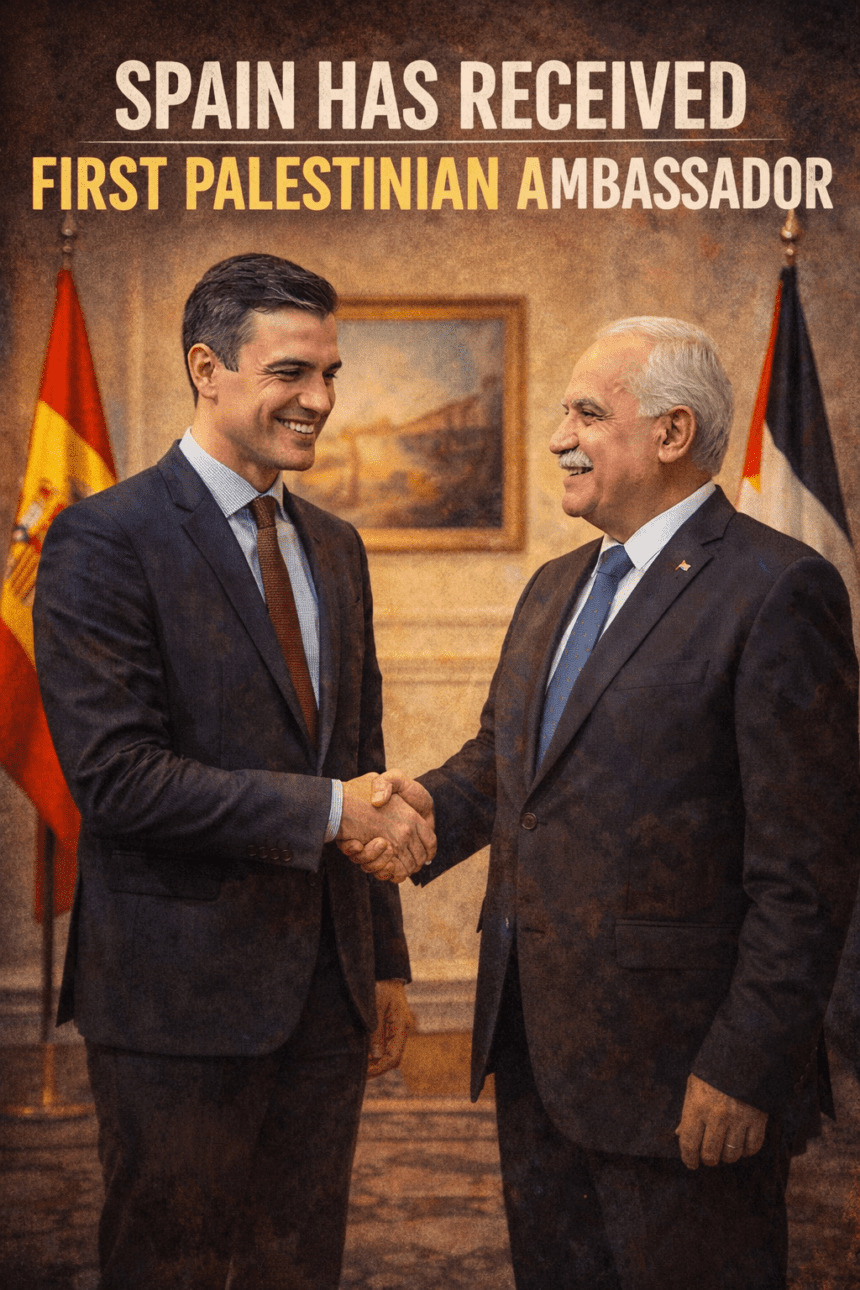
Spain formally received its first Palestinian ambassador in a landmark diplomatic step that underscores Madrid’s growing support for Palestinian statehood, months after the country officially recognized the State of Palestine. The development, which took place in Madrid, marks a historic upgrade in bilateral relations between Spain and Palestine and signals a broader shift in European diplomatic positioning on the long-running Middle East conflict. The ambassador, Husni Abdel Wahed, presented his credentials to Spain’s head of state, King Felipe VI, in a formal ceremony at the Royal Palace, a protocol gesture that confirms full diplomatic recognition and acceptance.
Spain had earlier taken the significant political decision to recognize Palestine as a sovereign state in 2024, aligning itself with countries such as Ireland and Norway, amid mounting international calls for a two-state solution to the Israel-Palestine conflict. The arrival and accreditation of Ambassador Abdel Wahed now operationalizes that recognition, allowing for full diplomatic engagement, policy coordination, and representation at the highest levels of government. Spanish officials described the move as a “commitment to peace, international law, and multilateral diplomacy,” emphasizing that recognizing Palestine is not directed against Israel but rather aimed at facilitating a negotiated resolution based on coexistence.
Prime Minister Pedro Sánchez has been among Europe’s most vocal leaders advocating for Palestinian recognition, repeatedly calling for an immediate ceasefire in Gaza and renewed peace talks. His government has argued that granting Palestine full diplomatic status helps “rebalance” negotiations and gives Palestinians equal footing in international forums. Spanish Foreign Ministry officials noted that the presence of an ambassador would strengthen bilateral cooperation in areas such as humanitarian aid, cultural exchange, and political dialogue.
Ambassador Abdel Wahed, speaking after the credential ceremony, described the moment as “historic and deeply symbolic,” stating that it reflects growing international acknowledgment of Palestinian rights and aspirations for statehood. He reaffirmed Palestine’s commitment to peace based on international resolutions and called on other European countries to follow Spain’s example. “This is not just a diplomatic step; it is a message that justice and recognition cannot be delayed indefinitely,” he said, adding that Spain’s stance offers hope to Palestinians amid ongoing conflict and humanitarian challenges.
Reactions to the development have been mixed across the international community. Palestinian officials and supporters welcomed the move as a significant diplomatic victory, with the Palestinian Authority praising Spain for its “principled and courageous decision.” Several European lawmakers and civil society groups also lauded Madrid’s leadership, urging other nations within the European Union to take similar steps toward recognition and engagement.
However, Israel strongly criticized Spain’s decision both to recognize Palestine and to receive its ambassador, arguing that such moves could undermine direct negotiations and embolden unilateral actions. Israeli officials reiterated that lasting peace can only be achieved through bilateral talks rather than international recognition initiatives. The diplomatic tension reflects broader divisions within Europe and beyond on how best to approach the conflict, particularly in the wake of renewed violence in Gaza and rising civilian casualties.
Analysts say Spain’s move could have ripple effects across Europe, where several countries have debated recognition but stopped short of formalizing it. The formal reception of a Palestinian ambassador may encourage others to reconsider their positions, especially as public opinion in many European states has shifted in favor of stronger support for Palestinian rights. At the same time, some governments remain cautious, citing concerns about regional stability and the potential impact on relations with Israel.
The establishment of full diplomatic ties between Spain and Palestine also opens new avenues for cooperation beyond politics. Cultural institutions, academic exchanges, and development programs are expected to expand, providing opportunities for deeper engagement between the two societies. Spanish NGOs and humanitarian organizations have already been active in Palestinian territories, and officials say diplomatic normalization will enhance coordination and effectiveness in aid delivery.
For Palestinians, the moment carries both symbolic and practical importance. Symbolically, it represents international validation of their long-standing quest for recognition as a sovereign state. Practically, it provides a stronger diplomatic platform to advocate for their interests globally. For Spain, the move reinforces its image as a proactive actor in international diplomacy and a supporter of multilateral solutions to global conflicts.
As Ambassador Abdel Wahed begins his tenure in Madrid, attention will turn to how Spain leverages this relationship in broader international efforts to revive peace negotiations. While the path to a comprehensive settlement remains uncertain, Spain’s decision to formally receive a Palestinian ambassador marks a notable milestone in the evolving diplomatic landscape surrounding one of the world’s most enduring conflicts.