
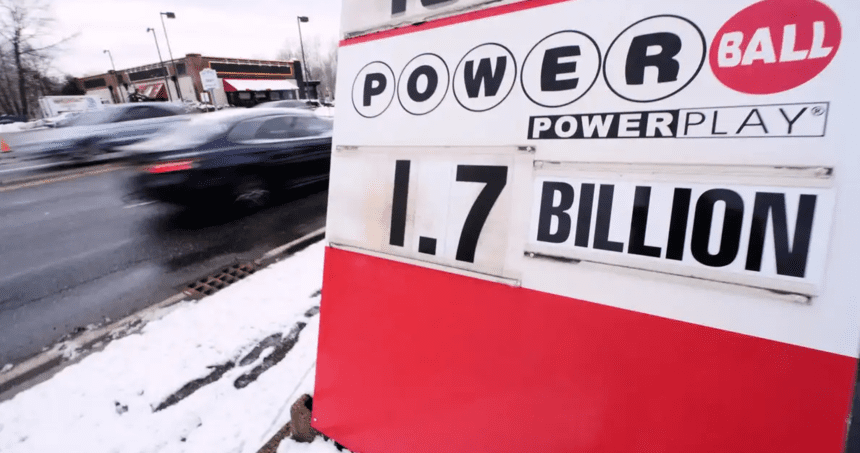
A single Powerball ticket sold in Arkansas hit a staggering $1.817 billion jackpot on Christmas Eve, marking one of the largest lottery prizes in U.S. history and delivering an extraordinary holiday surprise to one lucky player. The winning draw took place late on Wednesday, December 24, 2025, during the regular Powerball drawing, which occurs three times weekly. The jackpot had climbed for months through a long series of rollovers, capturing national attention as it approached record levels before a winning ticket was finally announced.
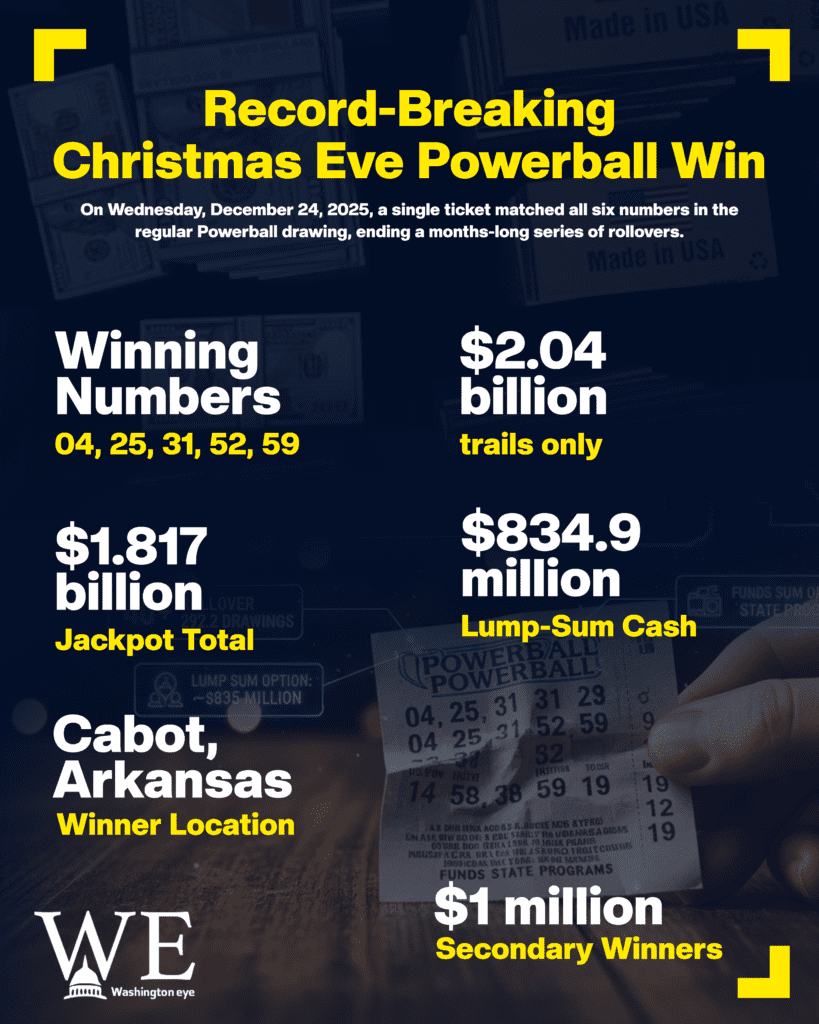
The winning numbers for the Christmas Eve draw were 04, 25, 31, 52, 59 and the Powerball 19, with a 2X multiplier attached, all of which matched the numbers on the lone ticket that eventually claimed the grand prize. That ticket was purchased at a gas station outside Little Rock, Arkansas, in the small community of Cabot, located roughly 26 miles northeast of the state capital.
Officials with the Multi-State Lottery Association (MUSL) and the Arkansas Scholarship Lottery confirmed the win Thursday morning but have not publicly identified the ticket holder. Under Arkansas law, winners of prizes $500,000 or more are afforded a period to remain anonymous, and many lottery winners choose to protect their privacy in the weeks following a big win.

At an estimated $1.817 billion, this Christmas Eve prize is the second-largest lottery jackpot ever won in the United States, trailing only the $2.04 billion Powerball jackpot won by a ticket sold in California in 2022. That historic prize remains the largest in U.S. lottery history.
The jackpot had been building for months as no ticket matched all six numbers in previous drawings. Organizers noted that the prize surged after more than 40 consecutive drawings without a jackpot winner, a period that saw ticket sales surge nationwide as players chased the ever-growing prize.
Powerball tickets are sold for $2 each, and the game is offered in 45 states, plus Washington, D.C., Puerto Rico and the U.S. Virgin Islands. The odds of winning the jackpot are about 1 in 292.2 million, reflecting the game’s structure and the massive prize pools that result when no winner is declared for several consecutive draws.
Lottery officials said the winner will have a choice between taking the prize as an annuity, paid in annual installments over 30 years with each payment increasing by approximately 5%, or a lump-sum cash option. The cash option for the $1.817 billion jackpot is estimated at about $834.9 million before taxes.

Beyond the grand prize, the Christmas Eve drawing also produced a number of secondary winners. In addition to the jackpot ticket in Arkansas, several players across the country matched five white balls to win $1 million prizes, while many more secured smaller payouts ranging from tens to hundreds of thousands of dollars. Lottery officials often highlight these smaller wins to underscore that, while the jackpot captures headlines, many participants benefit from other tiers of prizes.
Reaction to the historic win was swift on social media and local news outlets, with conversations ranging from congratulations for the mystery winner to reflections on the odds and the game’s enormous reach. Many commentators noted the poetic timing of such a life-changing event occurring on Christmas Eve, a night associated with surprises and gifts.
Experts in lottery economics have pointed out that large jackpots serve dual purposes: they fuel public excitement and sustain strong ticket sales, which in turn fund state programs such as education and public services. Powerball officials reiterated that every ticket purchased contributes to these broader public benefits, even when the jackpot winner remains unknown.
As of Christmas Day, lottery officials confirmed that the jackpot will reset to a starting level of $20 million for the next Powerball drawing, scheduled for Saturday, December 27, 2025. The holiday-weekend win is expected to be remembered as one of the most remarkable chapters in American lottery history.