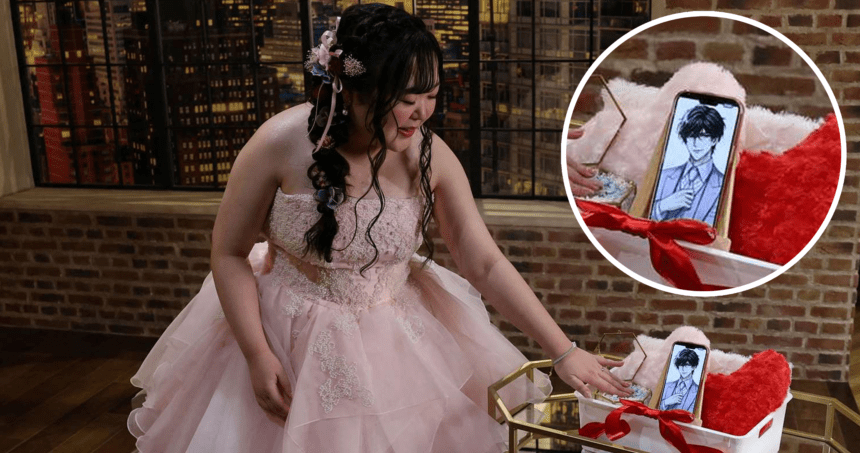
A Japanese woman’s symbolic marriage to an AI-generated partner has sparked global debate about intimacy, loneliness, and the growing emotional role of artificial intelligence in modern society. The story, which emerged from Japan in recent weeks, centers on Yurina Noguchi, a 32-year-old call center worker who held a wedding ceremony with a customized ChatGPT persona she created, named “Lune Klaus Verdure.” While the union has no legal standing, the event has drawn widespread attention for what it represents: a shifting boundary between technology and human relationships.
The ceremony reportedly took place in western Japan in October 2025 and was organized much like a traditional wedding. Noguchi wore formal attire, exchanged rings, and recited vows. The key difference, however, was the groom. Instead of a human partner, Noguchi interacted with her AI “husband” through a smartphone and augmented-reality smart glasses, which allowed her to visualize and communicate with the digital persona during the ceremony. In some moments, the wedding planner reportedly read the AI’s vows aloud, underscoring how technology mediated the entire experience.
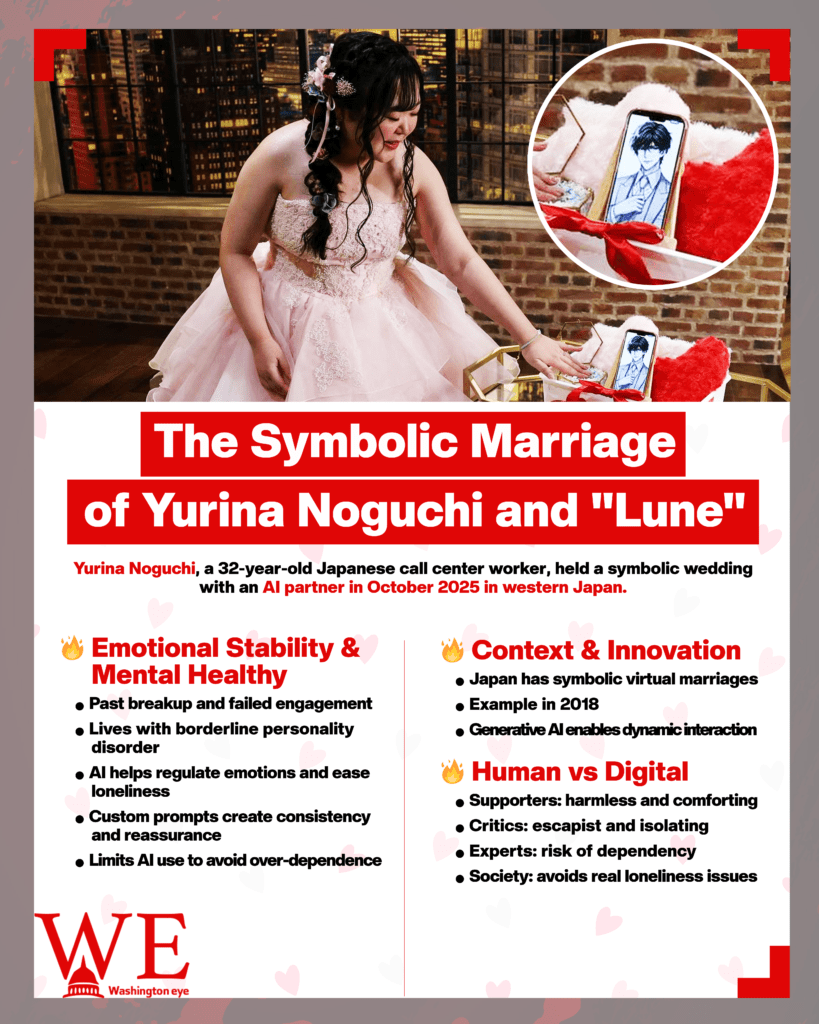
Noguchi has explained that her decision was deeply personal rather than performative. After a difficult breakup and a troubled engagement in the past, she said she struggled to find emotional stability in conventional relationships. Creating an AI companion, she noted, allowed her to feel supported without fear of sudden conflict or emotional harm. By carefully shaping the AI’s personality through prompts and boundaries, she felt the relationship offered consistency, reassurance, and calm; qualities she felt were missing from her previous experiences with human partners.
Mental health has also been part of the conversation. Noguchi has spoken openly about living with borderline personality disorder and said that interacting with the AI helped her regulate emotions and feel less alone. At the same time, she acknowledged the dangers of over-reliance on technology and said she intentionally limits how much time she spends with the AI each day, framing the relationship as a support mechanism rather than a total replacement for human contact.
Public reaction has been sharply divided. Supporters argue that the ceremony was a harmless expression of personal freedom, especially in a society where loneliness and social isolation are growing concerns. Critics, however, have dismissed the event as unsettling or escapist, warning that relationships with AI could encourage withdrawal from real-world social interaction and normalize avoidance of emotional complexity. Psychologists and technology ethicists have offered more nuanced views, noting that while AI companions can provide comfort, they also risk fostering dependency because they can be programmed to always agree, always comfort, and never challenge the user.
The event also fits into a broader cultural and technological context in Japan. The country has previously seen high-profile cases of people holding symbolic marriages with fictional or virtual characters, most notably the 2018 ceremony involving a virtual pop idol. What distinguishes Noguchi’s case is the use of generative AI, which allows for dynamic, conversational, and personalized interaction, making the “partner” feel more present and responsive than earlier static virtual characters.
Beyond Japan, the story has reignited a global discussion about where society is heading as artificial intelligence becomes more emotionally integrated into daily life. If companionship can be simulated on demand; patient, attentive, and endlessly available, some experts worry that societies may lose urgency in addressing the structural causes of loneliness, such as overwork, social fragmentation, and declining community spaces. Others argue that AI relationships will remain niche and symbolic, serving specific emotional needs rather than replacing human bonds.

Ultimately, Noguchi’s AI wedding is less about legality and more about symbolism. It reflects a world in which technology is no longer just a tool for productivity but a participant in emotional life. Whether such relationships remain rare personal choices or become more common expressions of modern intimacy, the story raises an uncomfortable but necessary question: in an age of intelligent machines, how do humans protect the value of imperfect, demanding, and deeply human connections?