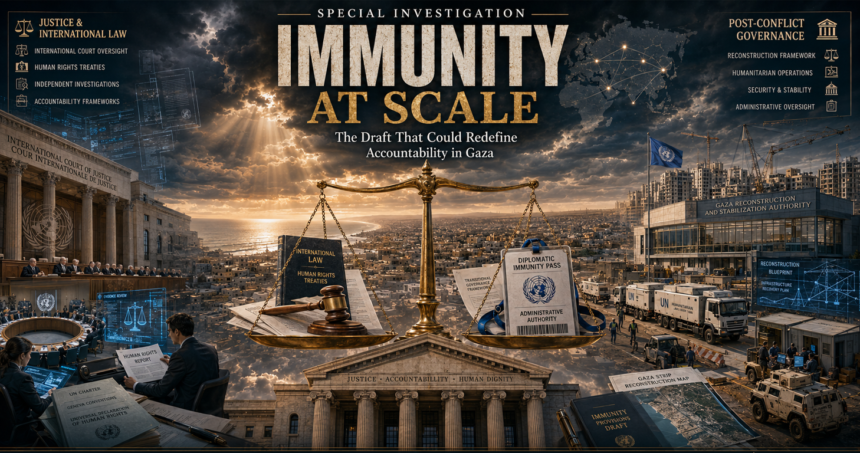
A leaked draft resolution shows that the Board of Peace intends to build a legal firewall around its members, contractors and accompanying forces operating in Gaza, raising immediate questions about oversight, sovereignty and human rights accountability. This article analyses the legal and political implications of the draft, the gaps it would create in existing accountability frameworks, and the regional consequences if such immunity were enacted.
What The Draft Would Do
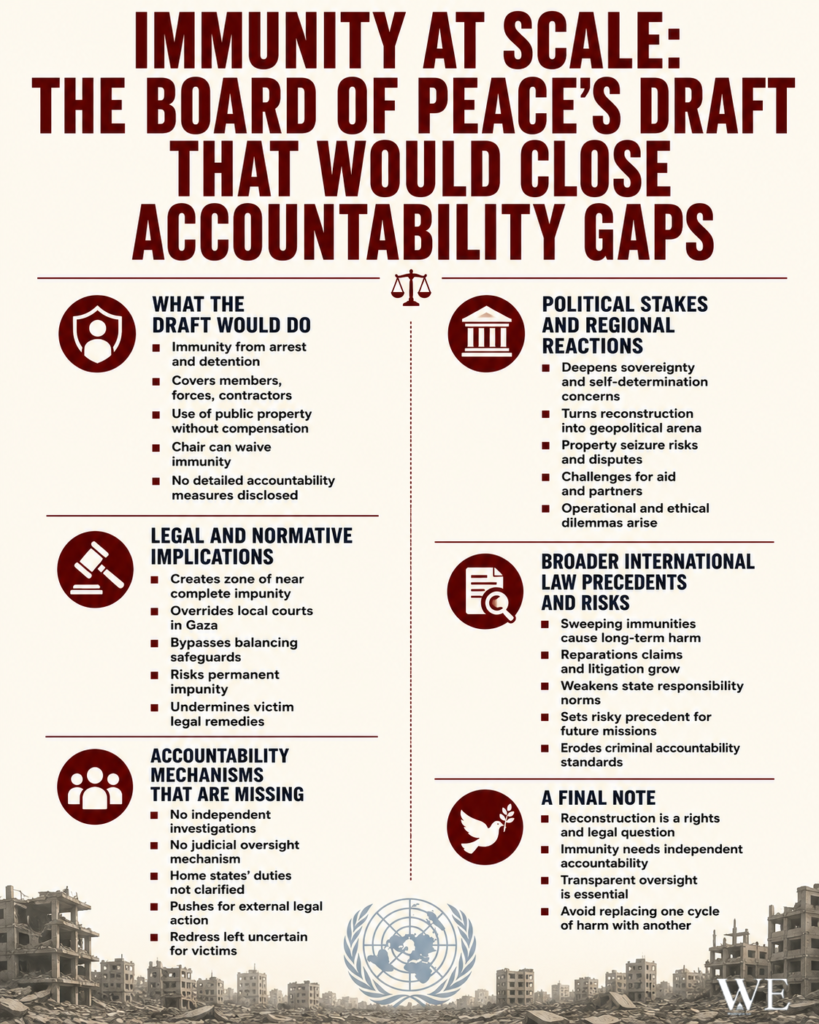
The four page document marked sensitive but unclassified would extend protection from arrest, detention and legal proceedings in Gaza to Board of Peace members, the office of the high representative, international military forces, contractors and named Palestinian technocrats, and would also allow the organisation to use public property without compensation. The draft further concentrates discretionary power by giving the board chair the power to waive an individual’s immunity with majority support from the board. Officials tied to the board have publicly denied that any operative immunity framework currently exists while declining to detail specific accountability measures.
Legal and Normative Implications
If implemented, the resolution would create an extraterritorial zone of near complete legal impunity inside Gaza, effectively superseding local courts and limiting remedies available to victims of unlawful acts committed by board personnel. International law recognises certain immunities for diplomats and peacekeeping personnel but those immunities are normally balanced by investigatory and prosecutorial mechanisms and by obligations on home states to prosecute serious crimes domestically; the draft appears to bypass those balancing safeguards. Legal scholars and human rights advocates warn that broad, enforceable immunity without parallel accountability risks eroding the distinction between temporary administrative protection and permanent impunity.
Political Stakes and Regional Reactions
Politically, the proposal would deepen grievances among Palestinians and regional actors who view external governance arrangements as infringements on sovereignty and self determination, while also transforming reconstruction and security management into arenas of geopolitical contestation. The authority to appropriate public property without compensation invites disputes over ownership, reconstruction priorities and long term land rights, and can inflame tensions that reconstruction aims to resolve. International partners and aid organisations that rely on impartial access and legal predictability could face operational and ethical dilemmas when asked to cooperate under an immunity regime that removes local legal recourse.
Accountability Mechanisms that are Missing
The draft’s text does not set out independent investigative or judicial procedures for allegations of abuse, nor does it clarify whether home states of personnel would accept responsibility to investigate and prosecute crimes committed under the Board of Peace mandate. Without such mechanisms, international human rights bodies, NGOs and domestic courts will likely seek alternative avenues for redress, including universal jurisdiction claims and targeted sanctions, which in turn would politicise legal accountability and complicate diplomatic relations.
Broader International Law Precedents and Risks
Comparative precedents show that sweeping immunities for external administrators often produce long term governance problems and litigation backlogs, as affected populations pursue reparations and states resist extraneous judicial scrutiny. Granting sweeping protections in a contested territory therefore risks creating a durable legal exception that weakens international norms on state responsibility and individual criminal accountability, with ripple effects for future post conflict administrations elsewhere.
A Final Note
The leaked draft reframes reconstruction and security provision as constitutional and legal questions not only of policy but of rights and redress. Any move toward codified immunity should be accompanied by clearly defined, independent accountability mechanisms and transparent oversight to avoid replacing one cycle of violence and grievance with another.