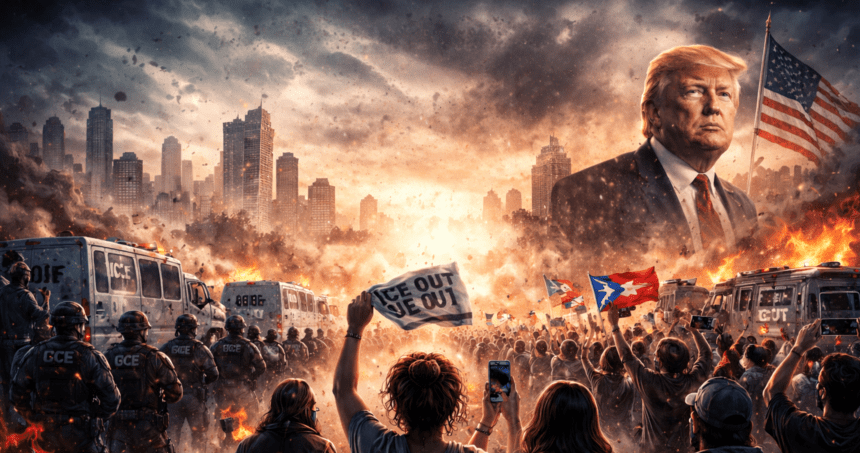
The slogan “ICE Out” has surged from protest signs into pop culture flashpoints in the United States, crystallizing opposition to President Donald Trump’s immigration crackdown and the role of U.S. Immigration and Customs Enforcement (ICE) in carrying it out. The phrase is now being used by activists, artists and some celebrities to demand that ICE be removed from communities, and, in its more sweeping versions, to argue the agency should be dismantled altogether.
ICE, a Homeland Security agency created in 2003 after the post-9/11 reorganization of federal law enforcement, is tasked with interior immigration enforcement and investigations. Under Trump’s current approach, critics say ICE tactics have become more aggressive and highly visible, fueling fear in immigrant neighborhoods and triggering a backlash that has widened beyond traditional immigrant-rights groups.
The immediate spark for the current “ICE Out” wave has been Minnesota, where a large-scale enforcement push known as Operation Metro Surge began in early December and quickly became a national lightning rod. The operation’s heavy federal presence and street-level tactics set off protests and legal and political challenges by local leaders, according to Reuters. The controversy deepened after two U.S. citizens, Renée Good and Alex Pretti, were killed in officer-involved shootings linked to federal immigration enforcement activity, igniting renewed calls for investigations and accountability.
On February 4, the Trump administration announced a partial drawdown of 700 immigration personnel from Minnesota, while leaving roughly 2,000 in place, in what it framed as a response to increased cooperation from local law enforcement. Minnesota’s Democratic leaders said the reduction was not enough, arguing the surge has disrupted communities and undermined trust in authorities.
As the political fight intensified, “ICE Out” also moved into entertainment venues, most visibly around major live events watched by millions. At Super Bowl LX on February 8 at Levi’s Stadium in Santa Clara, California, activists with a coalition calling itself Contra-ICE distributed tens of thousands of “ICE OUT” rally towels to fans approaching the stadium, urging them to raise the towels during the game as a sign of protest. The towels included political artwork by cartoonist Lalo Alcaraz, and organizers framed the stunt as a way to pierce the “corporate veneer” of the Super Bowl and put immigration enforcement under public scrutiny.
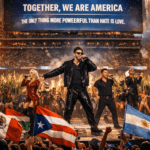
Inside the stadium, the protest visuals appeared mixed, with reports that more Puerto Rican flags were seen than raised towels during the halftime show. Still, the demonstration underscored how the movement is trying to blend street protest with high-visibility cultural moments, especially as some artists use award stages and red carpets to amplify similar messages.
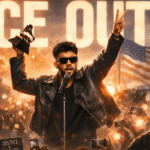
Bad Bunny, the Super Bowl halftime headliner, did not directly mention ICE during his performance, but highlighted unity and diversity through imagery and messaging, including “TOGETHER, WE ARE AMERICA” and “THE ONLY THING MORE POWERFUL THAN HATE IS LOVE,” according to Business Insider. The outlet also reported that, at the Grammys the week prior, he referenced “ICE out” while dedicating remarks to people who leave their homelands to pursue dreams, a moment activists have pointed to as evidence that “ICE Out” has entered mainstream vocabulary.

The celebrity dimension has grown beyond performances. The Guardian reported that anti-ICE pin badges have become a prominent red-carpet accessory, while the Los Angeles Times described entertainers publicly condemning ICE following the Minnesota shootings, including social posts urging followers to reject the agency. Supporters of “ICE Out” argue that celebrity attention helps keep pressure on Washington and forces wider audiences to confront the human consequences of enforcement. Critics counter that policing and immigration policy are matters of law and security, and that slogans oversimplify complex issues around borders, deportations and public safety.

For Trump and his allies, the political bet is that forceful interior enforcement energizes supporters who want tougher action on undocumented immigration. The White House has publicly celebrated Operation Metro Surge’s removals and arrests as a public-safety success, while opponents argue the operation has gone too far and demands independent scrutiny of the shootings and alleged misconduct. With court challenges, protests and cultural blowback mounting, “ICE Out vs Trump” is shaping up as both a policy fight and a symbolic battle over whose vision of America dominates the national stage.