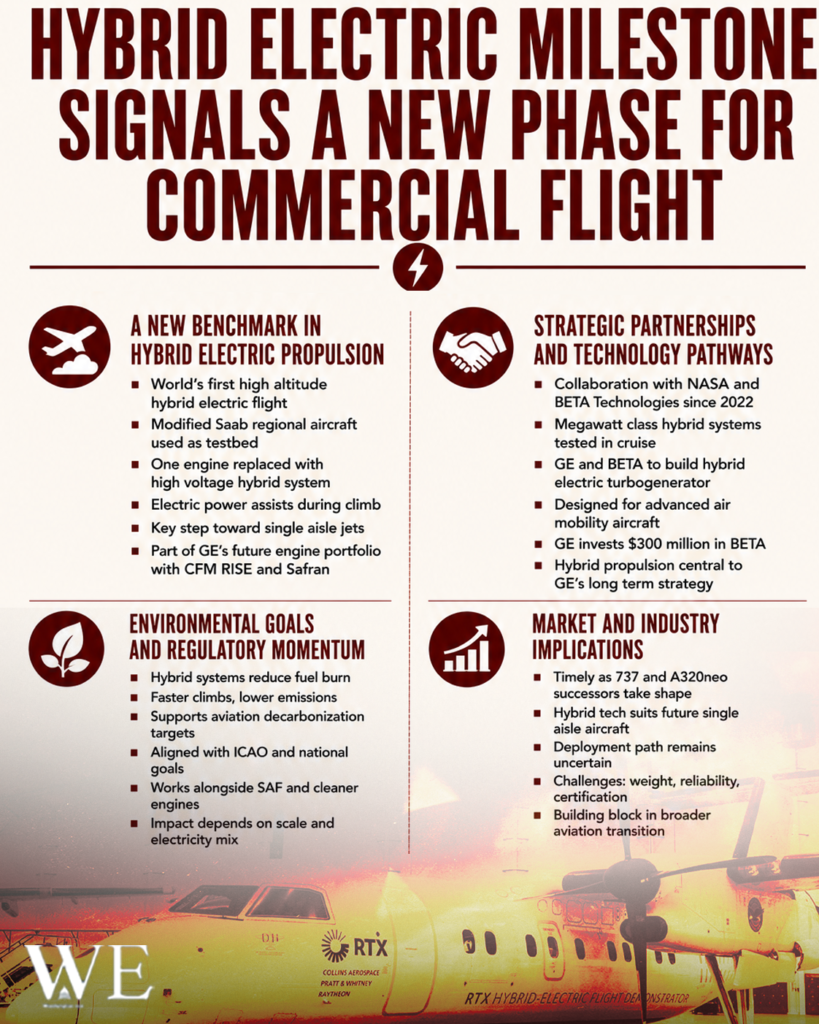
GE Aerospace’s latest hybrid electric flight test marks a significant technical and strategic step toward lower emission aviation, with implications that stretch well beyond a single demonstration at Farnborough.
A New Benchmark in Hybrid Electric Propulsion
GE Aerospace reports that it has completed what it describes as the world’s first high altitude flight assisted by a hybrid electric propulsion system, using a modified Saab regional aircraft as a flying laboratory. The test involved replacing one conventional engine with a high voltage hybrid system to provide additional electric power during climb, a configuration intended to show how electric assistance can work alongside existing turbine technology.
The company frames this achievement as part of a broader portfolio of future engine technologies, including integrated hybrid electric systems and new architectures being developed with partners such as Safran through the CFM RISE program. From an engineering standpoint, proving performance at higher altitudes is crucial because it brings hybrid concepts closer to the operating environment of single aisle jets that dominate global short and medium haul networks.
Strategic Partnerships and Technology Pathways
The flight campaign builds on a multiyear collaboration between GE Aerospace, NASA, and electric aviation company BETA Technologies, which have jointly tested megawatt class hybrid systems in simulated cruise conditions since 2022. In a separate strategic agreement, GE Aerospace and BETA have committed to develop a hybrid electric turbogenerator for advanced air mobility aircraft, arguing that such systems can extend range, increase payload, and improve speed compared with fully electric designs in the same segment.
GE has also invested three hundred million dollars in BETA Technologies, signaling that hybrid and distributed propulsion are central to its long term portfolio rather than peripheral experimental projects. These investments suggest that hybrid electric architectures may first appear in regional, cargo, or advanced air mobility platforms, creating a testbed that can gradually inform future narrowbody commercial designs.
Environmental Goals and Regulatory Momentum
Proponents of hybrid propulsion argue that combining traditional turbine engines with electric assistance can support faster climbs to optimal cruise levels and reduce overall fuel burn, contributing to sector wide emission reduction targets. Engine makers face increasing pressure from airlines, regulators, and investors to align new products with decarbonization roadmaps set by bodies such as the International Civil Aviation Organization and national authorities, which seek substantial cuts in aviation related emissions over the coming decades.
Hybrid systems complement other measures such as sustainable aviation fuels and cleaner core engine designs, offering a diversified approach to meeting efficiency and climate objectives. However, the ultimate environmental impact will depend on how rapidly these technologies move from demonstration to commercial service, and on the electricity mix and infrastructure that supports their operation.
Market and Industry Implications
The timing of GE Aerospace’s announcement at Farnborough is notable because major airframe manufacturers are already studying successors to workhorse families like the Boeing 737 and Airbus A320neo, which together anchor large parts of global fleets. Demonstrated hybrid capability at relevant altitudes strengthens the case that future single aisle platforms may integrate electric assistance rather than rely solely on incremental turbine improvements.
At the same time, the path to commercial deployment remains uncertain, given questions about system weight, reliability, certification standards, and airline business models. Hybrid electric propulsion is therefore best seen as a building block in a broader transition, influencing investment decisions across engine makers, airframers, and advanced air mobility firms that must balance innovation with cost and risk.
A Final Note
GE Aerospace’s hybrid electric flight marks a notable technical advance and reinforces the strategic importance of electrification in aviation, yet it remains an early step on a long timeline toward widespread commercial use. Observers will watch closely how quickly these experimental systems translate into certified products and whether they can deliver the promised efficiency and emission gains at scale