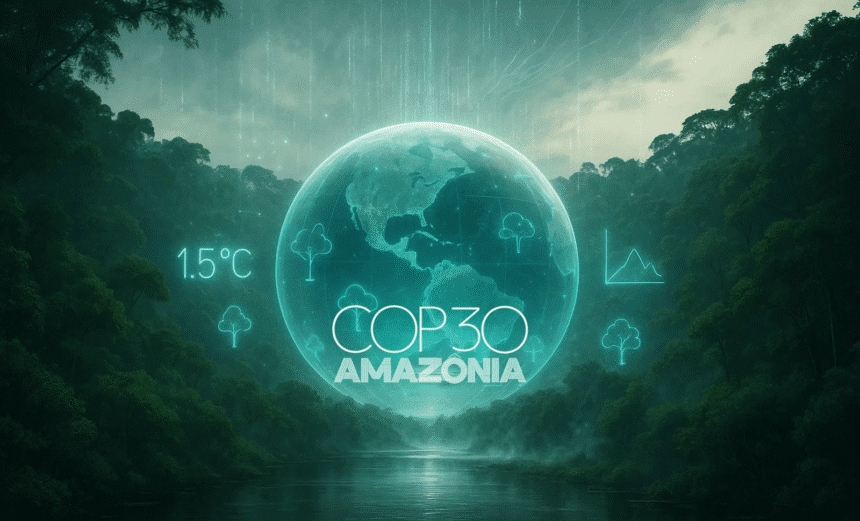
The 30th United Nations Climate Change Conference (COP30) opened today in the Amazonian city of Belém, marking a historic moment as world leaders gather in the heart of the world’s largest rainforest to confront what scientists call the “make-or-break decade” for the planet. Running from November 10 to November 22, 2025, the summit arrives at a time when global temperatures have already risen 1.2°C above pre-industrial levels, with projections warning that the critical 1.5°C threshold could be crossed by early 2030s.
The decision to host the conference in Brazil underscores both the urgency and symbolism of protecting the Amazon, a region that has lost nearly 17% of its forest cover and, in some areas, is now emitting more carbon than it absorbs. Brazilian President Luiz Inácio Lula da Silva emphasized during the opening ceremony that holding COP30 in the Amazon sends a message to the world that safeguarding climate stability begins with protecting Earth’s natural lungs.
Delegations from more than 190 countries, including the United States, China, India, the European Union, Pacific Island states, and African Union members, have arrived to negotiate what many hope will be the most transformative climate accord since the Paris Agreement. This year also marks the largest participation of Indigenous leaders in COP history, with over 300 Amazonian communities represented in Belém. Their presence highlights the critical role Indigenous stewardship plays in climate resilience, forest conservation, and sustainable land management.
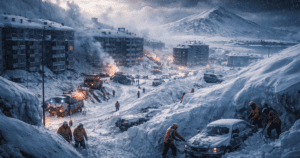
The urgency of this summit is driven by a series of devastating climate disasters across 2024 and 2025. Europe, India, and the Middle East faced heatwaves that crossed 50°C in multiple regions; Brazil, Pakistan, and Kenya experienced floods that displaced more than 10 million people combined; and Canada and Greece witnessed wildfires that destroyed millions of hectares. Cyclone damage across the Pacific reached an estimated $45 billion in losses. According to recent IPCC data, climate-induced disasters could lead to an economic loss equivalent to 18% of global GDP by 2050 if current emission trends continue.
Central to COP30’s agenda is the global push to update Nationally Determined Contributions (NDCs) and realign commitments with the 1.5°C climate pathway. The European Union and Canada are expected to announce new 2035 emissions targets, while the United States and China face growing pressure to accelerate fossil fuel phase-outs. India is negotiating for increased access to green technology, while African nations continue to advocate for long-delayed adaptation financing. Small Island Developing States (SIDS), some of the world’s most climate-vulnerable regions, are calling for immediate operationalization of a Loss-and-Damage fund to support communities already facing rising seas and extreme weather.
Brazil has introduced a major proposal at this year’s conference: the creation of an international Amazon Restoration Fund worth $10 billion, aimed at reversing deforestation trends and supporting sustainable livelihoods for forest-dependent populations. This proposal comes as global renewable energy investments reached $1.8 trillion in 2024, though experts insist the figure needs to at least double to keep warming within safe limits. The conference is also expected to push discussions on methane reduction, carbon markets, nature-based solutions, and new systems for transparent climate accountability.
The location of COP30 within the Amazon forest is intended to serve as both inspiration and warning. Scientists recently noted signs of ecosystem stress indicating that parts of the Amazon may be approaching a “tipping point,” after which the forest could shift toward a dryer, savannah-like state. Such a shift would have irreversible consequences for global climate stability. UN Secretary-General António Guterres, addressing delegates during the opening plenary, stated, “Humanity is running out of time. COP30 must deliver the breakthroughs that past conferences only promised.”
Expectations for COP30 remain high. Success could mean stronger global commitments to phasing out fossil fuels, new financial mechanisms for adaptation, and a significant step toward restoring the Amazon and other critical ecosystems. Failure, however, risks accelerating the climate crisis toward thresholds beyond human control. As negotiations begin, the world watches Belém, a city once at the edge of the rainforest now becoming the center of global climate diplomacy, hoping COP30 will not only ignite environmental action but also reclaim the future of a warming planet.