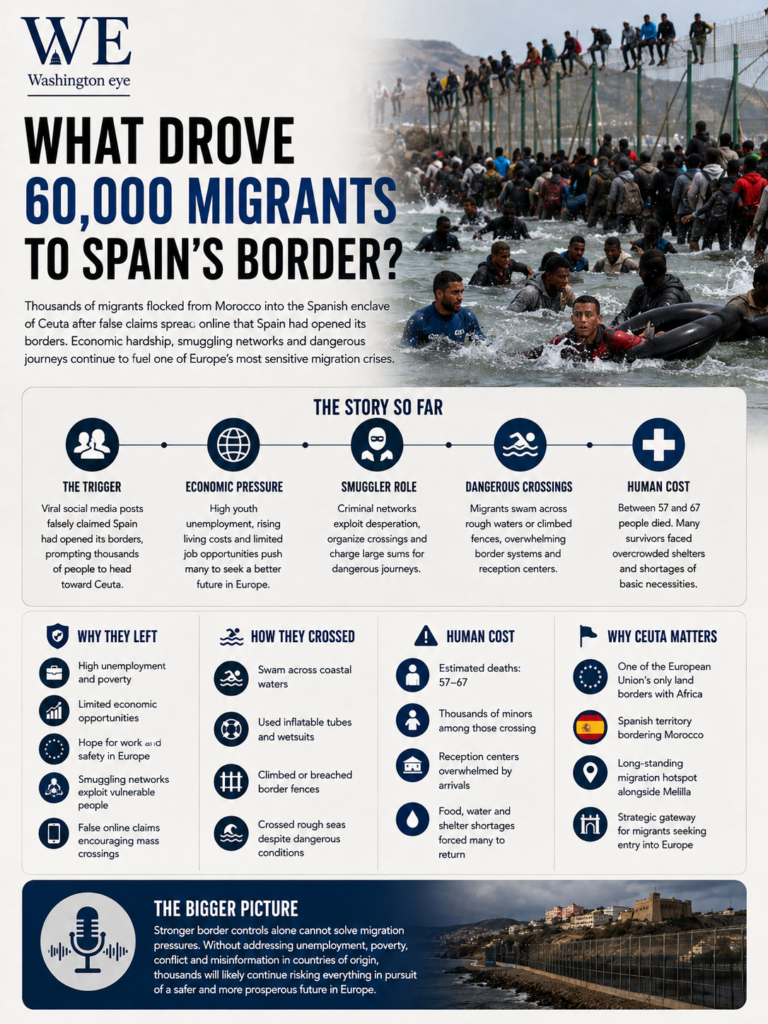
Thousands of migrants flocked from Morocco into the Spanish enclave of Ceuta once in the previous few days. Located on the northern coast of Africa, Ceuta is one of two Spanish territories bordering Morocco, making it one of the European Union’s only land frontiers with the African continent. For decades, it has served as a gateway for migrants hoping to enter Europe in search of safety, employment and improved living conditions.
The latest surge was reportedly fueled by viral social media posts claiming that Spain had temporarily opened its borders. Although the claims proved false, they spread rapidly across online platforms, encouraging thousands of young people to head toward Ceuta before authorities could clarify the situation.
Economic hardship remains one of the strongest forces behind the migration wave. Morocco continues to face high youth unemployment, rising living costs and limited job opportunities. Many migrants, including those from sub-Saharan Africa, view Europe as their best chance for financial stability. Criminal smuggling networks have capitalized on this desperation, organizing crossings and exploiting legal loopholes while charging migrants large sums for dangerous journeys.
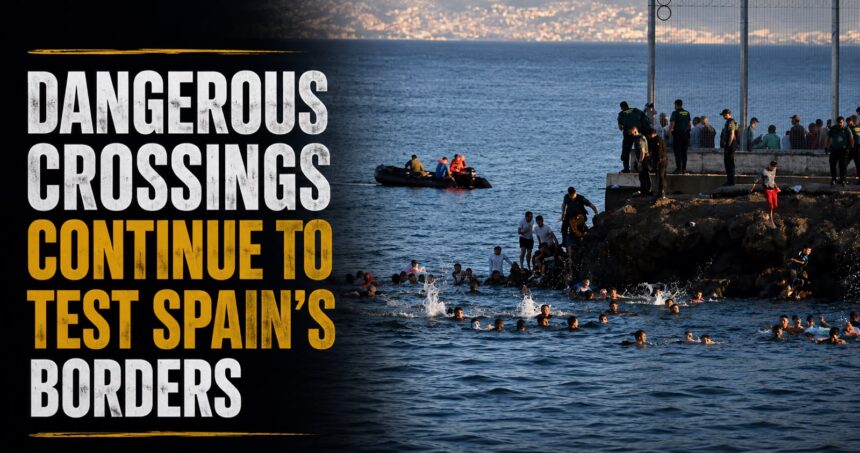
Many migrants reached Ceuta by swimming several kilometers across rough coastal waters using inflatable tubes, wetsuits or makeshift flotation devices. Others attempted to climb or force their way through the territory’s heavily fortified border fences. The crossings quickly descended into chaos as thousands arrived within a short period, overwhelming reception centers that struggled to provide food, water and medical care.
Reports indicate that between 57 and 67 people died during the dangerous attempts to reach Spanish territory. Many survivors faced overcrowded shelters and shortages of basic necessities, prompting some to voluntarily return to Morocco despite the risks they had already taken.
The crisis has also intensified political tensions between Spain and Morocco. Madrid described the mass crossing as a serious challenge to national sovereignty, while European leaders expressed concern over border security and migration management. Ceuta and the nearby enclave of Melilla remain highly sensitive flashpoints where humanitarian concerns intersect with immigration policy and diplomatic relations.
Stronger border controls alone cannot solve migration pressures. Without addressing unemployment, poverty, conflict and misinformation in countries of origin, thousands will likely continue risking everything in pursuit of a safer and more prosperous future in Europe.