
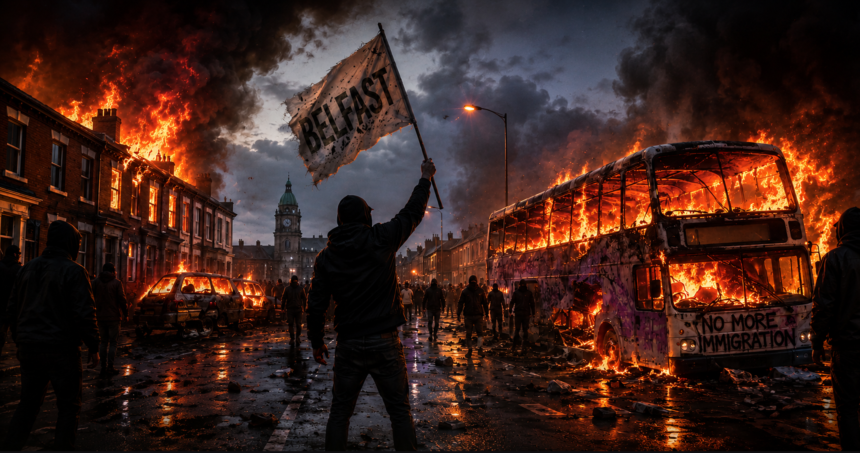
Violence erupted across parts of Belfast this week after a Sudanese asylum seeker appeared in court accused of carrying out a serious knife attack that left a man permanently injured. The unrest quickly escalated into anti-immigration protests, with vehicles torched, buildings damaged and families forced to flee their homes as tensions spread across Northern Ireland’s capital.
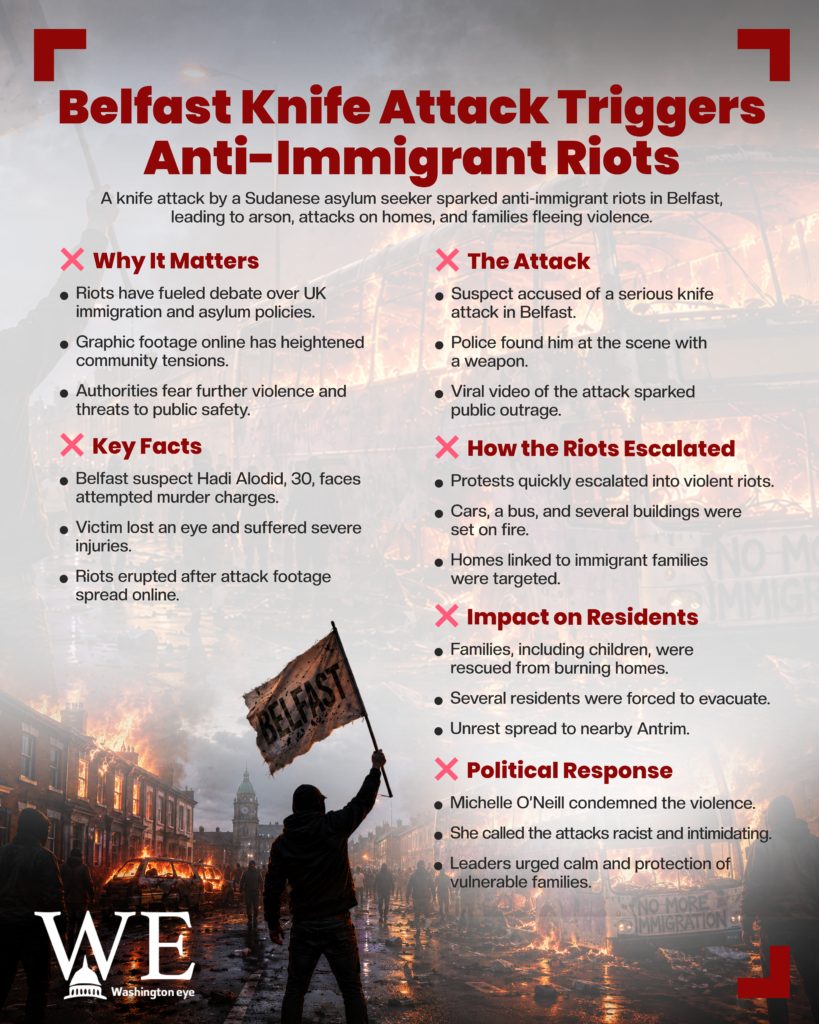
The disturbance followed the arrest of 30-year-old Hadi Alodid, who is accused of attacking a man in his 40s in Belfast on Monday. According to court proceedings, the victim suffered severe injuries to his face, head and back and lost an eye as a result of the assault. The attack was captured on video and circulated widely on social media, drawing strong public reaction.
Alodid has been charged with attempted murder, possession of a knife and making threats to kill. He remains in custody and has not yet entered a plea. Prosecutors told the court that police found him at the scene with a weapon, while evidence presented during the hearing included statements allegedly made by the suspect following the attack.
As footage of the stabbing spread online, protests began to form across Belfast. What initially started as demonstrations rapidly descended into violence. Groups of masked individuals set fire to cars and a public bus, while several properties were targeted in areas believed to house immigrant families. Firefighters and emergency services were called to multiple incidents as fires spread through residential neighborhoods.
Residents reported petrol bombs being thrown and buildings being deliberately set alight. Authorities confirmed that families, including young children, were rescued from burning homes. Similar gatherings were also reported in the town of Antrim, west of Belfast.
Political leaders strongly condemned the violence. Northern Ireland First Minister Michelle O’Neill described the attacks as acts of intimidation and racism, urging communities to remain calm. She warned that targeting families and vulnerable residents could not be justified under any circumstances.
The unrest has also reignited debate over immigration and asylum policies in the United Kingdom. Officials confirmed that Alodid entered Northern Ireland from the Republic of Ireland in 2023 after seeking asylum. That detail has become a focal point for anti-immigration activists who argue that the case highlights concerns about border management and migration controls.
Police continue to investigate both the stabbing and the subsequent riots. Security has been increased in affected areas as authorities work to prevent further violence and reassure communities shaken by several days of unrest.