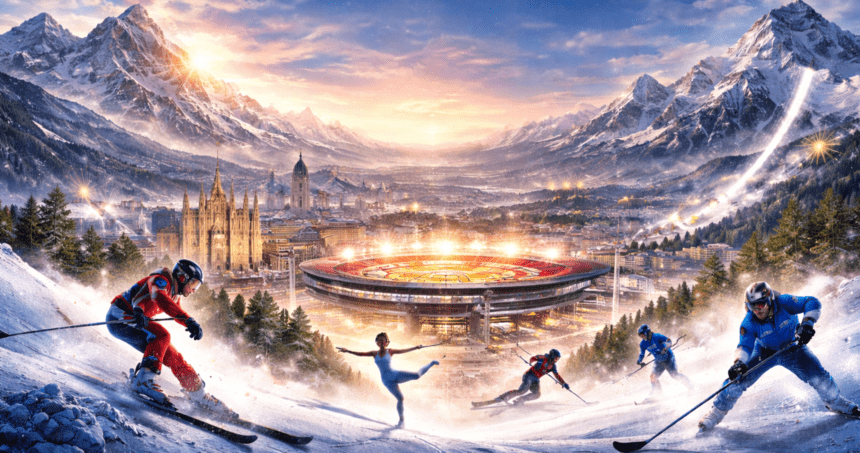
The 2026 Winter Olympics are now officially underway in northern Italy, bringing together elite athletes, national hopes, and mounting global attention from 6 to 22 February 2026 under the banner of sport, unity, and ambition. Hosted jointly by Milan and Cortina d’Ampezzo, this edition marks the third Winter Olympic Games in Italy and the first to be co-hosted by two cities, with competitions spread across a geographically diverse set of mountain sites and urban venues designed to test speed, skill, and stamina in snow and ice sports.
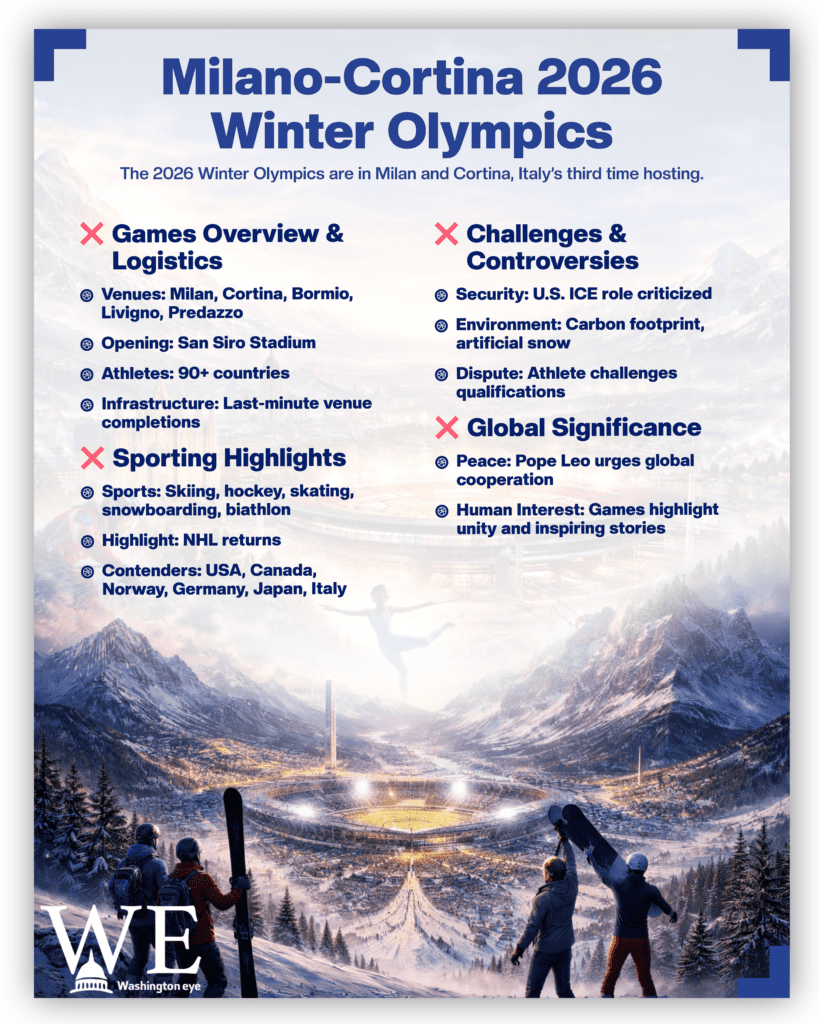
The opening ceremony in San Siro Stadium in Milan was a blend of pageantry and celebration, highlighting Italy’s deep winter-sports traditions as well as the global diversity of participating nations. Athletes and teams from more than 90 countries have converged on the Milan Olympic Village and auxiliary accommodations in Cortina, Bormio, Livigno, Predazzo, and other alpine locations, showcasing mascots, flags, and national pride in a vivid display of Olympic spirit.
From alpine skiing and ice hockey to figure skating, snowboarding, biathlon and speed skating, the Milano-Cortina 2026 program features one of the most varied schedules in recent Winter Games history. A notable highlight is the return of NHL players to the Olympic ice hockey tournament, a move that has energized fans and amplified international competition on the biggest stage.

While the action on the snow and ice has drawn enthusiastic crowds, the event has not been without its controversies and challenges. Security planning in the weeks leading up to the Games sparked debate when U.S. Immigration and Customs Enforcement (ICE) agents were announced to play an advisory role, a decision that drew rare political backlash from Italian leaders who argued the involvement clashed with Olympic ideals and local sensibilities.

Compounding political tensions are wider concerns about climate change and sustainability. Scientists and athletes alike have criticized certain sponsorship deals and infrastructure strategies, warning that the Games’ carbon footprint and reliance on artificial snow, necessary due to warming winters in the Alps, underline the stark reality that global warming is reshaping the future of winter sports.
Another layer of complexity emerged when American skeleton racer Katie Uhlaender challenged what she called unfair qualification decisions, after strategic withdrawals by competitors affected her path to the Games. This dispute, now headed toward arbitration, has become emblematic of broader tensions around fairness and competition in elite sport.
Even logistical hurdles have made headlines. Organizers and the International Olympic Committee (IOC) worked up to the last moment to complete key venues such as the Santagiulia ice hockey arena and ancillary infrastructure, reassuring the world that the Games would proceed smoothly despite construction delays.

Amid the serious news, there have been uplifting human-interest moments as well. An Italian boy who endured a winter hardship became a surprise guest at the ceremony, and athletes from around the globe are sharing cultural exchanges that underline the Olympics’ enduring role as a forum for unity and friendship.
With medals being contested across disciplines, nations with strong winter sports programs, including the United States, Canada, Norway, Germany and Japan, are vying for top spots in the medal tally, while host Italy aims to leverage home advantage to boost its podium haul. Medal results are continuing to evolve daily as athletes push for glory in events ranging from alpine skiing to short-track speed skating.
The significance of the 2026 Winter Olympics goes beyond medals and records. At a time of geopolitical stress, economic shifts, and environmental debate, the Games have become a focal point for global conversation, embodying not only athletic achievement but also the tensions and hopes of our era. Pope Leo’s recent call for peace initiatives during the Olympics illustrates the symbolic weight placed on this international event, inviting world leaders to embrace cooperation and dialogue in a troubled world.
As Milano-Cortina 2026 continues, audiences around the world are watching closely, not just for winter sports excellence, but for the broader cultural and political narratives playing out against the backdrop of one of the world’s most watched sporting festivals.