When the world crossed into 2026 at midnight on December 31, it did so with fireworks, music, prayers, and countdowns, but also with an unmistakable undercurrent of reflection. The arrival of the new year was not merely a celebration of time passing; it became a collective pause in a world that has felt unusually fast, unsettled, and emotionally stretched. From the Pacific islands to the Americas, the transition into 2026 revealed how global celebrations are evolving alongside global anxieties.
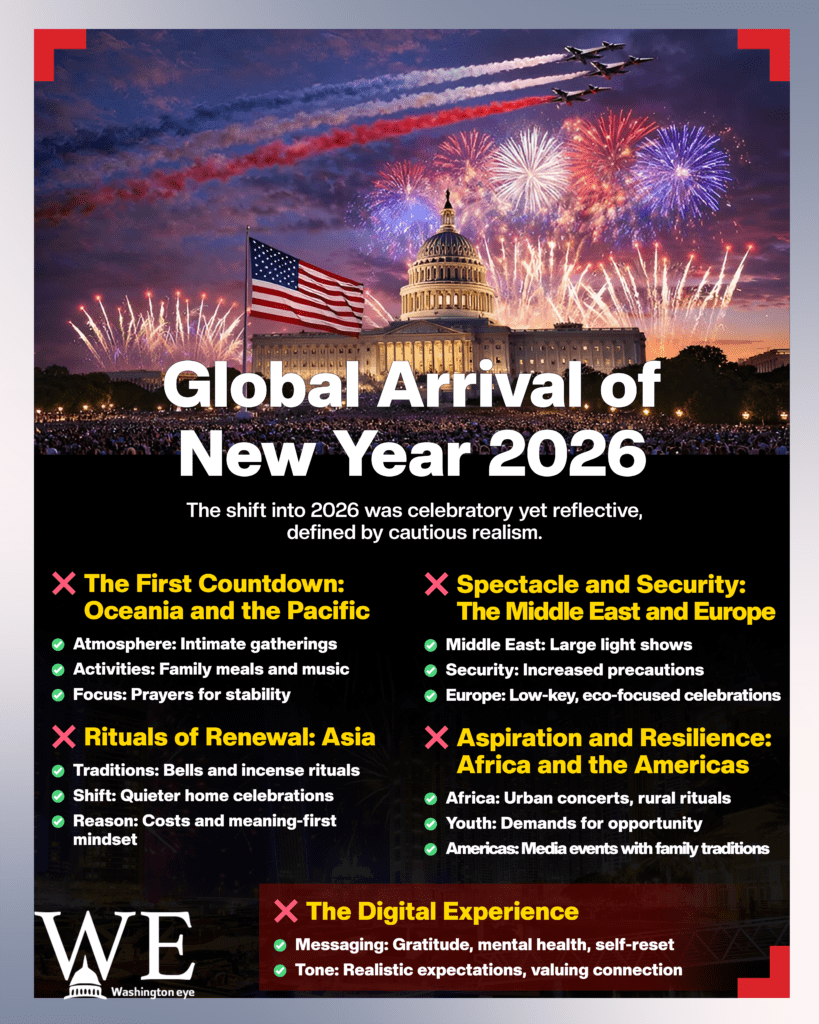
As always, the new year arrived first in the easternmost time zones, where small island nations and parts of Oceania stepped into 2026 hours before much of the world was still preparing for farewell gatherings. In these regions, celebrations were intimate and community-centered, shaped by geography and tradition rather than spectacle. Families gathered along coastlines, in churches, and in public spaces, marking the moment with music, shared meals, and prayers for stability in the year ahead. The mood was festive, but restrained, a tone that echoed across many parts of the globe.
Across Asia, New Year’s Eve unfolded less as a night of excess and more as a ritual of renewal. In several countries, temples and historic sites became focal points, where bells were rung, incense burned, and symbolic acts performed to let go of the past year’s burdens. For many, the arrival of 2026 was as much about mental and spiritual recalibration as it was about celebration. Large public events continued in major cities, but quieter household gatherings reflected shifting social habits, rising costs of living, and a growing preference for meaning over magnitude.
By the time midnight reached the Middle East, the tone shifted visually but not emotionally. Cities known for grand celebrations welcomed 2026 with choreographed light displays and fireworks that drew global attention. Yet beneath the spectacle, the emphasis on security and crowd management was hard to miss. Authorities across the region, like those elsewhere in the world, approached New Year’s Eve with heightened caution, a reminder that large celebrations now exist alongside persistent global uncertainty.

Europe’s transition into 2026 captured the dual nature of the moment particularly clearly. Streets and squares filled with people, but conversations often drifted beyond celebration. Economic pressures, political transitions, climate anxiety, and war on the continent’s periphery shaped how many Europeans viewed the new year. In several cities, local governments promoted environmentally conscious celebrations, scaling back fireworks and encouraging public transport and community events. The message was subtle but telling: celebration is no longer divorced from responsibility.
In regions affected by conflict, the new year arrived quietly. In parts of Eastern Europe, the Middle East, and Africa, New Year’s Eve was marked by prayers, candlelight gatherings, and subdued observances rather than public festivities. For millions, the hope attached to 2026 was not abstract optimism but a concrete wish for peace, safety, and continuity of daily life. Religious leaders and civil organizations across these regions framed the new year as a moral turning point, urging compassion and global solidarity.
Across Africa, New Year celebrations reflected deep contrasts. Urban centers hosted concerts and fireworks, while rural communities emphasized religious services and traditional music. For many young Africans, the new year symbolized aspiration, calls for employment, education, and political inclusion featured prominently in public discourse. The celebrations were joyful, but they carried an unmistakable demand for progress rather than symbolism alone.

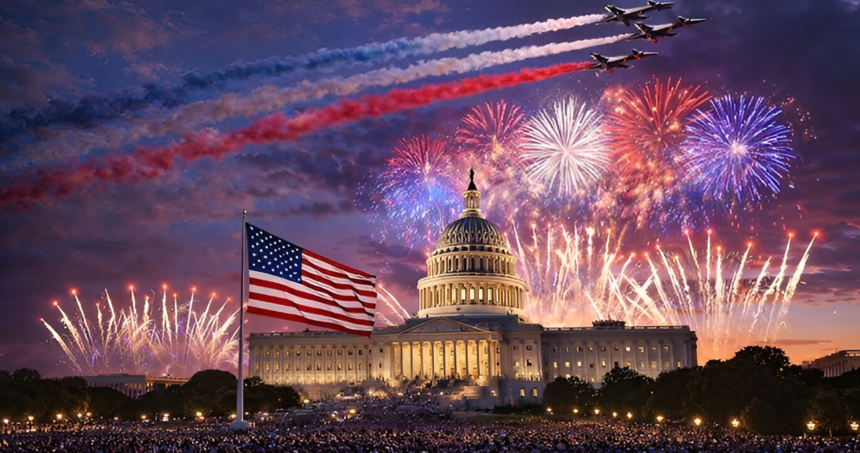
In the Americas, the arrival of 2026 blended resilience with ritual. Large cities hosted widely broadcast celebrations, while smaller communities leaned into family traditions and cultural practices passed down through generations. In Latin America, rituals involving food, clothing colors, and beach gatherings reinforced cultural identity, while in North America, weather challenges and security concerns shaped how people gathered. The emphasis was not just on welcoming a new year, but on surviving and adapting to a rapidly changing world.
Perhaps the most telling aspect of New Year 2026 was how it unfolded online. Social media turned the global countdown into a shared digital experience, with messages that emphasized gratitude, mental health, and self-reset rather than unchecked optimism. The tone suggested a shift: people no longer expect a new year to magically resolve global problems, but they still value the moment as a psychological checkpoint.
As 2026 begins, the world does not appear naïvely hopeful nor deeply pessimistic. Instead, it seems cautiously grounded. The celebrations marked continuity, proof that despite crises, people still gather, count down, and imagine better futures. The new year arrived not as a promise, but as an invitation: to move forward with realism, empathy, and deliberate hope.