
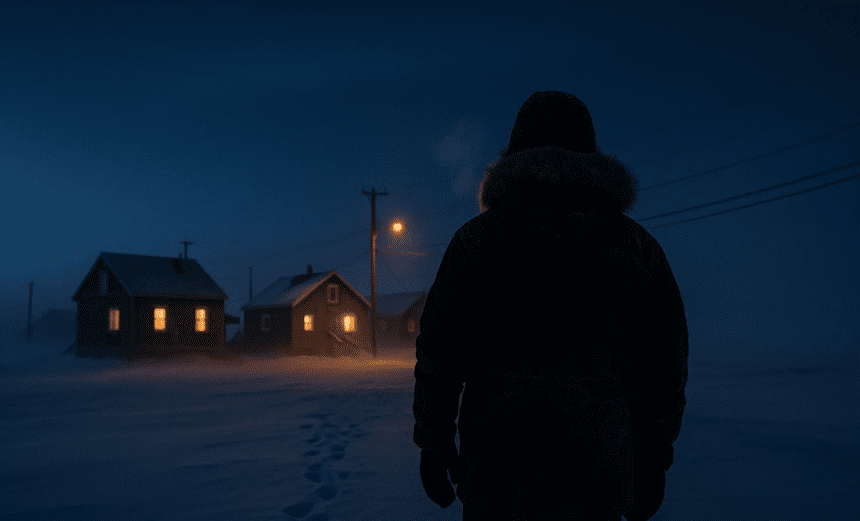
The sun has officially set in Utqiaġvik, Alaska, marking the start of one of the world’s most dramatic natural events: more than two months of continuous darkness known as the polar night. On the afternoon of November 18, 2025, at precisely 1:43 p.m., residents watched the sun slip below the horizon for the final time this year. Now, the northernmost community in the United States will not see daylight again until January 22, 2026, beginning a 65-day stretch where the sun never rises, only offering a brief, dim twilight at midday.
Utqiaġvik, formerly known as Barrow, lies more than 300 miles north of the Arctic Circle, making it the first American town to enter the extended winter darkness each year. Several other Alaskan settlements such as Kaktovik, Point Hope, Wainwright, and Nuiqsut also experience shortened days or full polar night, but none for as long as Utqiaġvik.
This phenomenon is not unique to the United States; communities across the Arctic enter similar darkness each winter. Tromsø in Norway, Svalbard, Greenland, Murmansk in Russia, and parts of northern Canada also undergo weeks or months without sunlight. Svalbard experiences the longest polar night of any inhabited place, lasting nearly four months, while Murmansk remains without a sunrise for 40 days. Canada’s Nunavut and Yukon regions also face prolonged twilight and intense cold during this period.
The science behind this unusual event lies in the tilt of Earth’s axis, which is angled at 23.5 degrees. As the planet orbits the sun, the Northern Hemisphere tilts away from sunlight during winter. This prevents regions above the Arctic Circle from receiving direct sun rays, even though the Earth continues spinning normally. Instead of daylight, these regions experience different levels of twilight depending on the sun’s angle below the horizon. Even at its brightest, the midday sky in Utqiaġvik resembles a deep blue glow, known as civil twilight, before fading into darker shades of nautical or astronomical darkness.

The arrival of the polar night also coincides with a dramatic drop in temperature. In Utqiaġvik, winter highs typically range from –18°C to –25°C, while nighttime lows can plummet to –30°C or even –40°C, with wind chills sinking to –55°C during storms. Sea ice grows rapidly, and ice fog often forms when cold air interacts with moisture, reducing visibility and creating a haunting white haze over the town. These conditions limit outdoor activities and require heavy winter gear, insulated buildings, and reliable heating systems to ensure daily life continues safely.
Yet despite the harsh environment, residents have adapted physically, culturally, and emotionally to survive the extended darkness. Many depend on light therapy lamps, Vitamin D supplements, and strict sleep routines to regulate their internal clocks. Schools, offices, and shops follow normal daytime schedules, even when the sky remains perpetually dark. Communities often organize winter gatherings, storytelling nights, youth sports, and cultural celebrations to maintain morale.
The Indigenous Iñupiat population, who have lived in the region for thousands of years, bring deep cultural knowledge to the season. They rely on traditional foods rich in nutrients, moonlight navigation, and community storytelling to pass long winter nights. Their understanding of snowdrifts, weather signs, and wildlife behavior remains essential for travel and hunting during the coldest months.

When the sun finally returns on January 22, 2026, it will appear only briefly, just a few minutes above the horizon, casting a soft orange glow that residents eagerly celebrate. Over the next weeks, daylight gradually increases, and by late April, Utqiaġvik will transition to the opposite extreme: 24-hour daylight, known as the midnight sun, which lasts until August. The polar night and polar day together define the rhythm of life in the Arctic and shape unique lifestyles found nowhere else in the world.
Interestingly, the darkness is not entirely black for the entire 65 days. Many nights are illuminated by the moon, the reflection of snow, and the brilliant aurora borealis, which frequently dances across the sky in green and violet waves. Even the faint midday twilight creates a surreal blue glow, making the town a favorite location for photographers and researchers studying atmospheric light.