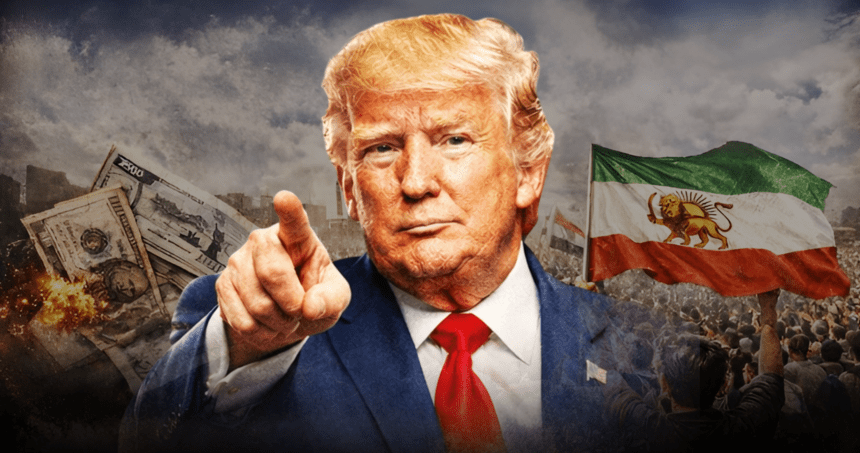
The current wave of unrest in Iran began on December 27, 2025, when spontaneous protests erupted in several Iranian cities following a sharp collapse of the national currency, sudden price hikes in fuel and food items, and growing frustration over unemployment and unpaid wages. What started as economically driven demonstrations quickly spread nationwide, turning into one of the most serious internal challenges faced by the Iranian leadership in recent years.
Within days, protests expanded from Tehran to major urban centers including Mashhad, Isfahan, Shiraz, Tabriz, and Ahvaz, drawing participation from students, workers, shopkeepers, and middle-class families. As security forces moved to disperse crowds, tensions escalated rapidly. Demonstrators began chanting political slogans, criticizing the ruling clerical system, and calling for systemic change rather than limited economic relief. The government responded with arrests, forceful crowd control, and restrictions on digital communication, further inflaming public anger.
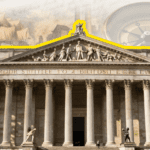
A striking symbolic element of the protests has been the re-emergence of Iran’s pre-1979 flag, featuring the lion and sun emblem. Protesters waving this flag have framed it as a rejection of the Islamic Republic’s authority and a call for a different national identity rooted in Iran’s pre-revolutionary past. Images of the flag circulating on social media and among diaspora communities have intensified the political meaning of the demonstrations, transforming them from economic protests into a broader challenge to state legitimacy.
As unrest deepened, Iran temporarily restricted and monitored parts of its airspace, citing security concerns. International airlines rerouted flights, while regional governments issued advisories, highlighting fears that internal instability could spill over into wider regional confrontation. Iran’s strategic location, bordering key Middle Eastern flashpoints and sitting near vital global energy routes, has made the situation a matter of international concern rather than a purely domestic crisis.
The United States has closely monitored developments since the protests began. In early January 2026, Washington issued strong statements condemning the use of force against protesters and imposed new targeted sanctions on Iranian officials and institutions linked to the crackdown. President Donald Trump, now back in office, publicly voiced support for Iranian demonstrators, stating that the US was “watching closely” and warning Tehran against further violence. His remarks revived memories of earlier periods of US-Iran confrontation and raised global speculation about possible American involvement.
Despite the strong rhetoric, the US has not announced direct military action. Officials have emphasized protection of US personnel and allies in the Middle East while stopping short of intervention. However, the phrase “all options remain on the table,” repeated by senior US figures, has kept tensions high. Iran, in response, accused Washington of interfering in its internal affairs and warned that any foreign intervention would be met with retaliation.
The crisis has added pressure to an already volatile Middle East. Regional allies of the US, including Israel and Gulf states, have increased security alerts, fearing instability or retaliatory actions linked to Iran or Iran-aligned groups. At the same time, Russia and China have cautioned against external interference, arguing that intervention could destabilize the region further and escalate into a wider conflict. European states have largely called for restraint, dialogue, and respect for human rights.
Inside Iran, protests have continued despite heavy security presence. While visible street demonstrations have fluctuated due to arrests and intimidation, dissent has persisted through strikes, graffiti, symbolic acts such as flag changes, and online activism when internet access allows. Human rights groups report hundreds of deaths and thousands of detentions since December, figures that Iranian authorities dispute. The growing humanitarian and political cost has intensified international scrutiny.
From a critical perspective, the question of US intervention remains complex. Direct military involvement could transform Iran’s internal crisis into a regional war, threatening global oil supplies and civilian lives. At the same time, critics argue that limited responses, sanctions and statements, may embolden Iranian authorities to continue repression. The US faces a familiar dilemma: balancing support for human rights and democratic expression with the risks of escalation and long-term instability.
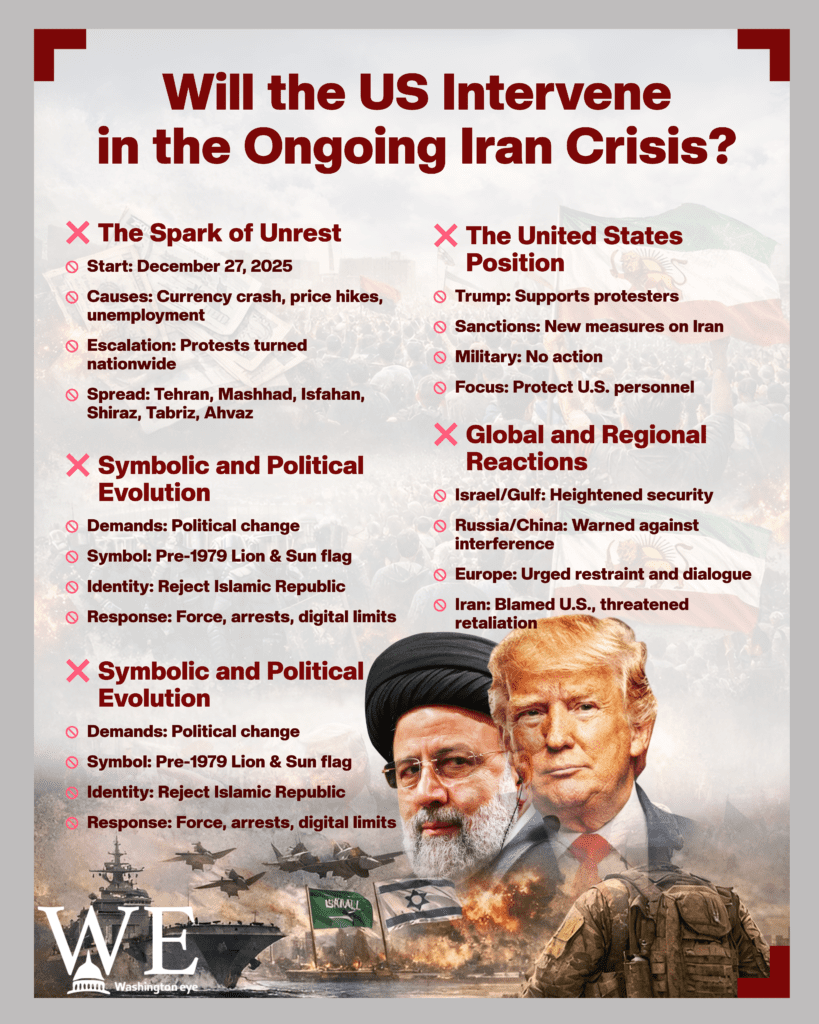
In conclusion, while the unrest that began on December 27, 2025, has fundamentally altered Iran’s internal landscape and heightened global tensions, immediate US military intervention appears unlikely unless triggered by a dramatic escalation, such as attacks on American forces or allies. For now, the crisis stands at a dangerous crossroads, marked by protests, symbolic defiance through flag changes, diplomatic pressure, and a world watching closely to see whether Iran’s internal struggle will remain domestic or reshape the geopolitics of the Middle East.