County borders can look like simple pencil marks on a map, but they shape everyday life in ways most people only notice when something goes wrong, an election dispute, a school zoning fight, a court case, a tax change, or a sudden emergency that crosses jurisdiction. From the United States and the United Kingdom to Kenya, Pakistan, and beyond, “counties” (and similar local units) are the quiet infrastructure of governance: they decide who collects what money, who provides which services, and who is responsible when residents demand answers. In an era of fast migration, climate shocks, and growing political polarization, those lines are being re-examined not as geography trivia, but as power, identity, and administration rolled into one.
Historically, counties were created for control and coordination, so rulers could count people, raise revenue, recruit soldiers, administer justice, and move information across territory. In medieval England, the “shires” that evolved into counties helped a central authority govern through sheriffs and courts, while local boundaries also reflected older communities, markets, and travel realities. In other places, county-like units were imposed later by colonial administrations that needed manageable districts for taxation and policing, often mapping straight lines over complex human landscapes. That origin story matters: a border drawn to simplify an empire’s paperwork can still determine today’s public services, political representation, and even social tensions.
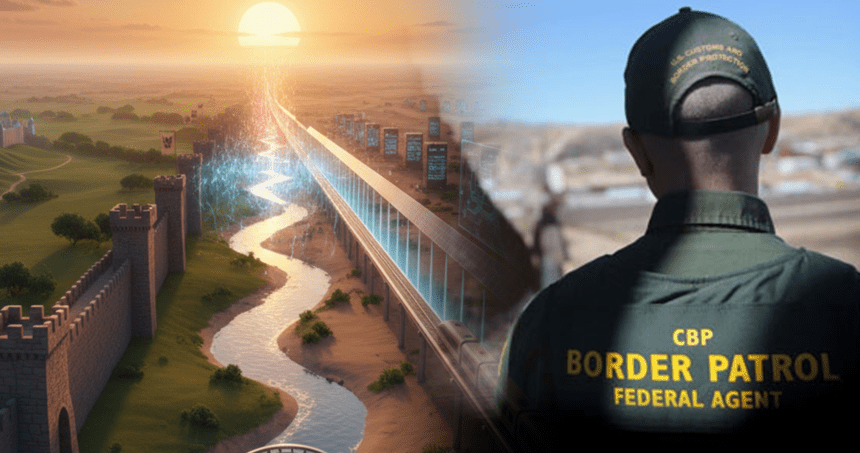
So who “made the lines”? Sometimes it was legislators with local knowledge, sometimes monarchs and administrators, and sometimes surveyors with a ruler and a deadline. In the United States, for example, many county boundaries followed rivers, ridgelines, and historic settlement patterns, but others were carved into regular shapes to speed land sales, create equal-ish administrative units, or satisfy political bargaining. Where cartography and political urgency met, borders could become surprisingly arbitrary. Across parts of Africa and the Middle East, boundaries at multiple levels, international, provincial, and local, were often influenced by colonial-era mapping that prioritized resource access and governability over cultural and linguistic continuity, leaving a long tail of disputes.

The importance of county borders today is practical first: they decide which police department responds, which courts have authority, where children attend school, how public health is administered, and who maintains the roads. They also determine tax bases and budgets, which can lock in inequalities. A wealthier county can fund better schools and infrastructure, attracting more investment, while a neighboring county struggles, creating two very different realities separated by a thin line. During emergencies, wildfires, floods, disease outbreaks, those borders can either enable rapid coordination (clear responsibility) or slow it down (too many agencies, conflicting rules).

But borders are also political technology. They shape voting outcomes through how populations are grouped, and they influence representation and resource distribution. When a border places a fast-growing suburb in one county rather than another, it can change election maps, legislative priorities, and even what issues dominate local media. That’s why boundary debates, county secessions, consolidations, “new county” proposals, or shifting lines, often sound like administrative tweaks but feel like cultural fights. People aren’t only arguing about roads and services; they’re arguing about belonging, identity, and whose voice counts.
Conflict emerges in predictable patterns. First are service conflicts: residents complain that they pay taxes to one county but rely on hospitals, jobs, or transport in another, triggering disputes over funding and responsibility. Second are resource conflicts: water rights, land development, mineral access, and zoning can turn a quiet border into a frontline. Third are identity conflicts: communities split by a line may share language, kinship, or history and resent governance that treats them as separate. And fourth are legitimacy conflicts: when borders are seen as imposed or manipulated, whether by colonial legacies, partisan tactics, or elite bargaining, trust in local institutions erodes.
Technology is adding a new twist. Digital maps make borders more visible and more contested: a mislabeled boundary on a popular mapping platform can fuel local outrage, while geofenced services (delivery zones, ride-hailing coverage, emergency alerts) can effectively “enforce” borders in daily life. At the same time, mobility and remote work are weakening the old idea that people live, work, and socialize within the same county. That mismatch, 20th-century boundaries governing 21st-century movement, drives new debates about regional cooperation and whether boundaries should be redrawn, shared, or simply worked around.


Ultimately, county borders endure because they are more than lines: they are agreements about how to live together at scale. They balance local identity with administrative efficiency, and they translate political decisions into concrete outcomes, such as schools, hospitals, policing, planning, and public accountability. The next time a county line shows up in a news story, it’s rarely “just cartography.” It’s a reminder that maps are not only descriptions of the world, they are also tools that help make the world.