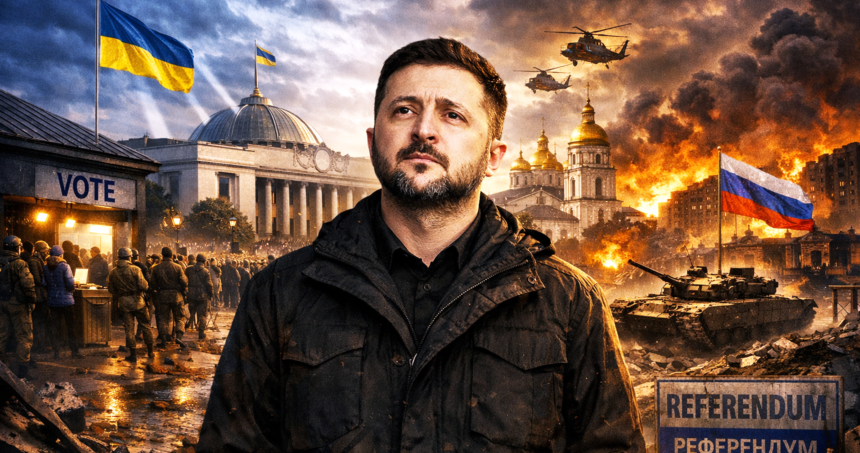
Ukraine is intensifying preparations to hold a presidential election and a nationwide referendum on a potential peace agreement with Russia, a move that would mark a dramatic political moment as the country continues to fight a full-scale invasion. Ukrainian officials are reportedly working on a framework that could see both votes held as soon as spring or early summer of 2026, although significant uncertainties remain due to the war, security risks, and logistical challenges.
Plans emerged following media reports that President Volodymyr Zelenskyy is under pressure from the United States to conclude peace negotiations with Russia and hold elections and a referendum by mid-May 2026. U.S. authorities have tied future security guarantees, including military and defense support, to progress toward a peace agreement and democratic reaffirmation through elections and a public vote.
Ukrainian and Western officials say Kyiv is considering announcing the timeline for these votes on February 24, the fourth anniversary of Russia’s full-scale invasion that began in 2022. Holding both the presidential election and the peace referendum on the same day is seen by Kyiv as a way to consolidate political energy and potentially increase voter participation.
If realized, this would be the first national vote since the outbreak of the war. Ukraine has operated under martial law since 2022, a situation that constitutionally prohibits elections but which lawmakers in Kyiv are now working to adjust through legislation that would permit ballots under wartime conditions. Parliament is expected to debate legal changes in March and April to enable voting amid ongoing hostilities.

Why Now? U.S. Pressure and Peace Talks
U.S. pressure is a central factor shaping Ukraine’s strategic timetable. According to reports, the White House has urged Kyiv to organize the election and the peace referendum by May 15, 2026, aligning with U.S. midterm election cycles and diplomatic objectives to show progress on an end to the war. The United States has tied these developments to security assurances, which could include extended defense guarantees against future aggression if Kyiv continues to press for peace.
Although Ukraine has publicly expressed its willingness to engage in peace negotiations, Kyiv has also insisted that any legitimate vote, especially a referendum on a peace deal, should occur only when there are solid security guarantees and a stable foundation for free expression. President Zelenskyy and senior officials have repeatedly stated that a ceasefire and robust protections for voters must be in place before elections can be credibly conducted.
Russia’s Role and Reactions
In contrast, Moscow’s stance on a peace deal remains tied to demands for territorial concessions, particularly over the contested Donbas region. Russia continues to press for Ukrainian withdrawal from areas of eastern Ukraine it claims, a move Kyiv firmly rejects. Russian authorities have not formally responded to Ukraine’s election and referendum plans, leaving uncertainty over how Moscow might react if Kyiv proceeds with political processes.
Russian military operations also continue to shape the context in which Ukraine plans domestic politics. Recent large-scale Russian strikes have targeted energy infrastructure and cities across Ukraine, contributing to lasting humanitarian and security challenges. Ukrainian officials say that hosting nationwide votes under such conditions would be unprecedented and difficult, with millions of citizens displaced and parts of the country under varying degrees of Russian control.
Domestic Debate and Democratic Integrity
Within Ukraine there is also vigorous debate over the timing and legitimacy of elections amid war. Critics, including local political leaders and analysts, warn that accelerated timelines could compromise democratic norms and the inclusiveness of the vote. Kyiv’s mayor has voiced concerns that electoral preparations should respect democratic principles and not be rushed for external political timelines.
Most Ukrainians reportedly oppose elections before a ceasefire, reflecting widespread concern that holding national ballots while combat continues could undermine both turnout and the safety of voters and electoral staff. Because of this, Zelenskyy has highlighted the need for a ceasefire and international security assurances as prerequisites for any credible election process.

Looking Ahead
As talks continue between Ukraine, Russia, and international partners, including a planned round of negotiations involving the United States, the potential for elections and a peace referendum marks a significant political development in the four-year war. Whether Ukraine can balance democratic processes with war-time realities, and whether an agreement with Russia can be reached that secures both peace and national sovereignty, remains among the most consequential questions facing Europe in 2026.