Donald Trump’s insistence that any Iran deal must reopen the Strait of Hormuz without tolls sounds like a technical shipping detail, but it is in fact a strategic marker in a larger contest over coercion, sanctions and regional order in the Gulf.
A Chokepoint at the Center of Global Power
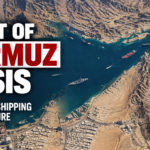
The Strait of Hormuz is a narrow maritime passage linking the Persian Gulf to the Arabian Sea, through which roughly one fifth of global oil trade and a significant share of liquefied natural gas flows each year. Analysts estimate that about 20 to 30 percent of the world’s seaborne oil passes through the strait, making it one of the most critical energy chokepoints for both Asian and European importers. Because it is the only sea route for exporters like Qatar, the United Arab Emirates and Kuwait, any disruption rapidly transmits into higher prices and heightened perceptions of risk in global markets.
Iran has long leveraged this geography as strategic insurance, repeatedly signaling that it could close or restrict passage in response to pressure on its economy or security. The recent closure during the Iran war pushed benchmark Brent crude above 105 dollars per barrel, underscoring how quickly shipping constraints in Hormuz reverberate through the world economy. Against this backdrop, Trump’s focus on reopening the passage is about far more than maritime administration.
Trump’s Message to Allies and Rivals
In recent remarks with world leaders, Trump has portrayed the emerging deal with Iran as ensuring that Tehran will never obtain nuclear weapons and as providing for a reopening of the Strait of Hormuz on a toll free basis. His earlier warning that Iran had 48 hours to reopen the strait or face strikes on its power infrastructure signaled a willingness to escalate militarily over energy transit, a threat that framed later diplomatic moves. By now insisting publicly that shipping must resume without any Iranian levy, he is drawing a red line against any attempt by Tehran to convert control of the chokepoint into a formal revenue source.
For European partners, several of whom had previously expressed “regret and concern” over earlier US decisions to walk away from the 2015 nuclear agreement, the new framework is both an opportunity to restore cooperation and a test of Washington’s reliability. Leaders in London, Paris and Berlin have indicated readiness to play an active role in keeping Hormuz open, framing energy security as a shared public good rather than a narrow American interest. At the same time, Russia and China are likely to watch whether the United States can secure concessions on nuclear and regional issues without reinforcing the perception that it weaponizes sanctions and naval superiority at will.
Iran’s Leverage and the “Toll Free” Debate
Reports on the draft ceasefire suggest that Iran is prepared to reopen the strait as part of a broader package that includes a defined period of de-escalation and negotiations over its nuclear program, along with partial relief from sanctions and unfreezing of assets. Iranian media and officials have been careful to stress, however, that the waterway will remain under Iranian control and that Tehran’s armed forces will manage any reopening in coordination with regional partners. Some accounts of earlier ceasefire proposals even described a formula that would “guarantee Iran’s dominance” over the strait while restoring commercial flows.
In that context, Trump’s insistence on toll free passage is intended to block institutionalization of an Iranian fee regime that would normalize Tehran’s use of the chokepoint as a direct economic tool. Yet it does not remove Iran’s de facto leverage, because the same naval and missile capabilities that enabled closure remain in place even if no formal toll is charged. For Gulf Arab states, the arrangement may therefore look less like a depoliticized corridor and more like a managed vulnerability, in which shipping resumes but remains exposed to recurring bargaining cycles between Washington and Tehran.
Implications for Energy Markets and Regional Order
In the short term, a deal that reopens Hormuz without tolls and pauses hostilities would likely ease crude prices and calm traders who have been pricing in the risk of prolonged disruption. Restored Iranian exports during a ceasefire could increase supply, but much depends on how quickly shippers and insurers regain confidence that the corridor is genuinely safe. If the truce is framed as a temporary arrangement pending more complex nuclear negotiations, the market may treat it as fragile, keeping a risk premium embedded in prices.
At the level of regional order, the episode reinforces the pattern of transactional crisis management between the United States and Iran. Instead of a comprehensive framework addressing security architecture in the Gulf, missile proliferation and nonstate actors, the focus has narrowed to a sequence of bargains over specific issues such as transit rights and sanctions relief. Trump’s narrative that the agreement will prevent Iran from ever obtaining a nuclear weapon sits uneasily alongside Iranian statements that nuclear questions will only be addressed in later phases, revealing a gap that could reopen quickly if expectations diverge.
A Final Note
Trump’s toll free Strait of Hormuz pledge thus captures the dual nature of the moment: an important de-escalation that restores a vital global artery, yet one built on unresolved disputes over nuclear capabilities, regional influence and the uses of economic coercion. Whether this arrangement stabilizes the Gulf or merely postpones the next confrontation will depend on how both Washington and Tehran interpret their leverage once ships start moving again.