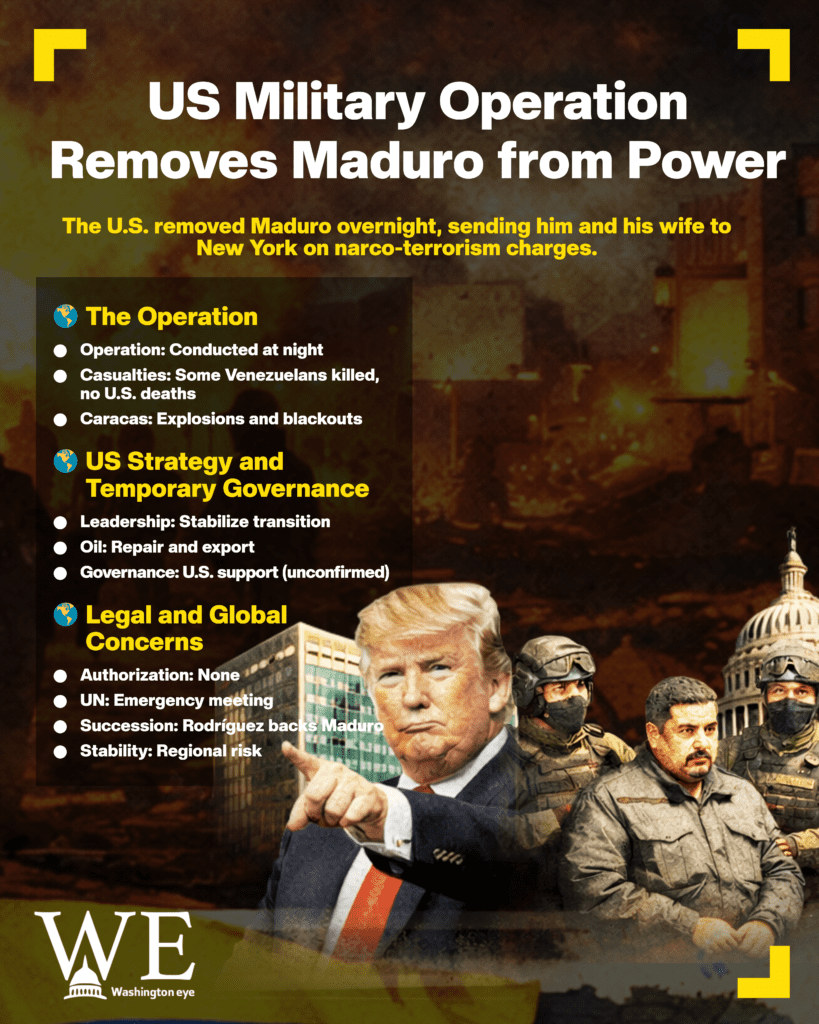
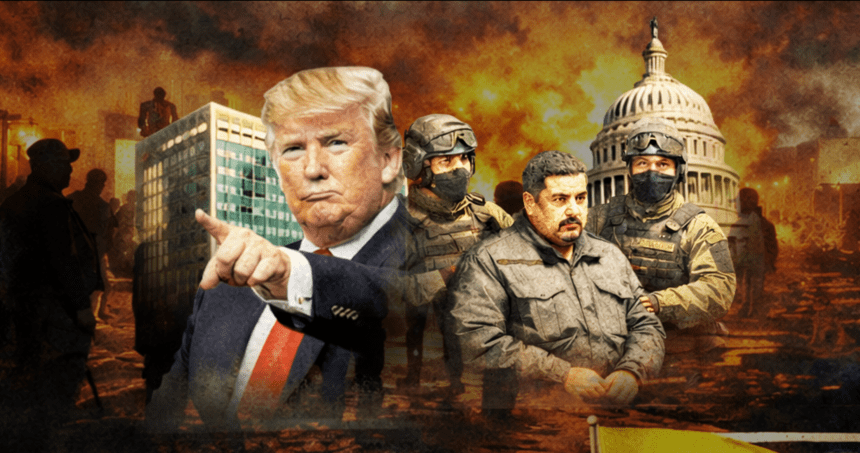
The United States carried out a surprise overnight military operation that removed Venezuelan President Nicolás Maduro from power and transported him out of the country, marking the most aggressive American-backed regime change effort in decades. President Donald Trump confirmed the action on Saturday, describing it as a swift and carefully planned mission executed under cover of darkness. Maduro and his wife, Cilia Flores, were seized from their residence on a military base and transferred to a US naval vessel before being flown to New York.
Federal authorities said the deposed leader will face prosecution under a Justice Department indictment accusing him of leading a narco-terrorism conspiracy. Trump framed the operation as a necessary response to drug trafficking and national security threats, calling it a decisive blow against what he described as a corrupt and illegitimate regime.
Trump Signals Temporary US Control and Oil Plans
Speaking from Mar-a-Lago hours after the operation, Trump said the United States would temporarily oversee Venezuela to stabilize the country and repair its collapsing oil infrastructure. He said Washington planned to sell large quantities of Venezuelan oil to international markets while managing a transition to new leadership. Trump claimed US officials were already assisting in governance, though no independent confirmation was immediately available. He argued the intervention would benefit both Venezuelans and global energy markets, portraying it as a corrective measure rather than an occupation. The president offered no timeline for a handover of power but said any transition would be “safe, proper, and judicious.” His remarks raised immediate questions about sovereignty and international law, as the operation was conducted without congressional authorization or a public multinational mandate.
Explosions in Caracas and Divided Public Response
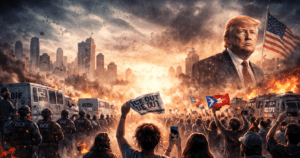
The operation triggered explosions, power outages, and the sound of low-flying aircraft across Caracas early Saturday, sending residents into the streets in fear. Venezuelan officials accused the United States of striking civilian and military targets, calling the action an imperialist attack. Vice President Delcy Rodríguez said some Venezuelans, including civilians and military personnel, were killed, though she did not provide figures. Despite Maduro’s capture, state television continued broadcasting pro-government messaging, and supporters gathered in parts of the capital demanding his return. In other neighborhoods, streets remained empty and electricity was still down hours later. Reactions were sharply divided, with some Venezuelans expressing fear and uncertainty, while others quietly welcomed the development. In Florida, members of Venezuela’s diaspora celebrated publicly, waving flags and chanting for freedom.
Legal Questions and International Fallout
The legality of the US operation quickly came under scrutiny from legal experts and lawmakers in Washington. Congress had not authorized the use of military force in Venezuela, prompting bipartisan demands for an immediate briefing from the Trump administration. The United Nations Security Council scheduled an emergency meeting following a request from Colombia, reflecting rising international concern over the precedent set by the intervention. Venezuelan Vice President Rodríguez rejected any succession under national law and declared Maduro the country’s rightful president, calling for his release. Analysts warned that the power vacuum could destabilize the region if a clear transition plan is not established. As Washington asserts temporary control, Venezuela faces a highly uncertain future shaped by legal disputes, geopolitical tension, and competing claims to legitimacy.