
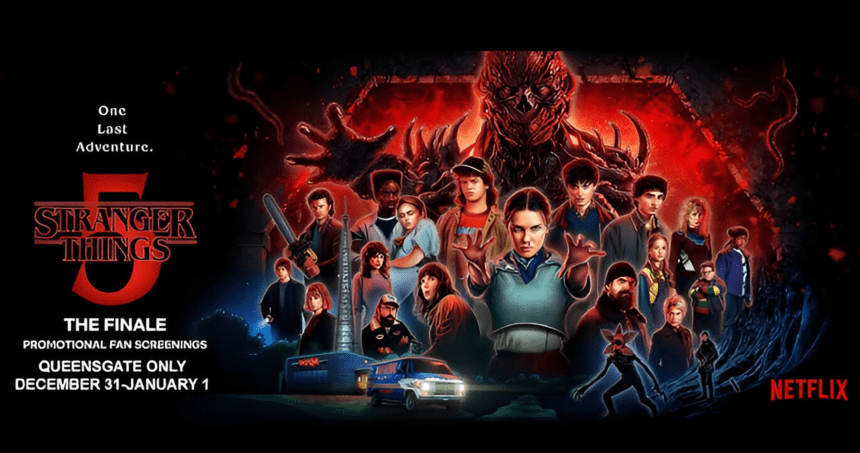
After nearly a decade of supernatural mystery, 1980s nostalgia, and blockbuster streaming success, Netflix’s beloved science-fiction series Stranger Things reached its long-awaited conclusion with the release of its fifth and final season’s finale, “Chapter Eight: The Right-side Up,” on December 31, 2025. The two-hour episode, released simultaneously on Netflix and in select theaters across the United States and Canada, marked the end of a cultural phenomenon that first debuted in 2016 and went on to define a generation of television viewers worldwide.
The final season was strategically released in three parts: the first on November 26 and the second on December 25, culminating in the epic finale on New Year’s Eve. Composed of eight episodes, Season 5 rounded out the long journey of the Hawkins, Indiana crew as they faced their deadliest threat yet, the sinister Vecna and the encroaching horrors of the Upside Down. The season was reported to cost an estimated $400–480 million, reinforcing its status as one of the most expensive television productions ever made.
In “The Rightside Up,” series creators Matt and Ross Duffer delivered both spectacle and sentiment as the characters fought to destroy Vecna once and for all. The narrative closed with a dramatic confrontation, emotional farewells, and a time jump that offered fans glimpses into the futures of beloved characters, from Dustin’s academic success to Joyce and Hopper’s engagement, while leaving open questions about the ultimate fate of Eleven.

The global audience reaction was immediate and fervent. Fans flooded social media, review sites, and comment threads with a mixture of praise and disappointment. While many viewers expressed heartfelt nostalgia and satisfaction at seeing long-standing arcs reach closure, others criticized the finale’s pacing, creative choices and narrative resolution. Debate ran especially hot on platforms like X (formerly Twitter), where hashtags related to the finale trended as fans dissected every detail.

A segment of the audience found the finale’s emotional weight and character payoffs moving, likening the final episode to a collective goodbye to a piece of their own past. At public screenings in cities like Corpus Christi, Texas, viewers were seen wiping away tears, with many describing the experience as deeply personal and evocative of their own childhood memories of the series.
However, not all reactions were positive. Some fans labeled the conclusion predictable, too sentimental or insufficiently bold, drawing parallels to other controversial finales like Game of Thrones. Critics pointed out unresolved mysteries, such as long-standing unanswered questions about character backstories, and debate over the defeat of the central villain led to heated online discussions.
Throughout this response spectrum, certain fan movements, such as the online trend dubbed #ConformityGate, emerged, arguing that the finale’s conventional tone was at odds with the show’s long-standing themes of defiance and identity. While speculative in nature, such theories underscore how invested the global fanbase remains in the series’ deeper mythology.

Industry insiders noted that part of Stranger Things’ broad appeal lay in its synthesis of genre elements, blending horror, coming-of-age drama, buddy comedy, and science fiction, all set to an evocative retro soundtrack that included iconic tracks used in key moments of the final season.
In interviews, the Duffer Brothers acknowledged the challenge of ending a story that spanned five seasons and a universe of devoted fans. They emphasized their intention to balance conclusive arcs with a reverence for audience interpretation, especially concerning ambiguous character outcomes.

As Stranger Things now retires from the Netflix lineup, its legacy is already being measured not just in streaming numbers and cultural imprint but in the rich, ongoing dialogue among its global audience. The divisive reactions, from adoration to critique, reflect the series’s profound emotional resonance and its place as a generational touchstone in the streaming era.