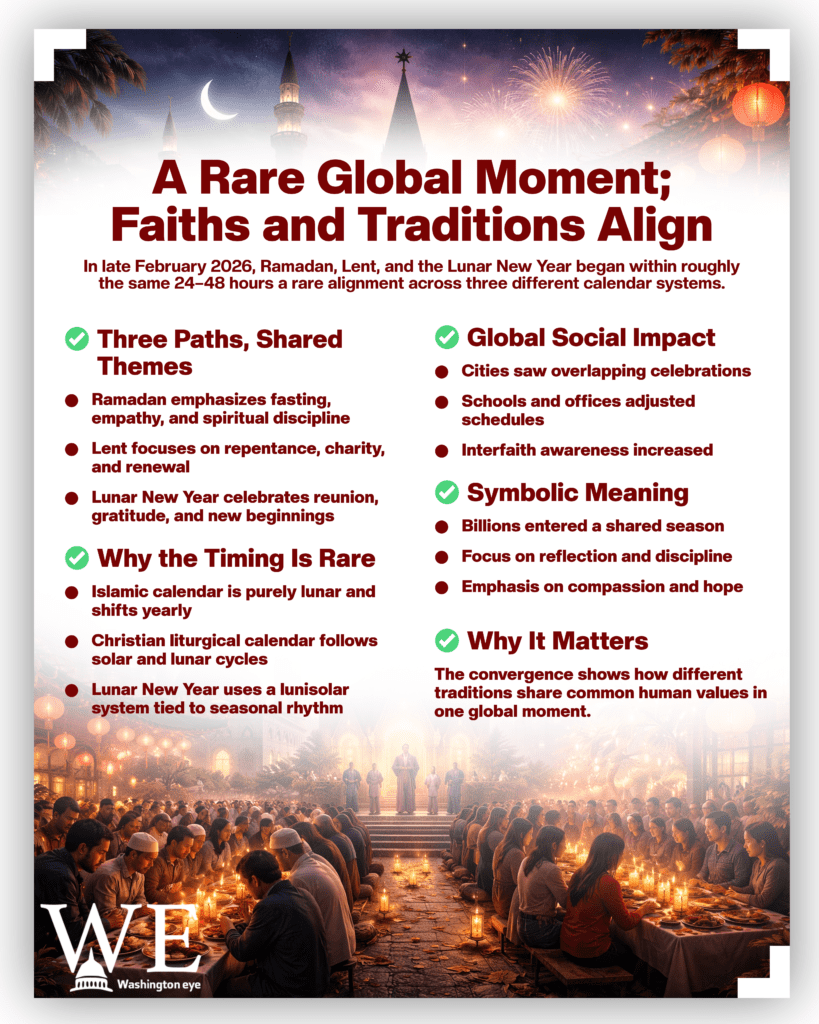
In a calendar quirk that spans three different ways of measuring time, Ramadan, Lent and the Lunar New Year are converging in late February 2026, placing major moments of fasting, reflection and renewal side-by-side for communities across the world. The Lunar New Year, the start of the Year of the Fire Horse, began on February 17, 2026, kicking off the Spring Festival period celebrated widely in China and across East and Southeast Asian diasporas.
Within roughly the same 24–48 hours, Christians entered Lent with Ash Wednesday on February 18, 2026, the day many churches mark with ashes as a public reminder of humility, mortality and the call to spiritual “reset” ahead of Easter. Lent’s traditional focus on fasting or abstinence, prayer, and charity makes it one of Christianity’s most widely observed seasons, stretching across Catholic, Orthodox and many Protestant traditions (with dates varying for some churches).
And at nearly the same time, Muslims around the world began preparing for, and in many places started Ramadan around February 18–19, depending on moon-sighting and national religious authorities. Ramadan follows a purely lunar Islamic calendar, so its start date moves earlier each year on the Gregorian calendar; official announcements can differ by country and community because the beginning of the month is traditionally confirmed by the sighting of the new crescent moon.

What makes this overlap feel so striking is not only the symbolism, three traditions emphasizing discipline, renewal, family, and moral recalibration, but also the math of three calendars “lining up”. Lent is anchored to the Christian liturgical calendar that depends on the date of Easter, which is tied to a springtime full moon rule in the Gregorian system. Ramadan is anchored to the Islamic lunar calendar, which is shorter than the solar year and therefore “drifts” through the seasons over multi-decade cycles. Lunar New Year is based on a lunisolar system designed to keep the holiday in late winter/early spring, using leap months to stay aligned with seasonal rhythms. When these systems happen to land close together, it is essentially a rare synchronization of solar, lunar, and lunisolar timekeeping.

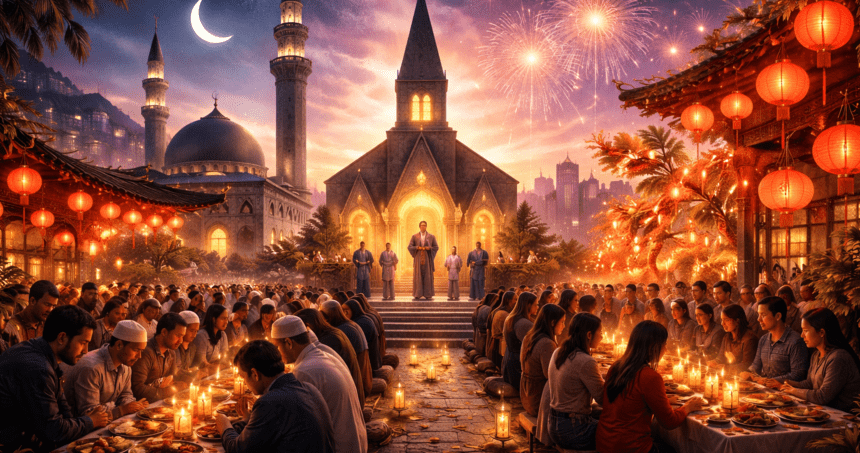
Across cities from Beijing to Berlin, London to Los Angeles, the convergence is visible in everyday life: red lanterns and family banquets sharing the same streets as Lenten fish menus, charity drives, Ramadan lights, mosque prayer schedules and nightly iftar gatherings. It also creates a unique moment for workplaces and schools, where cultural calendars collide in practical ways, dietary needs, evening prayers, religious services, travel, and family obligations. In multicultural neighborhoods, the week can feel like a global “season of meaning,” with communities marking different paths toward self-restraint and hope.
Faith leaders and community organizers have highlighted how the timing offers an opening for interfaith curiosity rather than competition, especially because each observance carries a message that resonates beyond its own tradition. For many Muslims, Ramadan centers on fasting, empathy with the poor, spiritual focus and community. For many Christians, Lent is about repentance, simplification and re-ordering life toward compassion. For Lunar New Year celebrants, the season emphasizes reunion, honoring elders and ancestors, and welcoming a new cycle with wishes for health and prosperity. Even without blending traditions, simply recognizing simultaneity can encourage small gestures of solidarity: neighbors exchanging greetings, colleagues accommodating schedules, and communities learning the “why” behind one another’s rituals.
How rare is it, exactly? Several recent reports describing the 2026 alignment note that all three begin within about a day of each other, calling it an unusually infrequent overlap; some calendar-based write-ups claim the last comparable convergence was in the 19th century and that the next won’t come for many generations. Because such claims depend on how strictly one defines “convergence” (same day vs. same week; local moon-sighting differences; which Christian calendar is used), it is safer to say this: a near-simultaneous start across the three observances is uncommon enough to stand out, and 2026 is one of those standout moments.

In a world often shaped by division, the February 2026 overlap is a reminder that different communities can arrive at similar human themes, restraint, gratitude, generosity, and new beginnings, even while following different stories and calendars. For billions, this is not just an interesting date coincidence; it is a lived week of early mornings and late evenings, of prayer and planning, of family gatherings and quiet discipline, all happening at once.