
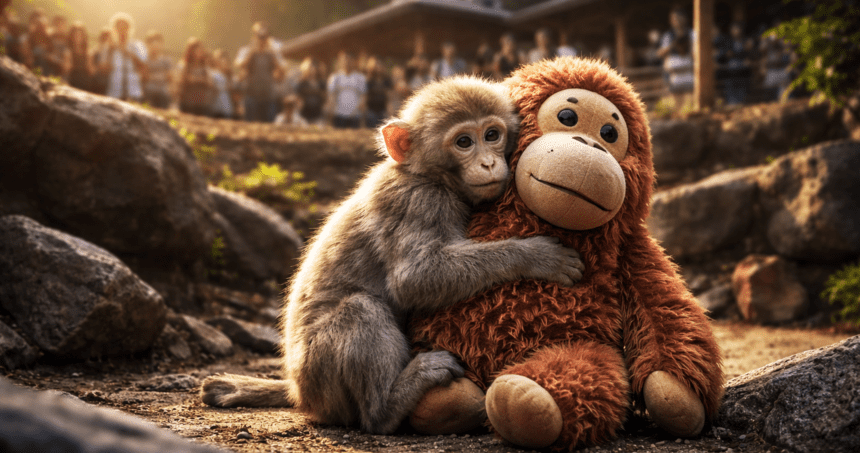
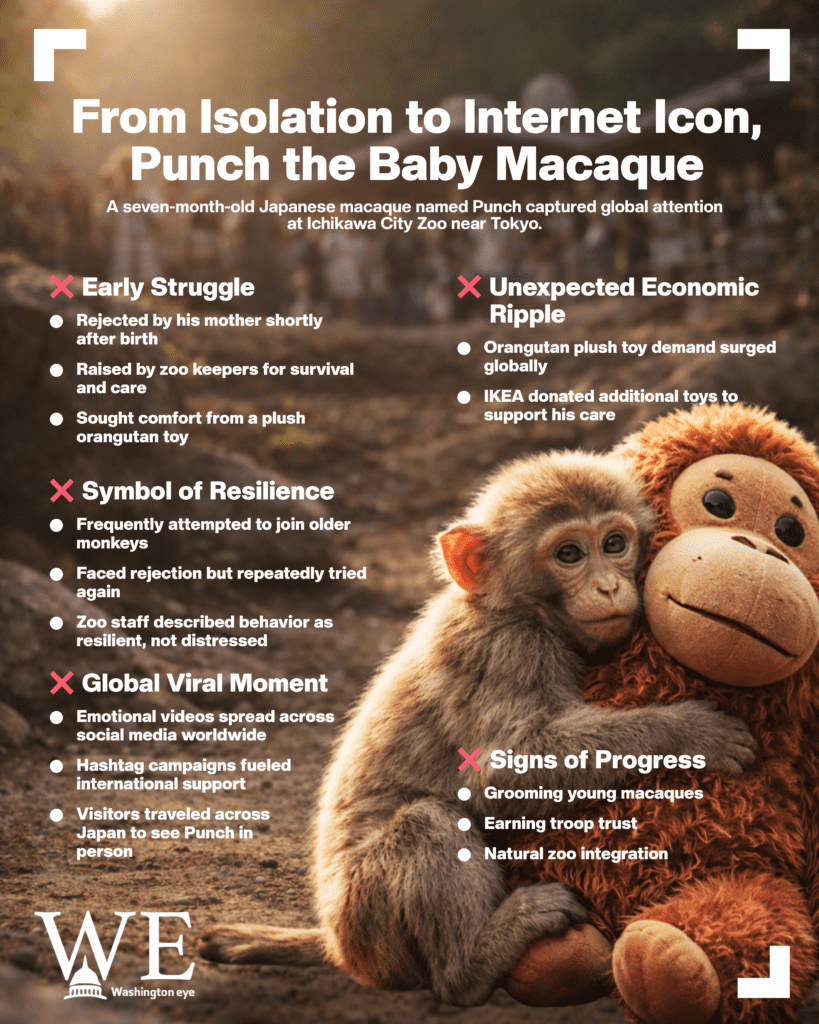
A seven-month-old Japanese macaque named Punch has become an international internet sensation after his emotional journey from isolation to slow acceptance at a zoo enclosure captured hearts worldwide. Born in July 2025 at the Ichikawa City Zoo near Tokyo, Punch was rejected by his mother shortly after birth, a rare but natural occurrence among primates, leaving him without the comfort and guidance other young macaques typically receive.
After zoo keepers stepped in to care for him, they noticed Punch repeatedly clinging to a large stuffed orangutan toy from IKEA, using it as a source of comfort and security in the absence of maternal care. The toy quickly became his constant companion, so much so that online viewers affectionately dubbed it “Ora-mama,” or surrogate mother.
Videos and images of the tiny macaque dragging the plush toy around his enclosure began circulating in early February 2026, propelled by social media users who were struck by the monkey’s apparent loneliness and tenderness. The hashtag #HangInTherePunch surged across platforms like X (formerly Twitter), Instagram and TikTok as millions shared, commented, and rallied behind his story.

Initial clips showed Punch attempting to interact with older members of his troop, sometimes being ignored or gently rebuffed, before retreating to the comfort of his plush companion. One widely viewed clip of him being gently dragged by another monkey sparked widespread sympathy online, prompting comments urging “support Punch’s efforts” rather than pity. The zoo later clarified that such social encounters are part of the normal process of integration and learning for young macaques.

Zoo officials describe Punch’s behavior as resilient rather than distressed, noting that he repeatedly returns to social attempts even after rejection. “While Punch is scolded by other monkeys, he shows mental strength and recovers quickly,” the zoo said in a statement, adding that no serious aggression has been shown toward him.
The global response has been overwhelmingly positive. Visitors from across Japan have traveled to Ichikawa City Zoo just to see Punch in person, turning his enclosure into an unexpected attraction. The increased foot traffic prompted the zoo to manage crowd flow around “Monkey Mountain,” where the troop resides, ensuring the young macaque’s welfare isn’t compromised.
Punch’s story has also had a surprising economic ripple effect. The IKEA DJUNGELSKOG orangutan plush toy, which serves as Punch’s emotional support object, sold out in stores across Japan, the United States and South Korea, with some listings on resale sites fetching prices far above the original retail cost. In response, IKEA donated dozens of additional plush toys to the zoo to ensure Punch always has access to comfort objects during his development.

As viral attention continues, recent clips show Punch making moments of progress: gentle grooming and play with younger macaques, important markers of social bonds in primate groups. Observers on social media celebrated these encounters as hopeful signs that Punch may soon be fully accepted into his troop’s social hierarchy.
The emotional impact of his journey has drawn comparisons from some internet users to famous fictional tales of character growth and belonging, with one trending comment likening his story to the early beginnings of the Planet of the Apes narrative. Experts say Punch’s experience highlights both the complexity of animal social structures and the human tendency to empathize deeply with non-human stories of struggle and resilience. “We see in Punch what we cherish: persistence, longing for connection, and gradual acceptance,” said one primatologist following the story.
Despite his online fame, zoo staff emphasize the importance of allowing Punch to integrate naturally with his troop, using the toy as a transitional comfort rather than a permanent substitute for social interaction. From rejection to recognition, Punch’s story has become more than a social media sensation, it’s a viral narrative about resilience, empathy, and the emotional lives of animals, reminding audiences around the world that even in the animal kingdom, learning to belong can take time.