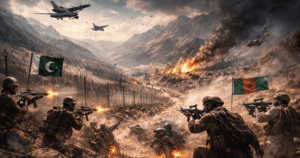
Thousands of civilians are once again streaming away from the borderlands between Thailand and Cambodia, carrying their belongings in a desperate exodus reminiscent of the violent upheavals of the past decade. On December 8, 2025, the fragile peace that had held the region together for mere months disintegrated into chaos. The renewal of hostilities, involving artillery exchanges and airstrikes, has shattered the ceasefire agreement brokered earlier this year and plunged bilateral relations into a deep freeze. This latest flare up is not merely a border skirmish but a significant diplomatic failure with profound implications for Southeast Asian stability.
The Spark of Renewed Conflict
The immediate catalyst for this resurgence of violence was a deadly encounter early Monday morning. According to statements from the Thai military, a Thai soldier was killed and several others were wounded during a clash in the Ubon Ratchathani province. Bangkok responded with significant force, launching airstrikes against what it termed military targets in Cambodia. The Cambodian Defense Ministry offered a conflicting narrative, accusing Thai forces of initiating unprovoked attacks on its troops in Preah Vihear province. Regardless of who fired the first shot, the result has been immediate and devastating. Reports indicate that at least four Cambodian civilians and one Thai soldier have died, while over 50,000 residents across four border provinces have been ordered to evacuate their homes.
Colonial Ghosts and Modern Nationalism
While the fighting is fresh, the wounds are old. The dispute is rooted in a century of contestation over the demarcation lines drawn by French colonial administrators in the early 20th century. At the heart of this enmity lies the Preah Vihear temple, a site of immense cultural significance that has long served as a flashpoint for nationalist sentiment in both nations. Although the International Court of Justice awarded the temple to Cambodia in 1962 and reaffirmed this in 2013, the surrounding 4.6 square kilometers of scrubland remain fiercely contested. Political factions in both Bangkok and Phnom Penh have frequently utilized this territorial ambiguity to stoke nationalist fervor to bolster domestic support.
Domestic Pressures and Geopolitical Stakes
The timing of this escalation suggests that domestic political dynamics are driving the military aggression. Analysts note that the Thai administration, led by Prime Minister Anutin Charnvirakul, is facing pressure to project strength and protect national sovereignty. Simultaneously, Cambodia, under the leadership of Hun Manet and the lingering influence of his father Hun Sen, has engaged in what observers call a propaganda war to unify its populace. The collapse of the peace deal, which was notably brokered with the involvement of U.S. President Donald Trump in October, highlights the limitations of external diplomatic intervention when local political incentives favor conflict. The breakdown of this high profile agreement serves as a stark embarrassment for international mediators who had hoped trade incentives would secure lasting peace.
Implications for Southeast Asian Stability
The implications of this renewed warfare extend far beyond the border villages. The Association of Southeast Asian Nations (ASEAN) faces a critical test of its unity and its ability to mediate between member states. Malaysian Prime Minister Anwar Ibrahim has already called for restraint, warning that the fighting risks unravelling years of diplomatic progress. Economically, the conflict threatens to disrupt cross border trade and tourism at the peak of the winter travel season, dealing a blow to two economies that are still navigating post pandemic recovery. If the violence continues to spiral, it could invite further involvement from major powers like China and the United States, transforming a local border dispute into a theater for broader geopolitical rivalry. The sight of thousands of refugees on the roads is a grim reminder that without a genuine political resolution to the map disputes, this cycle of violence is destined to repeat.
The Fragile Path Forward
The resurgence of hostilities between Thailand and Cambodia serves as a stark reminder that historical grievances cannot be silenced by temporary ceasefires or economic incentives alone. Unless both Bangkok and Phnom Penh commit to a transparent demarcation process and prioritize diplomatic channels over nationalist rhetoric the border will remain a volatile fault line in Southeast Asia. The international community must now move beyond statements of concern and actively facilitate a binding resolution for the cost of inaction is measured not just in diplomatic capital but in the lives of the thousands now displaced by this avoidable tragedy. As military commanders on both sides weigh their next moves the hope for a stable future rests on the realization that this century old dispute requires a political solution rather than a military victory.