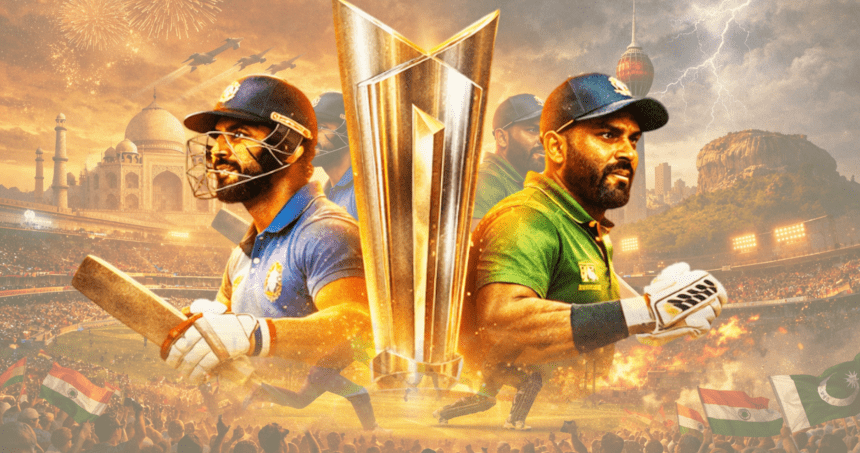
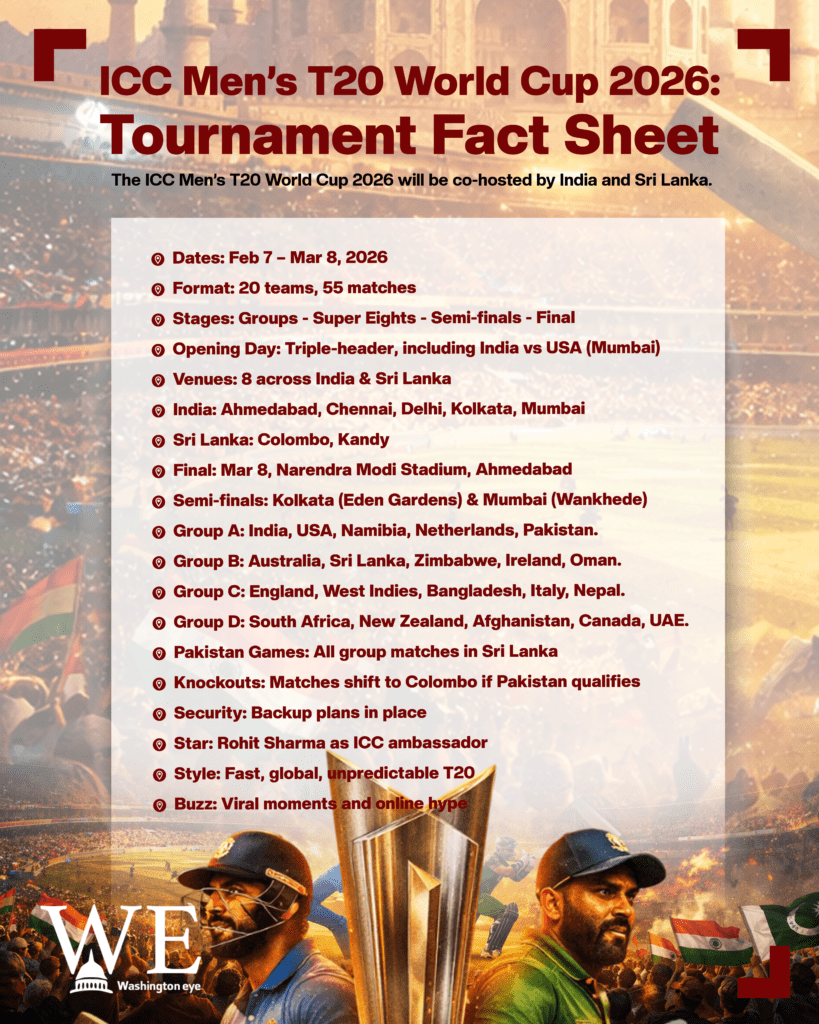
The ICC Men’s T20 World Cup 2026 is set to light up cricket’s biggest market as India and Sri Lanka co-host the tournament from February 7 to March 8, 2026, bringing the sport’s shortest global showpiece back to the subcontinent for the first time since India hosted in 2016. The event features 20 teams and 55 matches, using the same structure as 2024: a group stage, then Super Eights, followed by semi-finals and a final.
For the organisers, the “why” is straightforward: T20 is cricket’s most commercial, youth-friendly format, and the ICC is betting that packed grounds, prime-time television, and streaming audiences across South Asia will turn the tournament into a month-long festival. The ICC’s schedule revealed it as a marquee “spectacle,” with the final slated for the Narendra Modi Stadium on March 8 and the semi-finals planned for Eden Gardens and Wankhede Stadium, while also naming contingency plans in Sri Lanka if security or political sensitivities intensify.
The tournament opens with a triple-header on February 7, headlined by India’s night match against the United States in Mumbai, while Pakistan and West Indies also begin their campaigns the same day. Across the hosting map, matches are spread over eight venues: five in India (Ahmedabad, Chennai, Delhi, Kolkata, Mumbai) and three in Sri Lanka (Colombo’s SSC and R. Premadasa, plus Kandy).

The 2026 edition also leans into the modern T20 identity: globalised and unpredictable. Alongside traditional powerhouses, associate teams and emerging nations are expected to bring the kind of volatility that has defined the format, where one explosive innings or a two-over spell can flip a game. In the group stage, the ICC placed teams into four groups of five: Group A includes India, USA, Namibia, Netherlands and Pakistan; Group B includes Australia, Sri Lanka, Zimbabwe, Ireland and Oman; Group C features England, West Indies, Bangladesh, Italy and Nepal; Group D includes South Africa, New Zealand, Afghanistan, Canada and UAE.

But even before the first ball, the tournament’s biggest “issue” is already familiar: politics around India–Pakistan cricket. The ICC confirmed that all of Pakistan’s group matches will be played in Sri Lanka, and it published venue-switching contingencies if Pakistan reach the knockouts, including the possibility of moving a semi-final or even the final to Colombo. Those planning choices now look even more significant after reporting this week that Pakistan’s stance on playing India has triggered controversy, debate among fans, and pressure on the sport’s administrators to protect the tournament’s integrity and commercial centrepiece fixture.
The tension matters because India vs Pakistan is not just a match, it is the tournament’s single biggest ratings driver, a cultural event that spills far beyond sport. When that rivalry is threatened by diplomatic or security strains, it affects scheduling, ticketing, broadcasters, and the ICC’s promise of a seamless global spectacle. In this cycle, the governing body and hosts are trying to project certainty through logistics: neutral-ish venues, alternative sites, and a format that keeps top teams in the spotlight longer via Super Eights.
Beyond the geopolitics, the “craze” is expected to be massive. A T20 World Cup in India and Sri Lanka comes with the loudest stadium atmospheres in cricket, diaspora watch parties across Europe and North America, and an online ecosystem where highlights, memes and micro-moments dominate the conversation. The ICC has also leaned on star power at the launch, naming International Cricket Council brand ambassador Rohit Sharma, alongside senior ICC leadership and Indian captains at the ceremony.
Historically, the tournament has evolved from the inaugural 2007 edition, when T20 was still a novelty, to a modern flagship event. The ICC notes that the competition has produced multiple champions in less than two decades, underlining how quickly the balance of power can shift in the format. Recent editions have expanded to include more teams, reflecting the ICC’s push to grow the sport beyond its traditional centres.
As February unfolds, the early narrative will likely be shaped by two parallel forces: the on-field chaos that makes T20 irresistible, and the off-field pressures that come with hosting cricket’s biggest party in a region where the game is inseparable from identity and politics. If organisers manage the flashpoints and the cricket delivers its usual drama, T20 World Cup 2026 could become one of the most-watched and most-discussed editions yet.