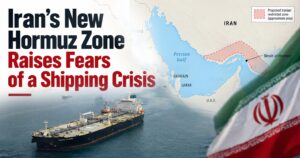
The current crisis in the Strait of Hormuz is not only a regional security problem; it is a stress test for the global trading system. It shows how quickly a single maritime corridor can turn into a pressure point for energy markets, shipping firms, and seafarers around the world.
A Chokepoint Under Strain
The Strait of Hormuz remains one of the world’s most consequential waterways because it carries around a quarter of global seaborne oil trade, along with major volumes of liquefied natural gas and fertilizers. When conflict intensifies around the strait, the impact extends far beyond the Gulf because shipping flows, insurance costs, and fuel prices all respond almost immediately.
UN data and analysis point to a wider system shock rather than a local disruption. Brent crude has already moved above 90 dollars per barrel in response to the escalation, and higher energy and transport costs can quickly feed into food prices and household budgets, especially in vulnerable economies.
Seafarers Caught in Conflict
One of the clearest lessons from the Hormuz crisis is that civilian shipping can become entangled in geopolitical disputes even when it has no role in them. The IMO chief told UN News that ships and crews are being used as leverage in geopolitical disputes, and that commercial shipping has been unjustifiably targeted, detained, or attacked.
The human cost is immediate. UN reporting says up to 20,000 seafarers on about 2,000 vessels have been stranded in the Persian Gulf because they cannot safely pass through the narrow waterway. That makes maritime security not an abstract policy issue but a labor, safety, and humanitarian concern.
What Protection Really Means
The crisis also exposes the limits of relying on force alone to secure trade routes. The IMO emphasizes that information sharing is crucial because misinformation can undermine voyage planning, while shipping companies must conduct proper risk assessments before entering conflict areas.
At the same time, the UN argues that diplomacy and de-escalation are the most durable solutions, and that naval escorts are not a sustainable answer. That matters because escort missions may reduce short term risk, but they do not remove the structural vulnerability of concentrating critical trade through narrow chokepoints.
The Wider Economic Shock
The deeper implication is that Hormuz illustrates a broader weakness in the architecture of globalization. Modern supply chains are efficient, but they are also highly exposed to disruption when too much trade depends on a few strategic corridors.
UNCTAD warns that the effects can spread through energy markets, freight rates, bunker fuel, insurance premiums, and fertilizer costs, which can then worsen inflation and food insecurity. The burden is likely to fall hardest on developing economies that already face debt pressures and limited fiscal space, leaving them with less room to absorb another external shock.
Security Beyond One Strait
Hormuz is not an isolated case. The IMO identifies other key maritime chokepoints, including the Suez Canal, Bab el Mandeb, the Straits of Malacca and Singapore, and the Panama Canal, all of which could create global consequences if disrupted. That suggests the real issue is not only the Strait of Hormuz itself, but the concentration of global commerce in narrow, politically sensitive corridors.
The policy response therefore needs to go beyond crisis management. It requires stronger maritime cooperation, better intelligence sharing, more resilient logistics planning, and continued protection of civilian shipping under international law.
A Final Note
The Hormuz crisis is a warning that global trade remains only as secure as its most vulnerable chokepoint. Its true significance lies in how visibly it connects regional conflict to worldwide economic and human consequences.