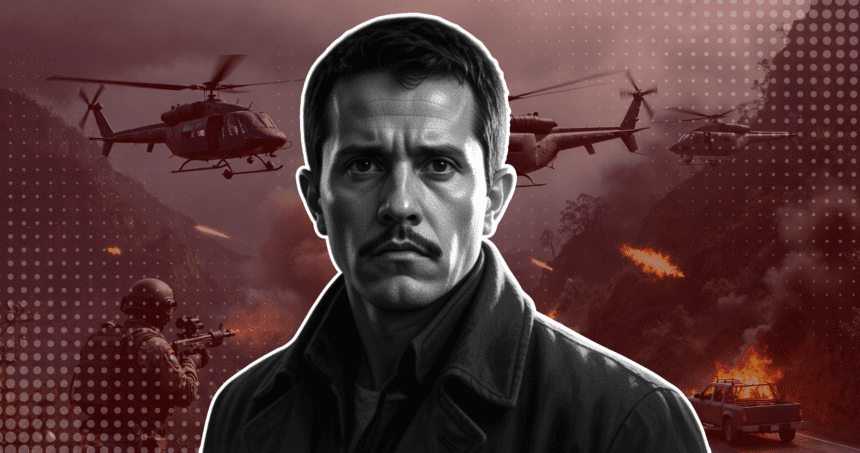
Mexican authorities say Nemesio Rubén Oseguera Cervantes, better known as “El Mencho,” the long-hunted leader of the Jalisco New Generation Cartel (CJNG), was killed during a major military operation in the western state of Jalisco, setting off hours of retaliatory violence and renewed questions about cartel succession and U.S.-Mexico security cooperation.
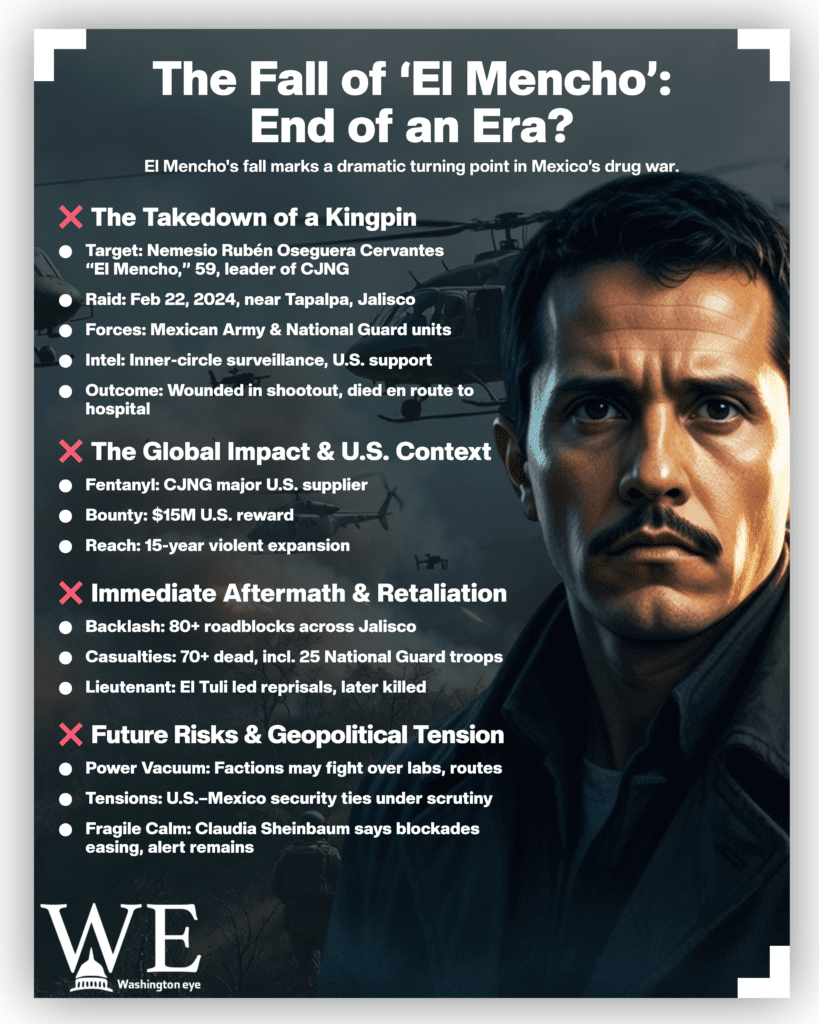
Officials said the raid took place on February 22 in the mountains near Tapalpa, Jalisco, after intelligence efforts narrowed in on the cartel boss’s location. Accounts of how he was tracked vary in details, but Mexican authorities and multiple reports said surveillance tied to people in his inner circle, reportedly including a romantic partner and a trusted associate, helped confirm where he was hiding. U.S. intelligence support was also cited as playing a role in verifying the target’s position ahead of the assault.
The operation involved elite army units and the National Guard, backed by aerial surveillance. Authorities said heavy gunfire erupted as cartel gunmen resisted, with reports describing the use of high-powered weapons. Oseguera was wounded during the pursuit and later died while being transported for medical treatment, according to official and media accounts.

El Mencho, 59, was widely viewed as the most powerful figure in Mexico’s criminal underworld and the driving force behind CJNG’s rapid expansion over the past decade and a half. He rose through earlier criminal networks, spent time in the United States and was later deported, before consolidating power in Mexico and helping build CJNG into an organization known both for international drug trafficking, particularly synthetic drugs, and for extreme violence used to control territory and intimidate rivals and authorities.
In the United States, he was one of the most wanted traffickers, with a reward that had climbed to as much as $15 million for information leading to his arrest or conviction. CJNG has been repeatedly identified by U.S. and Mexican officials as a major supplier feeding the fentanyl crisis north of the border, making his capture, or death, a top bilateral security priority and a politically charged issue in both countries.
But the raid’s immediate aftermath underscored how deeply CJNG has embedded itself across Mexico. Within hours, authorities reported a coordinated retaliation campaign: vehicles set ablaze, improvised roadblocks, attacks in multiple locations and widespread disruptions that forced closures and heightened security alerts. Reuters described more than 80 roadblocks and attacks tied to the backlash, while other reports said the violence spread beyond Jalisco into other states as cartel cells attempted to overwhelm security forces and paralyze movement.
The death toll was significant. Reuters reported at least 25 National Guard troops killed along with dozens of suspected cartel members and at least one bystander, while AP reported the broader toll exceeded 70 dead in total amid clashes and reprisals. The violence also rattled local economies and travel, with some routes cut and daily life briefly grinding down in affected areas.

Mexican officials said a key CJNG lieutenant, identified in reports as “El Tuli”, helped orchestrate the retaliation, including bounties for attacks on soldiers, before he was later killed in a separate security engagement. By February 23, President Claudia Sheinbaum said the most acute phase of blockades was easing, though authorities remained on alert for further flare-ups and revenge attacks as CJNG fragments or regroups.
Beyond the immediate chaos, analysts and officials now expect a volatile power struggle. Removing a cartel leader can weaken command-and-control, but it can also splinter an organization into competing factions, intensifying violence as successors fight over routes, labs, and extortion rackets. Reuters noted Mexican and U.S.-linked intelligence involvement in the operation, highlighting a security partnership that has long been sensitive, welcomed by some as necessary against transnational crime, and criticized by others as risking sovereignty and escalation.
For Washington and Mexico City, the moment is both a symbolic win and a test: whether authorities can disrupt CJNG’s operational capacity, money flows, chemical supply chains, and armed enforcement networks, faster than the cartel can replace a fallen leader. On streets from Guadalajara to smaller towns in Jalisco’s highlands, residents are left with the most immediate question: whether the apparent calm holds, or whether the next chapter brings another surge of fear and fire.