
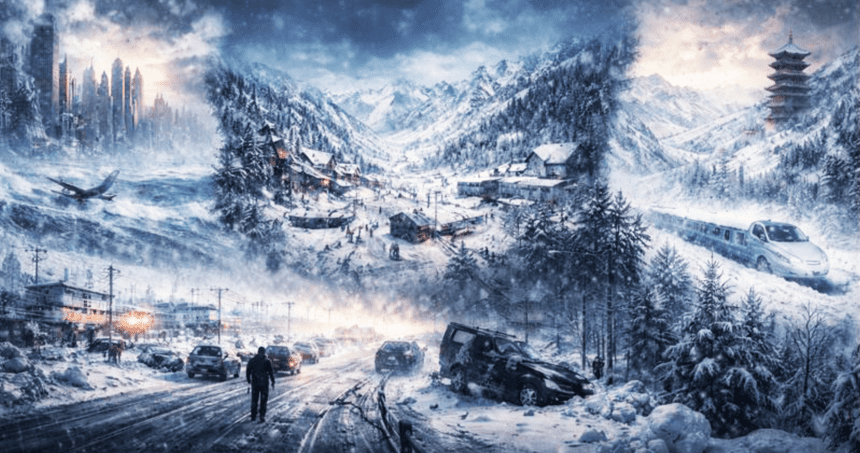
Extreme winter warnings stretched across multiple regions this week as meteorological agencies flagged dangerous cold, heavy snow and ice, conditions that can turn routine travel into a life-threatening risk within hours.
In the United States, a fast-intensifying winter system, described by forecasters as a “bomb cyclone”, pushed freezing air deep into the South and up the East Coast, triggering widespread cold and extreme cold alerts and a wave of disruptions from highways to airports. U.S. media reports cited mass flight cancellations, power outages, and deadly crashes as snow and ice spread into areas unaccustomed to severe winter weather.
The storm’s reach extended unusually far south. In Orlando, record-low temperatures were reported as an extreme cold warning was issued for parts of east-central Florida, with wind chills forecast to fall into the teens (°F). The cold even contributed to operational disruption at Federal Aviation Administration facilities, briefly halting flights at a major airport, according to local reporting.

Across the Atlantic, parts of the United Kingdom faced renewed ice and snow risks after a wet spell, with the Met Office issuing yellow warnings for ice in several regions as temperatures dipped below freezing overnight. In Scotland, additional snow warnings raised the prospect of travel disruption, particularly on higher ground, as commuters were urged to plan for delays on roads and rail lines.

In Japan, the Japan Meteorological Agency warned of heavy snow concentrated along the Sea of Japan side, with forecasts cited by Reuters indicating totals that could reach around 60–70 centimeters in some regions over a short window, enough to strand vehicles, strain roofs, and heighten avalanche risk. The warnings came amid repeated midwinter snow bursts that have battered transport links and local services.
In China, state media quoted forecasters warning of multiple cold waves through February that could overlap with the Spring Festival travel rush, typically the world’s largest annual human migration, raising the stakes for rail, road, and power-grid resilience. Separate reports described temperature drops of 6–12°C in parts of central and eastern China, with some localities seeing sharper falls.
South Asia has also been grappling with hazardous winter conditions, though impacts vary by location. In India, dense fog episodes, common in northern plains winters, were again disrupting visibility around the capital region, with humidity, light rain, and cooling air cited as key drivers. In Pakistan, forecasters have recently pointed to a mix of prolonged cold, fog, and low nighttime temperatures, particularly affecting northern and upland areas.

Scientists and meteorologists continue to debate the exact links between a warming climate and bouts of severe winter weather, but many analyses focus on Arctic-driven pattern shifts, such as disruptions to the polar vortex and large-scale atmospheric waves, that can spill cold air southward while also supercharging snowfall when moisture is available.
The impact profile is familiar and costly: crashes on untreated roads, hypothermia risk for people without adequate heating, supply delays, burst pipes, and spikes in electricity demand. Public-health experts warn that extreme cold can be as deadly as heat, especially for older adults, infants, and people with heart or respiratory conditions, while emergency managers emphasize that “secondary hazards” like ice, wind chill, and carbon-monoxide poisoning from improper indoor heating often drive the worst outcomes.
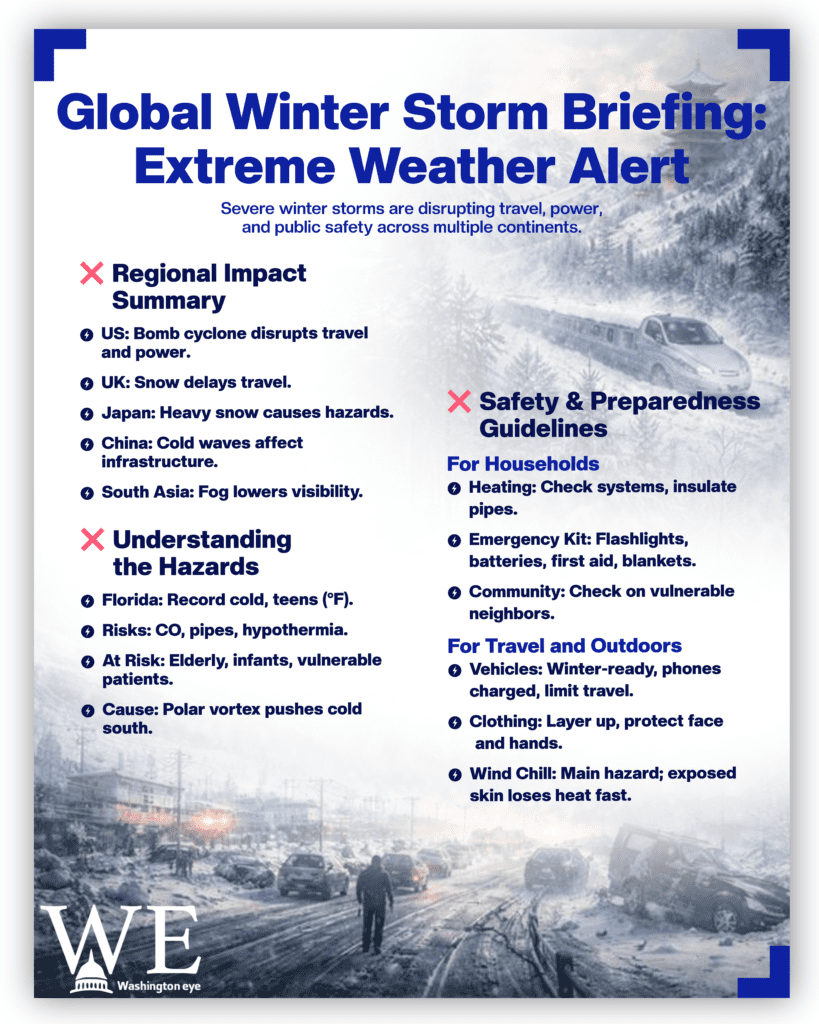
Authorities across affected regions have repeated similar precautions: limit non-essential travel during peak snow/ice, keep phones charged and vehicles winter-ready, and prepare for short-notice power cuts. Households are advised to check heating systems, insulate exposed pipes, keep a basic emergency kit (flashlight, batteries, first aid, blankets), and look in on neighbors who may be isolated. For those outdoors, the guidance is simple: wear layers, protect hands and face, and treat wind chill as the real danger, because exposed skin can lose heat far faster than the thermometer alone suggests.