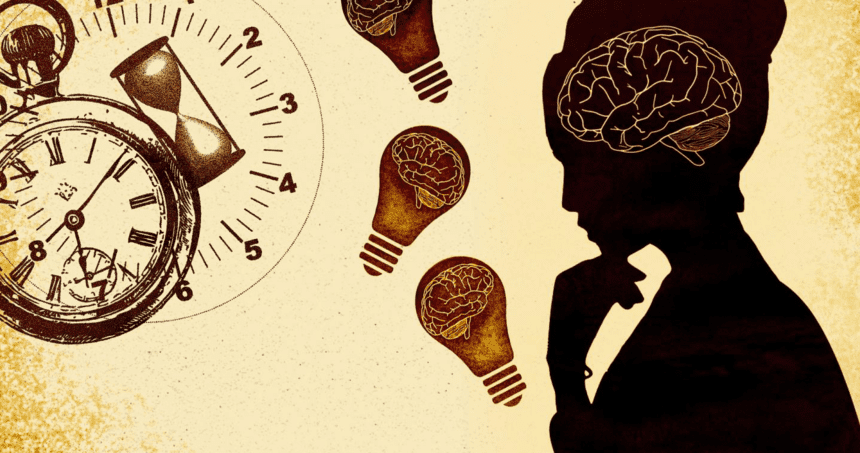
There is a growing sense that life no longer moves at a human pace. Years arrive and disappear with unsettling speed, leaving many people wondering when time itself began to rush. What once felt slow, stretched, and heavy now feels light and fleeting, as if entire chapters of life are being skipped. This feeling is not confined to any one country or age group; it has become a shared global opinion, quietly voiced in everyday conversations and loudly echoed online.
For many, the contrast is clearest when looking back. Childhood felt long. Summers seemed endless. Even the transition from one year to the next took time to settle in. People remember writing the old year by mistake for weeks, sometimes a full month, before finally adjusting to the new one. Today, that hesitation has almost disappeared. The new year is written instinctively, as if the mind is already trained to move on before the previous one has fully ended.
This shift is especially noticeable in recent years. A common sentiment repeated across social media is that 2019 feels surprisingly close, as though it happened only two years ago. Yet in reality, 6 years has passed. Many say they cannot clearly account for what happened in between. The years seem to have merged, leaving behind a strange emptiness rather than a sequence of memories.

People describe it as life being placed on fast-forward. One year barely begins before conversations move to the next. Goals roll over unfinished. Plans are postponed again and again, while calendars continue turning without pause. What once felt like progress now feels like acceleration without direction.

Older generations often compare this feeling to their youth, recalling a time when life moved slower, milestones took longer, and waiting was part of daily existence. Younger people, meanwhile, express shock at how quickly adulthood arrived. Despite generational differences, both groups agree on one thing: time feels fundamentally different now.
Social media has become a central space for expressing this unease. Posts reflecting on how fast years are passing routinely go viral, filled with comments like “Where did the time go?” and “I still feel stuck in the past.” Many users joke about still mentally living years behind the current date, while others express anxiety about aging and missed moments. Humor and worry often sit side by side.
The period after 2019 is frequently cited as a turning point. While life did not stop, it changed in ways that altered how people experienced time. Since then, years have felt lighter, quicker, and less defined. People speak less about what they did in a year and more about how quickly it ended.
This is not just nostalgia. It is a reflection of how modern life has changed. Constant connectivity, faster communication, and an always-on digital world leave little space for pause. Days are filled, but not always remembered. Life continues, but reflection struggles to keep up.
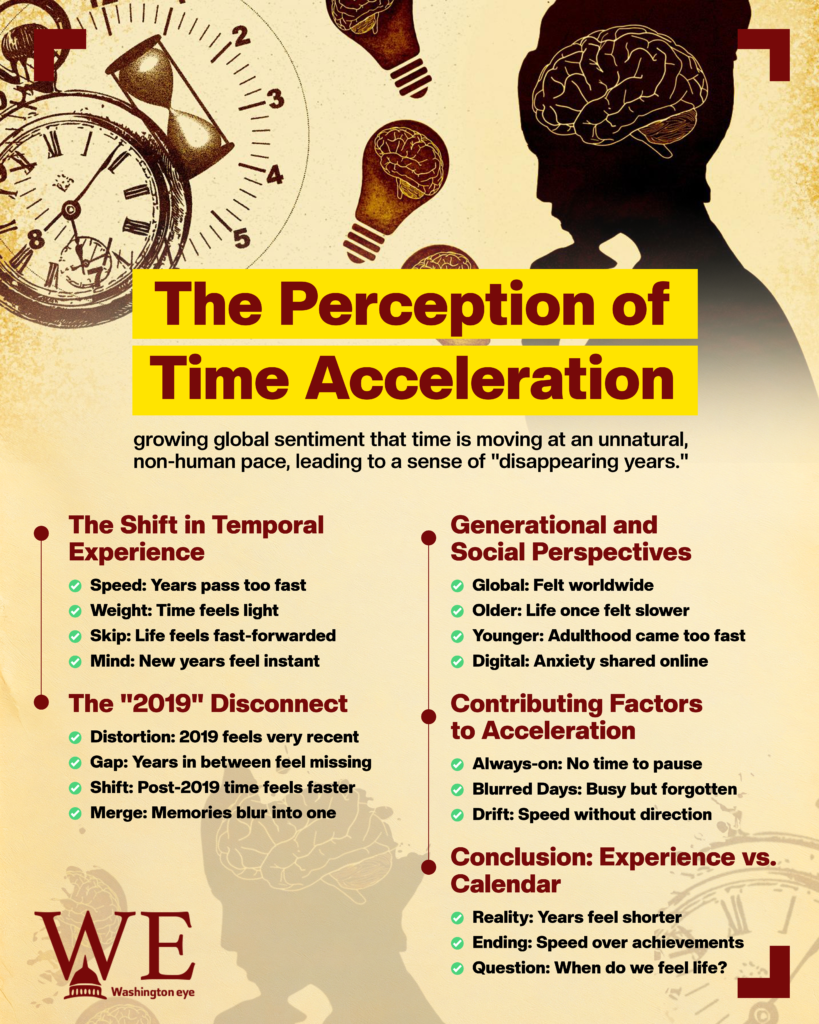
In the end, the feeling that time is moving too fast is less about numbers on a calendar and more about experience. The years are not shorter, but they feel that way. And as people continue to rush from one year to the next, many are left asking a simple question: if life keeps moving this fast, when do we get time to feel it?