
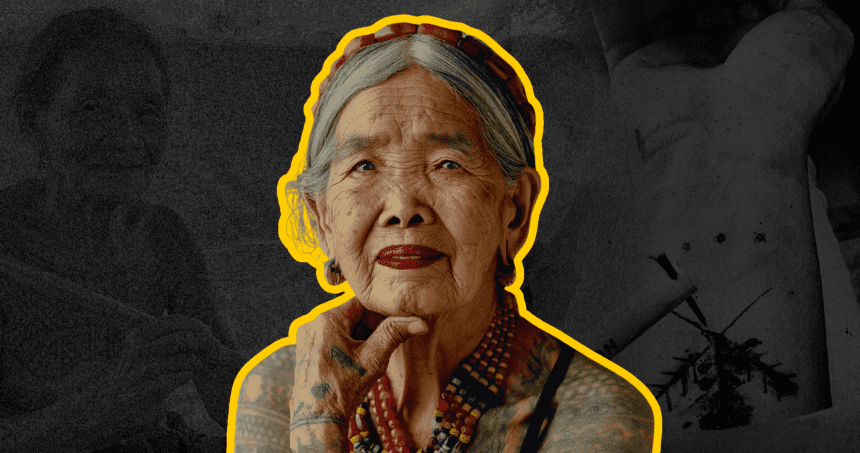
In the remote mountain village of Buscalan in the Kalinga province of the Philippines, a centuries-old art is thriving led by its most remarkable living practitioner, Apo Whang-Od Oggay, widely recognized as the world’s oldest tattoo artist. At 106 years old, Whang-Od has become both a global cultural icon and a beloved custodian of the indigenous Filipino tradition of batok, an ancient hand-tapping tattooing method that predates modern electric needles by centuries.
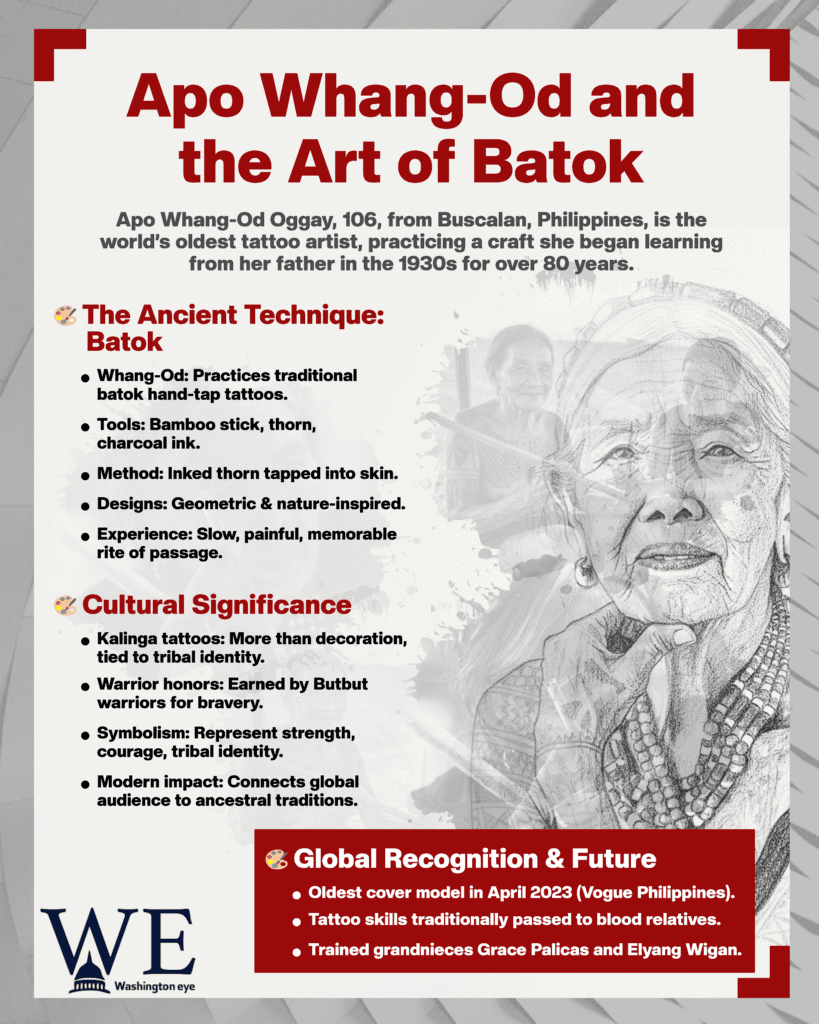
Born on February 17, 1917, in the highland region of northern Luzon, Whang-Od began learning the craft from her father as a young teenager in the early 1930s. In her community, tattoos were not merely decorative, they were badges of honor and rites of passage. Traditionally, the inked marks were earned by Butbut warriors after feats of bravery and combat, serving as symbols of strength, courage, and identity within the tribe.
Whang-Od’s practice extends back over eight decades, during which she has meticulously honed her technique and preserved the ritualistic meaning embedded in each design. What sets her craft apart is not just her longevity, but the ancient “hand-tapping” technique she employs, known locally as batok. Unlike modern electric tattoo machines, batok is executed using a bamboo stick, a thorn from a pomelo or calamansi tree, and a charcoal-and-water ink mixture. The thorn is dipped in ink and then tapped rhythmically into the skin with another stick, creating geometric patterns and images with cultural meanings that echo the natural world.

Visitors who come to Buscalan speak of the distinctive experience. The procedure, while slower than machine tattooing, is deeply rooted in ritual and patience. Some say it hurts more than machine work because the hand-tapping repeatedly pierces the skin in a traditional manner; yet many of Whang-Od’s clients describe the sensation as an unforgettable rite of passage, worth enduring for the cultural depth and personal story that each tattoo carries.

Over the past two decades, Whang-Od’s fame has moved far beyond the Philippines. From the early 2000s onward, anthropologists, tattoo enthusiasts, and global travelers made pilgrimages to Buscalan to witness her craft firsthand. In April 2023, Vogue Philippines honored her legacy by featuring Whang-Od on the cover of its Beauty Issue, making her the oldest person ever to grace the magazine’s front page, surpassing even British actress Judi Dench’s previous record.
Though world-renowned, the tattoo tradition Whang-Od practices is fragile. Historically, mambabatok (traditional tattoo artists) passed their skills only to blood relatives. Whang-Od, aware that she might be one of the last of her generation, has taken deliberate steps to train her grandnieces, including Grace Palicas and Elyang Wigan, ensuring that the lineage of batok continues.
In Buscalan, her presence is more than that of an artisan, it is the heart of cultural continuity. Her tiny hillside community has become a destination for cultural tourism, bringing visitors from across the world to witness a living history. While some purists argue that the influx of foreign clients risks changing the tradition’s meaning, many local advocates say that global appreciation has helped preserve the practice at a time when many indigenous art forms are at risk of disappearing.

Beyond technical mastery, Whang-Od’s legacy resonates because it embodies endurance, identity, and respect for ancestral wisdom. Each tattoo she inks carries whispers of centuries of tribal memory, symbols that once marked warriors and now connect a diverse global audience to an ancient tribal narrative.
At a time when technology continues to redefine body art, Whang-Od’s hand-tapped tattoos remain reminders of the enduring value of human touch, ritual, and cultural heritage. Her story bridges past and present, offering a testament to how rooted traditions can flourish in the modern world.