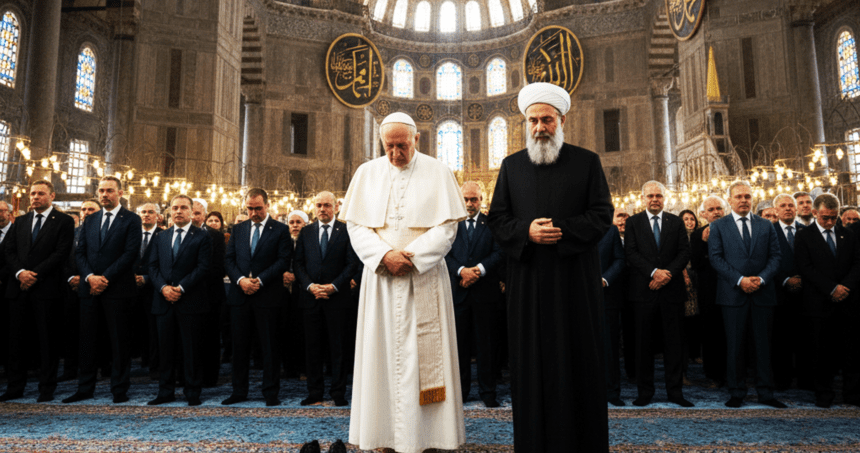
In a landmark moment for global interfaith relations, Pope Leo paid an official visit to the Sultan Ahmed Mosque, widely known as the Blue Mosque, in Istanbul, Turkey, on Tuesday, 2 December 2025. The visit, held at the heart of the historic peninsula, marked the first time a pontiff named Leo had entered the iconic 17th-century Ottoman mosque, drawing comparisons to previous papal gestures of Muslim-Christian goodwill and signaling renewed commitment to dialogue in an era of global tension.
The Pope arrived in Istanbul early in the morning and was welcomed by Turkey’s Religious Affairs Directorate (Diyanet) officials, the Grand Mufti of Istanbul, and a large delegation of interfaith leaders. Thousands gathered outside the mosque complex to witness the historic moment, while global media outlets broadcast the visit live.
The Blue Mosque, completed in 1616 under Sultan Ahmed I, stands as one of the most architecturally and spiritually significant landmarks in the Muslim world. Pope Leo’s entry into the mosque symbolized a powerful moment of humility and respect as he removed his shoes and stepped inside the prayer hall, illuminated by its famed blue İznik tiles.

The central highlight of the visit came when Pope Leo paused for a moment of silent reflection alongside Istanbul’s Grand Mufti. Although not a prayer in the formal sense, the gesture echoed previous papal visits to mosques and represented a universal appeal for peace, compassion, and coexistence. According to Vatican officials, the Pope’s intention was “to honor a sacred space, acknowledge shared Abrahamic traditions, and foster unity in a time of global polarization.”

In a joint address delivered after the visit, Pope Leo emphasized the urgent need for mutual respect, shared moral responsibility, and solidarity across religious communities. “Faith must never be a bridge to division,” he said. “Instead, it must be the foundation for reconciliation, human dignity, and peace across nations.”
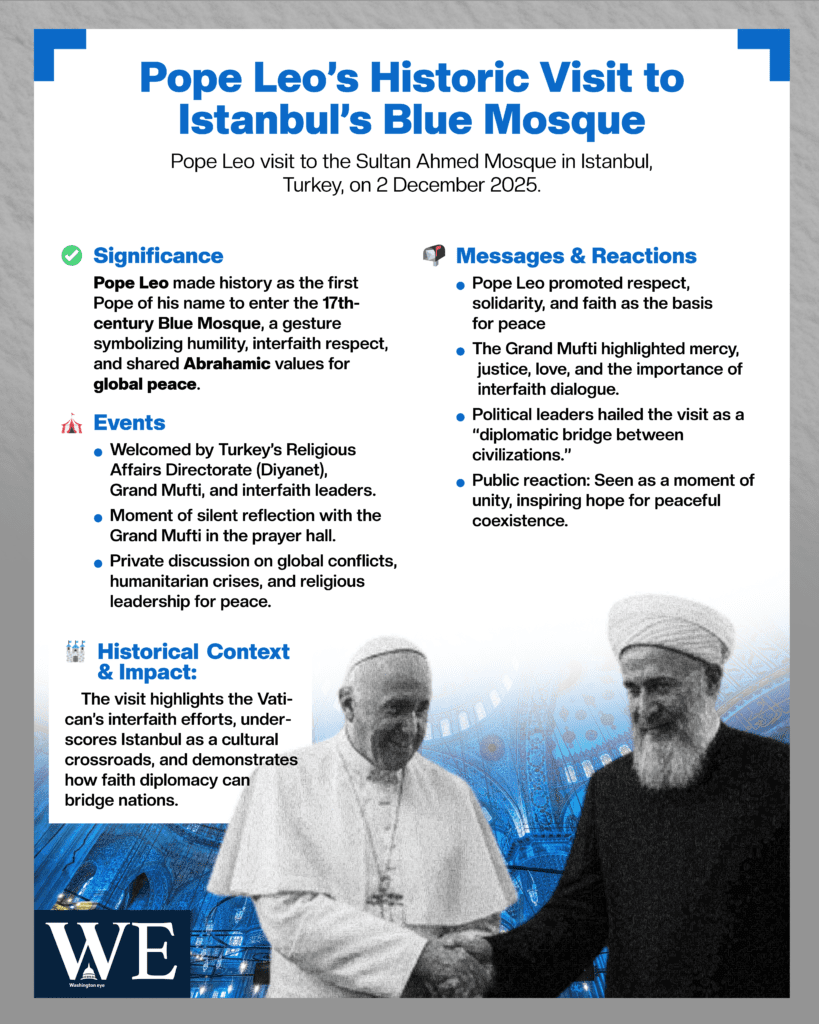
The Grand Mufti, in response, welcomed the Pope’s message and highlighted the importance of interreligious dialogue in countering extremism and misinformation. “This visit is a testament to the belief that Muslims and Christians, despite their differences, share values of mercy, justice, and love. Our world needs these values now more than ever,” he stated.
The visit also included a private conversation between the Pope and the Mufti in the inner courtyard, where they discussed the rising challenges of global conflict, the humanitarian crises affecting Christian and Muslim populations alike, and the role of religious leadership in promoting peace. They stressed the significance of collaborative efforts in addressing poverty, migration crises, environmental concerns, and the rising tide of xenophobia in both East and West.
Political leaders across Turkey welcomed the Pope’s gesture, calling it “a diplomatic bridge between civilizations.” President and government officials issued statements noting that the visit underlined Istanbul’s historical identity as a meeting point of cultures, religions, and empires. International observers also praised the move as a response to a world increasingly fragmented by ideological divisions.
Religious scholars highlighted the long-term historical importance of the moment. Many referred to Pope Leo’s visit as part of a broader Vatican tradition of interfaith outreach that dates back decades. Analysts noted that by choosing the Blue Mosque, an actively used place of worship and one of Islam’s most recognizable symbols, the Pope reaffirmed his vision of respectful engagement and mutual understanding.
Crowds outside the mosque reacted positively, with many Turkish citizens describing the visit as a “moment of unity,” and international pilgrims expressing hope that such symbolic gestures would inspire peaceful coexistence worldwide. As the Pope departed the mosque for a later meeting at the Hagia Sophia Square, applause filled the courtyard, marking the conclusion of a visit that underscored Istanbul’s unique role as a bridge between continents, cultures, and faiths. In a world increasingly challenged by conflict and polarization, Pope Leo’s visit to the Blue Mosque stands as a gentle reminder that faith-based diplomacy still has the power to transcend borders and bring people together.