
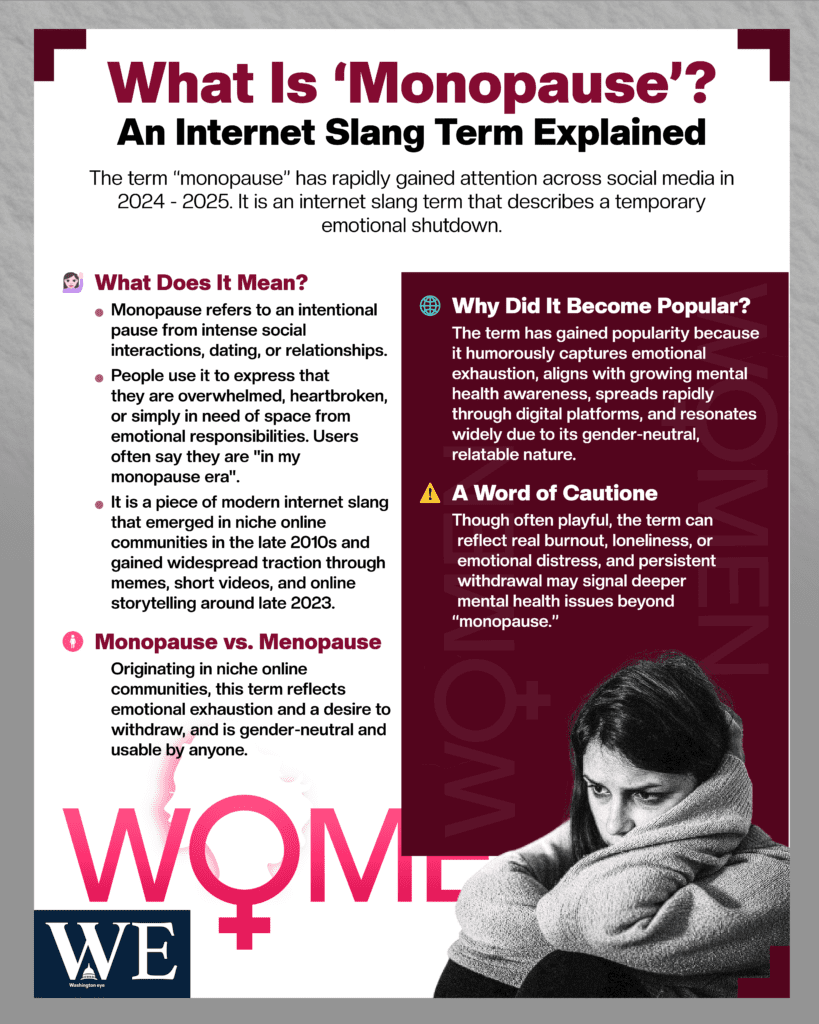
The term “monopause” has rapidly gained attention across social media platforms in 2024 and 2025, leaving many people wondering what it actually means and whether it has any connection to the medical term “menopause.” While the words sound strikingly similar, monopause is not a medical condition and did not originate in scientific research. Instead, it emerged as a piece of modern internet slang, gaining traction through memes, short videos, and online storytelling. Digital trend analysts note that the term first appeared in niche online communities in the late 2010s, but it began spreading widely around late 2023. By 2025, it had entered mainstream online vocabulary, especially among younger users who were looking for a humorous yet relatable way to describe emotional exhaustion and the desire to withdraw from social or romantic engagement.
In everyday usage, monopause refers to a temporary emotional shutdown, an intentional pause from dating, relationships, or intense social interactions. People often use the phrase to express that they are overwhelmed, heartbroken, or simply needing space from emotional responsibilities. Online users describe it as being “in my monopause era” or joke that “monopause hit me this month,” pointing to a mood of detachment or self-imposed isolation. Unlike menopause, which is a biological, hormonal transition experienced by women, usually between ages 45 and 55, monopause has no physiological basis. However, the two terms sometimes overlap in metaphorical meaning. Both suggest a shift in emotional or life circumstances, prompting reassessment, renewal, or withdrawal. This linguistic similarity has confused, and medical professionals have repeatedly clarified that monopause is not a real medical diagnosis or symptom.
The rise of monopause can be attributed to several cultural and digital factors. First, humor plays a central role. Many memes use exaggerated language to dramatize emotional fatigue, and monopause fits neatly into this trend. Second, younger generations increasingly prioritize mental health and setting boundaries. For many, taking a break from dating or socializing is not only acceptable but encouraged. Third, digital echo chambers, especially those on TikTok, Reddit, Instagram Reels, and X, help slang terms spread at incredible speed. Influencers and lifestyle bloggers integrated “monopause” into their content, linking it with narratives of self-care, emotional detox, and personal healing, further popularizing the term.
Although monopause is not officially recognized in psychology or medicine, its meaning intersects with real emotional experiences. People who use the term often describe feelings associated with burnout, heartbreak, stress, social fatigue, or loneliness. In some cases, monopause is a playful exaggeration; in others, it reflects a genuine need to disconnect. Mental health experts caution that while it can be helpful to name emotional experiences in humorous or symbolic ways, individuals should avoid dismissing deeper issues. Persistent emotional withdrawal can sometimes indicate underlying anxiety, depression, or chronic stress, and such symptoms should not be explained away solely as “monopause.” Still, the term offers many users a softer, more relatable vocabulary to express their need for rest.
The cultural impact of monopause extends beyond humor. It mirrors broader societal shifts toward digital overload, romantic burnout, and the re-evaluation of emotional labor. Many users say they are intentionally “pausing” dating apps, preferring to invest time in personal goals rather than relationships. Others frame monopause as part of their healing journey, especially after breakups or toxic connections. The gender-neutral nature of the term also contributes to its appeal. Unlike menopause, which is biologically exclusive to women, monopause can be used by anyone, regardless of gender or age, making it broadly relatable. Critics, however, argue that the term trivializes the real and often challenging medical experience of menopause. Supporters counter that monopause is simply modern slang, not a substitute or comparison, and that language is evolving with digital culture.
Whether monopause will remain relevant is uncertain. Internet slang often enjoys brief cycles of popularity before fading or transforming. However, the rise of monopause speaks to something deeper: people everywhere are overwhelmed, emotionally overstimulated, and eager for a way to articulate the desire to step back. At its core, monopause captures a collective mood, one shaped by digital fatigue, shifting relationship norms, and a growing emphasis on mental well-being. Even if the word eventually disappears, the emotions behind it are likely to persist.