
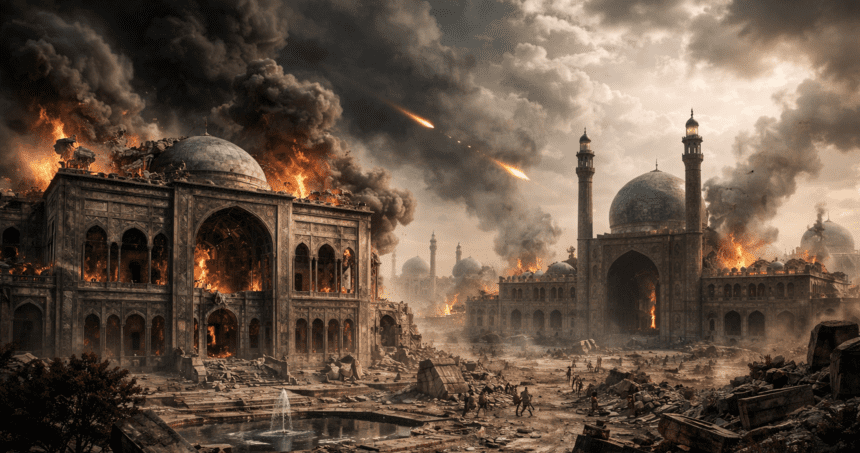
Several of Iran’s historic monuments and UNESCO World Heritage Sites have been damaged during the ongoing military conflict involving Iran, the United States, and Israel, raising international alarm over the destruction of cultural heritage. Cultural organizations and historians say the attacks not only threaten human lives but also centuries of history and identity preserved in Iran’s architectural landmarks.
The damage began after a wave of airstrikes and military operations intensified in late February 2026 as part of a rapidly escalating regional conflict. According to international reports, the strikes targeted military and strategic sites across Iran but shockwaves and nearby explosions also affected historic structures located in major cities such as Tehran and Isfahan. UNESCO and other cultural protection groups have warned that the war now poses a serious threat to some of the most important historical monuments in the Middle East.
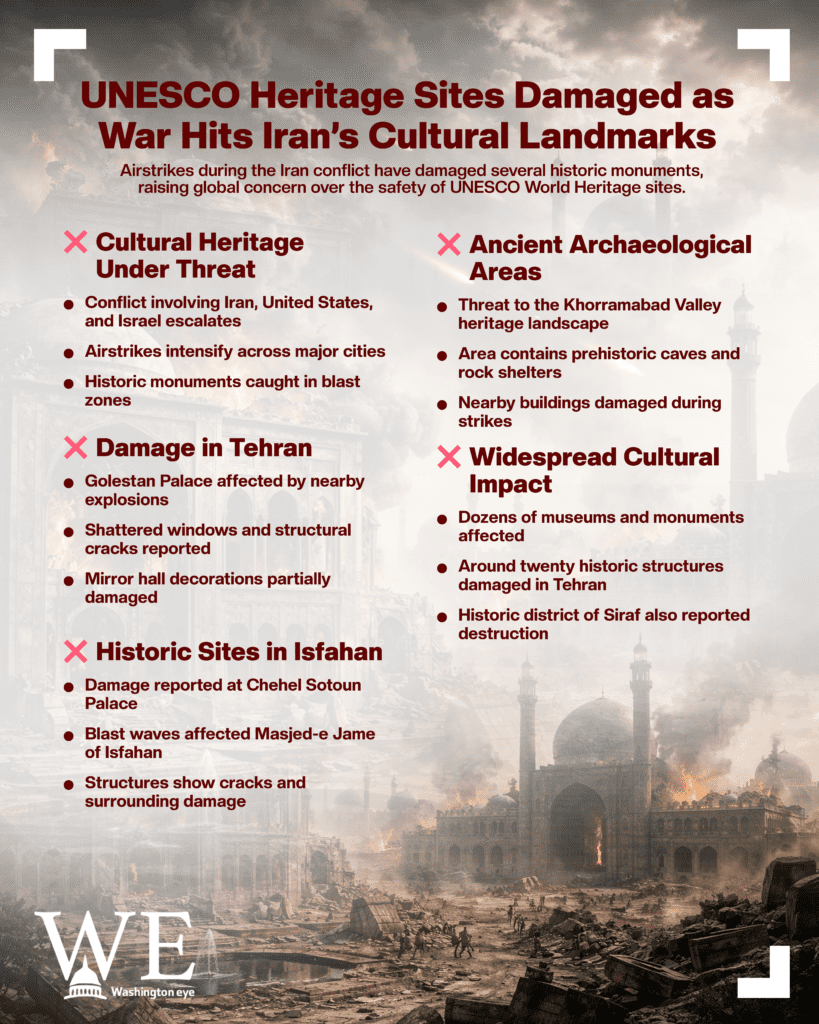
Among the most significant sites affected is Golestan Palace in Tehran, a UNESCO World Heritage Site and one of Iran’s most iconic royal complexes. Built during the Qajar dynasty in the 19th century, the palace is famous for its ornate halls, mirrored interiors, and historical significance as a seat of Persian rulers. Reports indicate that nearby explosions caused structural damage, shattered windows, and dislodged decorative elements inside the complex, including parts of the palace’s famous mirror hall.

In the historic city of Isfahan, additional damage has been reported at several cultural sites, including Chehel Sotoun Palace and Masjed-e Jame of Isfahan, one of the oldest mosques in the country and a masterpiece of Islamic architecture that reflects more than a thousand years of architectural evolution. Although these monuments were not always directly targeted, blast waves from nearby strikes caused cracks in structures and damaged surrounding buildings.

Another heritage area affected is the Khorramabad Valley, a prehistoric archaeological landscape containing caves and rock shelters that provide evidence of human settlement dating back tens of thousands of years. Buildings close to the archaeological zone have been damaged during the conflict, raising fears that fragile prehistoric remains could also be at risk if the fighting continues.
Iranian authorities say the destruction extends beyond a few sites. The country’s cultural heritage ministry has reported that dozens of museums and historical monuments have suffered damage since the conflict began. In Tehran alone, nearly twenty historic structures have reportedly been affected, while the historic district of Siraf in southern Iran also saw damage to traditional houses and old buildings.
International organizations have strongly condemned the attacks and warned that cultural heritage sites are protected under international law. UNESCO officials stated that coordinates of major heritage locations had been shared with all parties involved in the conflict in advance, urging them to take precautions to avoid damage. Despite these warnings, several sites have already been affected. Experts note that deliberately targeting heritage landmarks could be considered a violation of international humanitarian law or even a war crime.

Iranian officials have described the attacks as an assault not only on the country but also on world civilization. Local authorities in Isfahan called the damage “a declaration of war on culture,” arguing that historic monuments belong to humanity as a whole rather than any single nation. Cultural historians agree that Iran holds one of the richest collections of historical architecture in the world, including Persian palaces, mosques, gardens, and archaeological landscapes that trace thousands of years of civilization.
UNESCO currently lists 29 World Heritage Sites in Iran, ranging from ancient Persian capitals and Silk Road settlements to Islamic-era mosques and gardens. Officials say at least four of these sites have already been damaged since the beginning of the war. The organization has urged all sides to respect international conventions protecting cultural property during armed conflict and to avoid military operations near heritage zones whenever possible.
Experts warn that the destruction of heritage sites can have long-lasting consequences beyond the battlefield. Once damaged or destroyed, ancient structures and archaeological sites are often impossible to fully restore. Cultural heritage also plays a major role in national identity, tourism, and historical scholarship. For many Iranians, these monuments represent the legacy of ancient Persian civilization and centuries of cultural achievement.
As the conflict continues, UNESCO and other international bodies are monitoring the situation closely and calling for emergency measures to protect endangered monuments. Cultural experts say that safeguarding heritage during wartime is essential to preserving the shared history of humanity and ensuring that future generations can learn from the past.