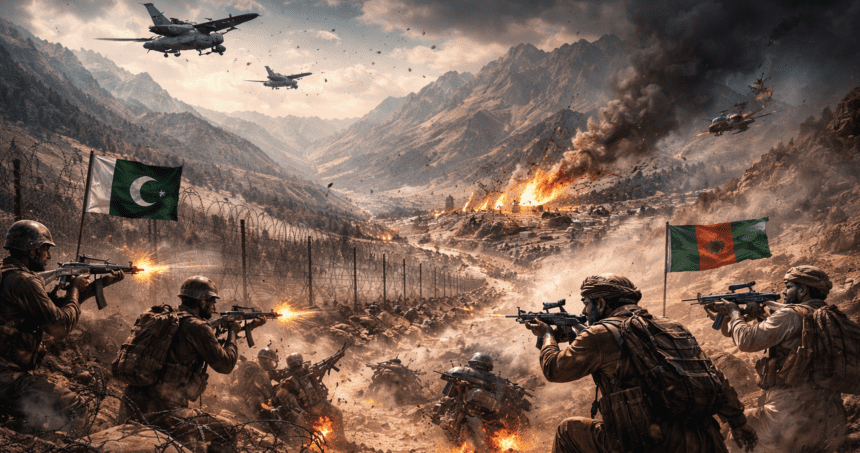
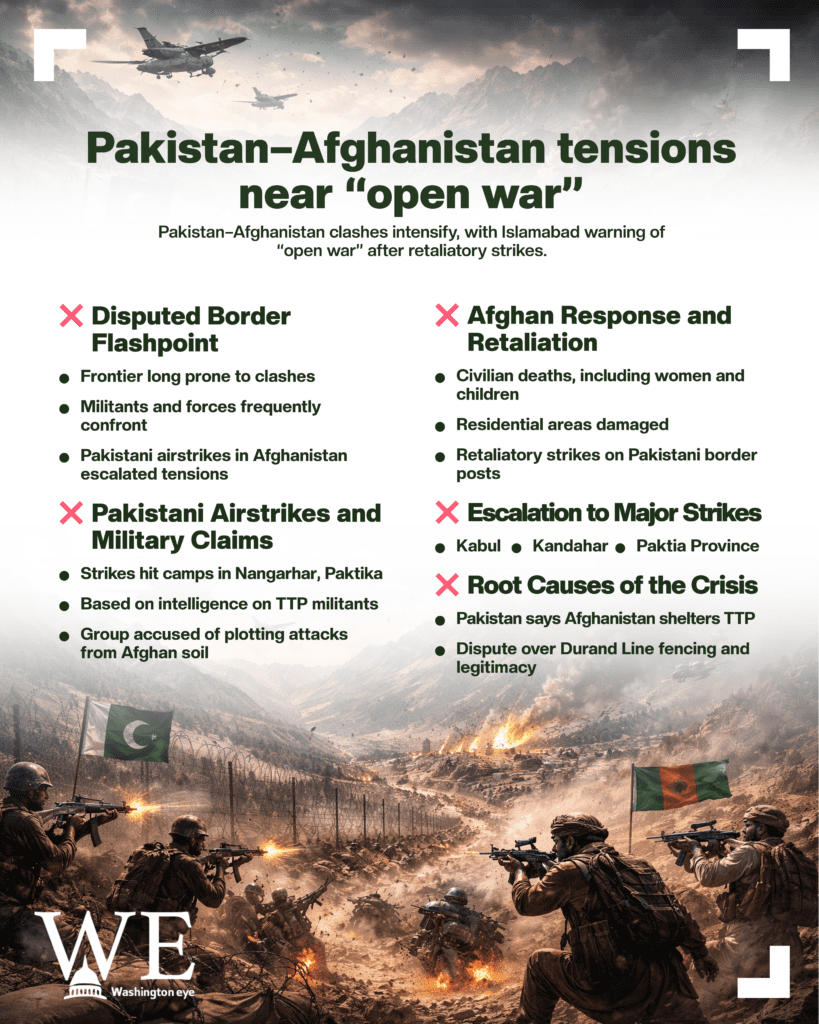
Tensions between Pakistan and Afghanistan have dramatically escalated in recent weeks, raising fears of a wider regional conflict after both countries exchanged airstrikes and cross-border attacks. The crisis intensified in late February 2026 when Pakistan declared that it was effectively in an “open war” situation with Afghanistan following a series of military confrontations along the disputed border and retaliatory operations by both sides.
The latest conflict is centered around the long-contested Durand Line, a 2,611-kilometre border separating Pakistan and Afghanistan. The border has long been a flashpoint between the two neighbours, with frequent clashes involving militants, security forces, and border guards. However, the situation reached a new level in February 2026 after Pakistan carried out large-scale airstrikes inside Afghanistan, targeting what it described as militant hideouts linked to the Tehreek-e-Taliban Pakistan (TTP).
According to Pakistani authorities, the airstrikes targeted camps in eastern Afghan provinces such as Nangarhar and Paktika. Islamabad said the strikes were intelligence-based operations against TTP fighters responsible for deadly attacks in Pakistan, including suicide bombings and assaults on security posts. The Pakistani government argues that militant groups use Afghan territory as a safe haven to plan attacks across the border.

Afghanistan’s Taliban-led government strongly condemned the strikes, calling them a violation of its sovereignty and accusing Pakistan of hitting civilian areas. Afghan officials reported casualties, including women and children, and vowed to respond to the attacks. Soon afterward, Afghan forces launched retaliatory operations against Pakistani border positions, leading to intense exchanges of fire and artillery along the frontier.

The conflict escalated further when Pakistani warplanes reportedly struck targets in major Afghan cities including Kabul, Kandahar and Paktia after Afghan forces attacked Pakistani military posts near the border. Pakistan said the strikes were necessary to protect national security, while Afghan authorities accused Islamabad of targeting civilian areas and escalating the conflict. Both sides claim heavy casualties, though independent verification remains difficult.
The roots of the current crisis lie in years of growing tensions between the two countries. Since the Taliban returned to power in Afghanistan in 2021, Pakistan has repeatedly accused the Afghan government of allowing the TTP to operate from Afghan soil. The TTP is responsible for numerous attacks on Pakistani security forces and civilians, including a deadly suicide bombing in Bajaur district in February 2026 that killed several soldiers and civilians.
Afghanistan, however, denies providing shelter to the TTP and says Pakistan often blames Kabul for its own security challenges. The Taliban government has also criticized Pakistan’s border fencing along the Durand Line, arguing that the boundary was imposed during colonial times and remains disputed. These longstanding disagreements have fueled mistrust and periodic clashes between the two sides.
The escalating conflict has raised alarm among regional and international observers. The United Nations and several global powers have urged both countries to show restraint and pursue diplomatic solutions. Analysts warn that a prolonged war could destabilize the wider South Asian region and worsen humanitarian conditions in Afghanistan, where millions already face severe economic hardship and food shortages.
Security experts say the conflict could also affect trade routes, refugee movements, and regional counter-terrorism efforts. Pakistan hosts millions of Afghan refugees, while cross-border trade and transport remain vital for both economies. A prolonged military confrontation could disrupt these connections and deepen tensions between the two countries.
Despite the rising hostilities, diplomatic channels remain open, and regional mediators are attempting to prevent the conflict from turning into a full-scale war. However, with continued clashes and accusations on both sides, the Pakistan–Afghanistan border remains one of the most volatile flashpoints in the region.