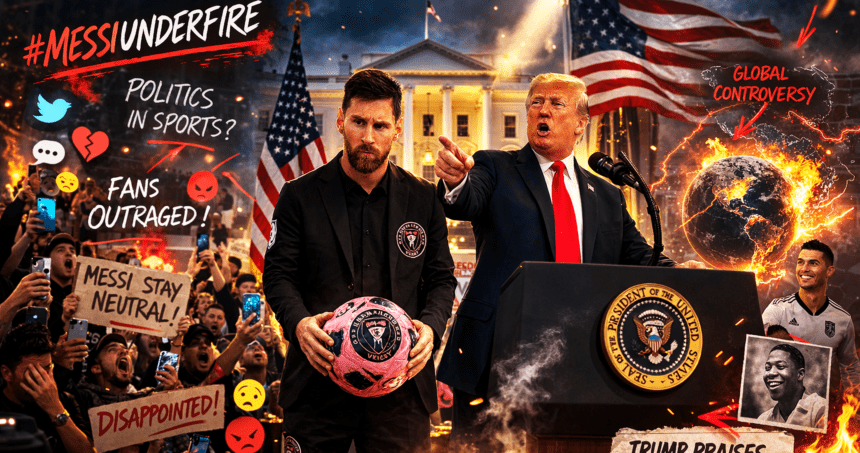
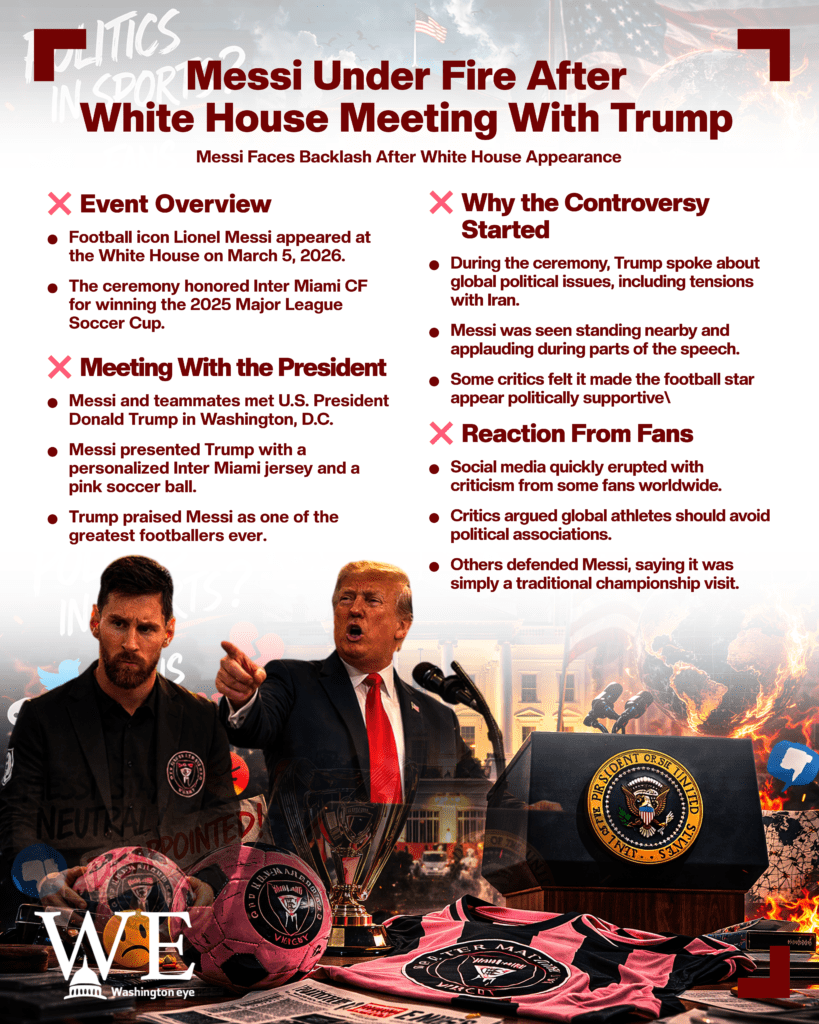
Lionel Messi, one of the most celebrated footballers in the world, has come under criticism after appearing alongside United States President Donald Trump at a White House ceremony in Washington, D.C. The meeting, held on March 5, 2026, was meant to celebrate Inter Miami’s historic 2025 Major League Soccer (MLS) Cup victory, but it quickly sparked political debate and backlash across social media and among some fans worldwide.
The Argentine star visited the White House with his Inter Miami teammates after the club won its first MLS Cup title in December 2025, defeating the Vancouver Whitecaps. Messi, who played a key role in the championship and was named the league’s Most Valuable Player for the second consecutive season, was honored alongside other players and club officials during the ceremony. Such visits are a longstanding American tradition in which championship teams meet the sitting president to mark their achievement.
During the event, Messi presented Trump with a personalized Inter Miami jersey and a decorative pink soccer ball, symbolizing the club’s colors. Trump praised the football icon’s impact on the sport and his role in boosting soccer’s popularity in the United States after joining Inter Miami in 2023. The president reportedly described Messi as one of the greatest players in football history and even suggested he might be “better than Pelé,” drawing applause from attendees.
However, the ceremony did not remain purely about sports. Trump used part of the event to comment on global political issues, including U.S. foreign policy and tensions involving Iran. Messi was seen standing nearby and applauding during portions of the speech, which critics said gave the impression that he was endorsing the president’s remarks. The optics of a global sports icon appearing to support political statements during a tense geopolitical period triggered heated reactions online.

Many fans expressed disappointment on social media platforms, arguing that Messi should avoid political associations and remain neutral as a global sporting figure. Some critics said that athletes with worldwide influence must be cautious about appearing alongside controversial political leaders, especially when the event includes statements related to international conflicts. Others accused the football star of unintentionally lending legitimacy to political messaging unrelated to sports.
Supporters of Messi, however, defended the Argentine captain, saying his presence at the White House was part of a routine honor for championship teams rather than a political endorsement. They noted that professional athletes often attend such ceremonies regardless of which political party is in power, and that Messi himself did not make any political remarks during the visit. For many, the controversy highlights the increasingly blurred line between sports, celebrity, and politics in the modern media environment.
The meeting also generated global attention because Messi rarely participates in political events. In the past, the football legend has largely avoided public political statements, focusing instead on football, charity work, and international humanitarian campaigns. His quiet personality and reputation as a humble athlete have helped him maintain a largely non-political public image for most of his career.

Another moment that drew attention during the ceremony came when Trump mentioned Messi’s longtime rival Cristiano Ronaldo during his speech. The president joked that his son Barron admired both football stars and described them as “great champions,” prompting a lighthearted reaction from those in the room. Despite the friendly exchange, the political context of the event overshadowed what might otherwise have been a simple sporting celebration.
The episode reflects a broader trend in global sports where athletes increasingly find themselves drawn into political conversations. In recent years, high-profile athletes have spoken out on issues ranging from social justice to international conflicts. While some fans welcome athletes using their influence for political causes, others argue that sports should remain separate from politics.
For Messi, the controversy is unlikely to affect his football career, but it shows how even the world’s most admired athletes are not immune to political scrutiny. As one of the most recognizable figures in global sport, every public appearance he makes can carry symbolic meaning beyond the football pitch.
Despite the backlash, Inter Miami and MLS officials emphasized that the visit was intended to celebrate the team’s sporting achievement and to promote soccer’s growing popularity in the United States. For Messi and his teammates, the event marked a milestone moment following their historic championship win, even if the political debate surrounding it continues to unfold online.